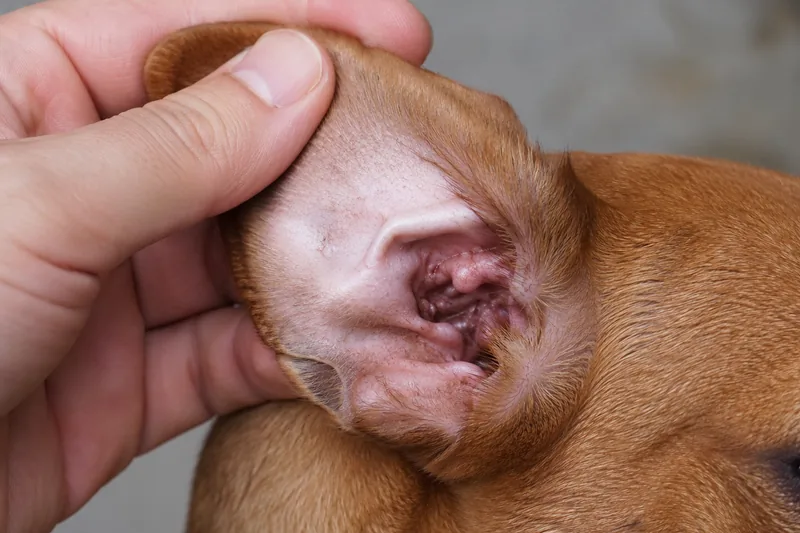
Ear mites are one of those problems that sound worse than they are and feel worse than they sound. The parasite is barely the size of a pinhead, but the itch it triggers can take over a dog’s entire day.
The good news is that mites are among the most fixable ear problems a dog can have. Modern treatments clear them reliably in a few weeks.
This guide covers how to recognize an infestation, how it spreads through a household, and what actually kills the mites. It also covers the follow-through that keeps them from circling back.
What Ear Mites Actually Are
The dog ear mite has a proper name: Otodectes cynotis. It’s a tiny eight-legged parasite, a distant cousin of spiders and ticks, that lives on the surface of the ear canal.
Mites don’t burrow into the skin or suck blood. They crawl across the canal lining and feed on ear wax, skin oils, and shed skin debris.
A single mite is about the size of a grain of salt, right at the edge of what a sharp eye can catch. In a heavy infestation, a vet looking through an otoscope sees them as tiny white specks moving across the dark wax.
The full life cycle runs about three weeks from egg to egg-laying adult. That timeline matters later, because it explains why treatment has to outlast the eggs.
Symptoms: The Coffee-Grounds Calling Card
The signature sign is the debris. Ear mites produce a dry, dark, crumbly discharge that looks remarkably like coffee grounds spilled into the ear.
That gunk is a mix of wax, blood, skin flakes, and mite waste. It’s different from the brown, greasy smear of a yeast problem, and the difference is a genuinely useful clue.
The itch is the other headline. Some dogs are mildly bothered, but many develop an allergic reaction to the mites and scratch like the ear is on fire.
Expect aggressive scratching at the ears, nonstop head shaking, and rubbing the head along the carpet or furniture. Scabs, crusts, and raw patches around the ear base follow once the claws do their damage.
Some dogs add a lopsided look, carrying the itchy ear low or tilting toward it. In heavy infestations the mites occasionally wander out of the ear entirely and set up skin irritation on the neck, rump, or tail.
Ear Mites or Just Ear Wax?
Normal dog ear wax runs from pale yellow to light brown, and there isn’t much of it. A healthy ear carries a thin film of wax, not visible clumps.
Mite debris is darker, drier, and far more abundant. If the ear suddenly fills with blackish-brown crumbles and the dog can’t leave it alone, wax alone isn’t the story.
The itch is the tiebreaker. Plain wax doesn’t itch, so a dog with slightly dirty ears who couldn’t care less probably just needs a routine cleaning.
Mites or an Ear Infection? How to Tell
Here’s the complication: ear infections and ear mites cause overlapping symptoms, and the treatments are completely different. Antifungals don’t kill mites, and mite medication doesn’t clear bacteria.
Smell is one separator. A yeast infection in the ears smells musty like corn chips, bacterial infections smell genuinely foul, and mite ears mostly smell dusty or faintly waxy.
Discharge is another. Infections tend to produce moist, greasy, or pus-like discharge, while classic mite debris stays dry and crumbly.
Age and history complete the picture. Mites skew heavily toward puppies and dogs fresh from shelters or litters, while a middle-aged allergic dog with a recurring ear problem is usually fighting an infection instead.
Don’t bet the treatment on guesswork, though. Plenty of mite infestations breed secondary infections on top, so both answers can be true at once.
How Dogs Catch Ear Mites
Ear mites spread by direct contact, and they’re extremely good at it. A few seconds of cuddling, wrestling, or shared sleeping space is all the transfer takes.
The classic sources are littermates, shelters, boarding kennels, and outdoor cats. Cats carry the same mite species, and an outdoor cat is one of the most common ways the parasite enters a household.
Puppies are the most frequent victims. They spend their early weeks piled on top of siblings, which is exactly the contact mites are built to exploit.
Off the host, mites are weak. They survive only a matter of days in bedding or carpet, which is why treatment focuses on the animals rather than the house.
Can People Catch Them?
Technically yes, practically almost never. Ear mites are adapted to dogs, cats, and ferrets, and they can’t complete their life cycle on a human.
The worst most people ever experience is a few itchy red marks on the arms after close contact with a heavily infested pet. Those clear on their own once the pet is treated.
Genuine human ear infestations exist in the medical literature as rare curiosities. You’re very unlikely to join that list, but it’s one more reason not to let an infestation linger.
How Vets Confirm the Diagnosis
The diagnosis is quick and oddly satisfying. The vet looks into the canal with an otoscope, and in many cases the mites are visible on the spot as moving white dots.
The backup test is a swab. A sample of the debris goes under the microscope, where the mites and their eggs are unmistakable.
That swab does double duty, because it also reveals any yeast or bacteria thriving alongside the mites. Knowing the full guest list is what gets the treatment right on the first try.
Vets also check both ears and often the surrounding coat. Mites can camp beyond the canal in heavy infestations, and missing those stragglers invites a relapse.
Treatment That Actually Works
Modern mite treatment is genuinely easy, which wasn’t always true. The old routine meant daily ear drops for weeks, and plenty of half-treated infestations bounced right back.
Today most vets reach for a prescription parasite product instead. Single applications of spot-ons like selamectin or moxidectin, and the newer chewable flea-and-tick medications, kill mites in one or two doses.
Step one is still a proper ear cleaning. Clearing the coffee-ground debris removes mites, eggs, and the gunk that medication would otherwise have to fight through.
If the swab found a secondary infection, drops for the yeast or bacteria join the plan. Skipping that step leaves the dog itchy and inflamed even after every mite is dead.
Then comes the non-negotiable rule: treat every dog, cat, and ferret in the house at the same time. Mites move between pets freely, and one untreated housemate quietly reinfests everyone.
Why Home Remedies Usually Backfire
The internet offers plenty of mite cures, from olive oil to vinegar rinses. Oil can genuinely smother some adult mites, which is why the idea refuses to die.
The problem is the eggs. Oil doesn’t touch them, so a fresh generation hatches within days and the cycle restarts while the ear stays inflamed.
The bigger trap is misdiagnosis. A large share of suspected mite cases turn out to be yeast or bacterial infections, and weeks of home treatment just gave the real problem time to dig in.
Vinegar and hydrogen peroxide earn a special warning. On raw, scratched-up canal skin they sting badly, and they still don’t fix anything.
Pet-store mite drops sit in the middle. The older pyrethrin-based formulas are weaker than prescription options, demand weeks of daily dosing, and fail completely when the diagnosis was wrong.
How Long Until the Mites Are Gone
With prescription treatment, relief comes fast. The itching usually eases noticeably within a few days as the mites start dying.
Full clearance takes about three to four weeks. That’s one complete life cycle, the time needed for every egg to hatch into a mite that meets the medication.
Vets often schedule a recheck swab around the one-month mark. A clean swab, a calm ear, and fur regrowing around the ear base mark a closed case.
If the scratching outlasts that window, something else is in play. Usually it’s a secondary infection that survived the mites or an allergy that was there all along.
The Damage Mites Leave Behind
Mites do their worst damage indirectly, through the dog’s own claws and the violence of constant head shaking. Scratched skin opens the door to bacteria, and hard shaking can rupture blood vessels in the ear flap.
That rupture creates a swollen, fluid-filled ear flap called an aural hematoma, which usually needs a vet procedure to fix. It’s a dramatic complication from such a tiny parasite.
The inflamed, debris-filled canal is also prime real estate for yeast. Some dogs finish their mite treatment only to grow a yeast infection in the damaged canal as a sequel.
Untreated long enough, chronic inflammation thickens and narrows the canal for good. Hearing suffers, and the ear becomes a lifelong trouble spot.
Keeping Them From Coming Back
The best prevention is already in many dogs’ monthly routine. Most modern heartworm and flea preventives, spot-ons and chewables alike, kill ear mites as a side benefit.
If your dog isn’t on one, that’s worth fixing as part of year-round preventive care. It closes the door on mites, fleas, and far worse in a single step.
Beyond medication, manage the contacts. New puppies, foster animals, and outdoor cats deserve an ear check before joining the cuddle pile.
Wash bedding in hot water during treatment and vacuum the sleeping spots. Off-host mites die within days, so basic cleaning is enough, no fumigation required.
Keep up a quick monthly ear check at home. A ten-second sniff-and-look catches the next problem, mites or otherwise, while it’s still a small one.
Final Thoughts
Ear mites are a miserable itch with a genuinely happy ending. Few dog parasites are this easy to kill once they’re correctly named.
The naming is the whole game. Coffee-ground debris and frantic scratching are your cue, and a two-minute vet swab turns the suspicion into a diagnosis.
Treat every pet in the house, finish the recheck, and keep the monthly preventive going. Do that, and ear mites become a story you tell once, not a problem you fight every season.
Frequently Asked Questions
Start with a vet visit to confirm mites with a quick ear swab. Treatment is a thorough ear cleaning plus a prescription mite-killing product, usually a spot-on or chewable that handles everything in one or two doses. Every pet in the household gets treated at the same time, or the mites just rotate between them.
It's rare and short-lived when it happens. Ear mites can't complete their life cycle on people, so the worst most owners ever see is a few itchy bites on the arms after handling a heavily infested pet. Those resolve on their own once the dog is treated.
Mite debris is dry, dark, and crumbly like coffee grounds, while infections usually produce moist, smelly, greasy discharge. Mites also skew young, showing up most in puppies and new shelter adoptees. The honest answer is a microscope, because the two problems overlap and often coexist.
Pet-store mite drops exist, but they're weaker than prescription options and useless when the problem is actually a yeast or bacterial infection, which it often is. Home oils smother some adult mites and skip the eggs entirely. One confirmed diagnosis beats weeks of guessing on an ear that keeps getting worse.
Expect about three to four weeks for full clearance, one complete mite life cycle. The itching itself usually fades within days of starting a prescription treatment. A recheck swab at the one-month mark confirms the ears are truly clear before you close the book.