A dog’s eyes are remarkably expressive and remarkably fragile. Problems there can move from minor to serious quickly, and because dogs hide discomfort, the early signs are easy to miss.
The good news is that most eye problems are very treatable when caught early. The risk lies in waiting, since a delay with the wrong eye problem can cost a dog its sight.
This guide covers the signs of eye trouble, what discharge and redness are telling you, the common causes, and the emergencies that mean you should not wait.
This guide is for general education and does not replace veterinary care. A painful, suddenly red, cloudy, or injured eye is an emergency, so do not wait on those.
Why Eye Problems Matter
The eye is a delicate, complex organ, and it has little tolerance for damage. A small scratch or infection can escalate to an ulcer or vision loss faster than problems elsewhere on the body.
Dogs also adapt to failing vision quietly, navigating familiar spaces by memory and smell. That means sight can be slipping well before an owner notices anything is wrong.
Both facts argue for paying close attention to the eyes. Small changes are worth taking seriously, because the eye does not give much margin for delay.
Signs of an Eye Problem
The signs of eye trouble are usually visible if you look. Redness, discharge, excessive tearing, swelling, and cloudiness are the most common.
Behavior tells you too. Squinting, holding an eye shut, pawing or rubbing at the face, and sensitivity to light all signal discomfort.
Changes in vision round out the picture. A dog that suddenly bumps into furniture, hesitates on stairs, or seems startled easily may be losing sight in one or both eyes.
Eye Discharge
A small amount of clear discharge is normal, the eye’s everyday housekeeping. It becomes a concern when it changes color, thickens, or increases.
Yellow or green discharge usually points to infection, while heavy clear tearing can mean allergies, irritation, or a blocked tear duct. Sticky or crusty buildup that keeps returning is a clue worth following.
Because the type of discharge narrows the cause, it is worth a closer look. Our guide to eye discharge in dogs breaks down what the colors and textures mean and when each needs a vet.
Red or Irritated Eyes
Redness is the eye’s way of showing inflammation, and inflammation has many sources. Allergies, irritants, infection, dry eye, and injury can all turn the white of the eye pink or red.
Mild, brief redness with no other signs may be a passing irritation. Redness that comes with squinting, discharge, cloudiness, or pain is a different matter and needs attention.
Some causes of red eye threaten vision, which is why it should not be ignored. Our guide to red eyes in dogs covers the range of causes and how to tell a minor irritation from a serious one.
The Common Causes
Most eye problems trace back to a handful of culprits. Allergies and environmental irritants are common and often cause both eyes to water and redden together.
Infections like conjunctivitis, injuries and scratches from play or foreign material, and dry eye from inadequate tear production round out the frequent causes. Blocked tear ducts and inward-rolling eyelids affect certain breeds in particular.
Because the causes look so similar from the outside, the look alone rarely settles it. A vet exam is what separates a simple irritation from something that needs prompt treatment.
Cloudy Eyes and Vision Loss
A cloudy or hazy look to the eye is common in older dogs and has more than one cause. A bluish haze across both eyes is often a normal age change called nuclear sclerosis, which barely affects vision.
Cataracts are different, turning the lens white and genuinely clouding sight. Diabetic dogs are especially prone, sometimes developing cataracts quickly.
A sudden cloudiness, especially with pain or redness, can signal glaucoma or an ulcer and is an emergency. Any new cloudiness deserves a vet’s eye to sort the harmless from the serious.
Eye Emergencies
Some eye signs mean act now. A suddenly very red or painful eye, a bulging eye, an obvious injury, or anything embedded in the eye are all emergencies.
Sudden vision loss belongs on this list too, as does a cloudy eye paired with pain. These can point to glaucoma, a corneal ulcer, or trauma, all of which can cost vision within hours.
When any of these appear, skip the home remedies. Keep your dog from rubbing the eye and get to a vet or emergency clinic right away.
Supporting Eye Health
Beyond treating problems, a few habits support healthy eyes. Keep the hair around the eyes trimmed, wipe away normal discharge gently, and protect the eyes from wind and debris on car rides.
Nutrition plays a supporting role, with antioxidants and certain nutrients linked to eye health. The options in our eye vitamins for dogs guide can complement, not replace, regular veterinary care.
Routine checks help most of all. Glancing at your dog’s eyes during grooming catches redness, cloudiness, and discharge while they are still small problems.
How Vets Diagnose Eye Problems
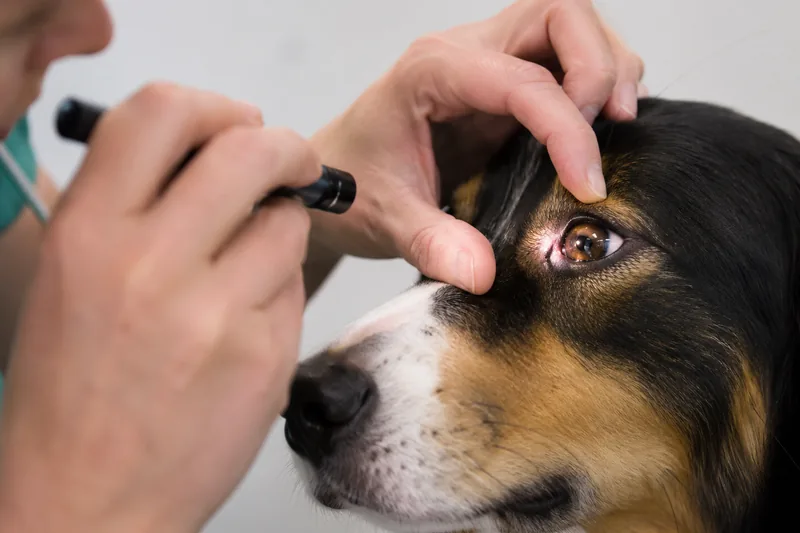
Vets have specific tools for the eyes. A bright light and magnification let them examine the surface, while a fluorescein stain reveals scratches and ulcers on the cornea.
Two common tests measure function. A tear test checks for dry eye, and a pressure test screens for glaucoma, both quick and painless.
Sharing what you have seen speeds the diagnosis. Which eye, how suddenly it started, and whether your dog seems in pain all guide the exam.
When to See the Vet
Minor, brief watering or a little clear discharge in a comfortable dog can be watched for a day. Most other eye changes deserve a prompt call.
Book a visit for persistent redness, colored discharge, squinting, or cloudiness. Go immediately for a painful, bulging, or injured eye, or any sudden change in vision.
When you are unsure, treat the eye as the cautious option. Eye problems are one area where a fast vet visit genuinely protects against permanent damage.
Sources and Further Reading
These veterinary resources go deeper on canine eye health.
- Eye Disorders of Dogs, Merck Veterinary Manual
- Eye Problems in Dogs, VCA Animal Hospitals
- American Veterinary Medical Association (AVMA)
Frequently Asked Questions
Watch for redness, discharge, excessive tearing, squinting or holding an eye shut, cloudiness, swelling, and pawing or rubbing at the face. A dog may also bump into things if vision is affected. Any of these, especially with signs of pain, is worth a vet check, since eye problems can worsen quickly.
Often, yes. A suddenly red, painful, cloudy, or bulging eye, an obvious injury, or a sudden loss of vision should be treated as an emergency. Eyes can deteriorate within hours, and delays risk permanent damage or blindness. When in doubt, call your vet or an emergency clinic right away rather than waiting.
A little clear discharge or 'sleep' in the corner is normal. Heavier, colored, or sticky discharge can signal allergies, infection, a blocked tear duct, dry eye, or a foreign object. Yellow or green discharge in particular suggests infection. Persistent or colored discharge is worth a vet visit to find the cause.
Red eyes mean inflammation, which has many causes: allergies, irritants, infection like conjunctivitis, dry eye, an injury, or more serious conditions like glaucoma. Mild redness with no pain may be a passing irritation, but redness with squinting, discharge, or cloudiness needs a vet, since some causes threaten vision.
No, not without your vet's direction. Many human eye products are not safe for dogs, and using the wrong one can worsen a problem, especially if there's an unseen scratch or ulcer on the eye. Plain sterile saline can flush a mild irritant, but for anything beyond that, let your vet prescribe the right treatment.