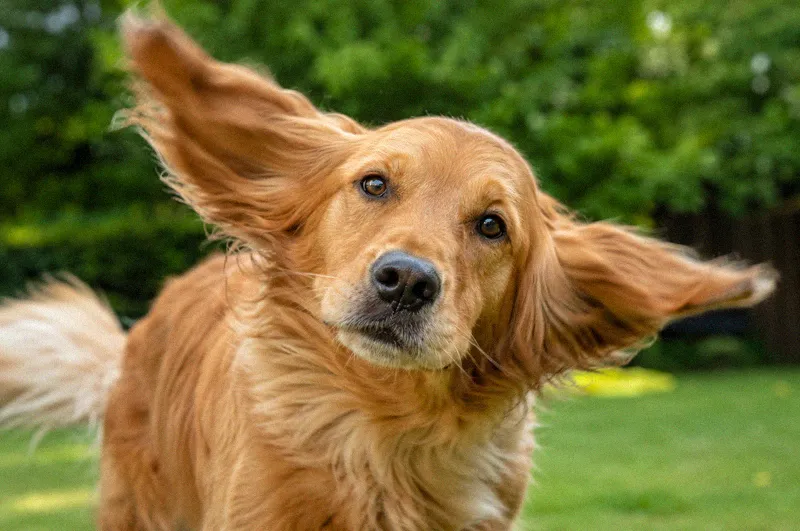
Every dog shakes his head sometimes. It’s how they scratch an itch they can’t reach and shed water after a swim.
The version that should get your attention is the shake that keeps coming back. Repeated head shaking is one of the clearest signals a dog gives, and it almost always points at the ears.
This guide walks through the causes, from the everyday to the serious. You’ll also learn what’s safe to do at home and exactly when a vet needs to take over.
The Occasional Shake vs a Real Problem
A shake or two after waking up, rolling in the grass, or hopping out of the bath is completely normal. That’s basic maintenance, and it stops on its own.
The pattern changes when shaking becomes a theme of the day. A dog that rattles his ears every hour, wakes up to shake, or pairs the shaking with scratching and whining has an irritant that isn’t going away.
Frequency and persistence are your two measuring sticks. One energetic shake means nothing, while a third day of repeated shaking means something specific is bothering that ear.
There’s a structural reason dogs can’t just ignore ear trouble. A dog’s ear canal runs in an L shape, down and then inward, so irritants and moisture settle deep where a paw can’t reach.
Shaking is the only tool your dog has for that deep itch. That’s why the behavior is so consistent, and so worth taking seriously.
Ear Infections Are the Top Cause
If a dog keeps shaking his head, an ear infection is the first suspect every vet checks. Bacteria and yeast both thrive in the warm, humid environment of the canine ear canal.
The supporting evidence is usually easy to spot. Infected ears smell sour or distinctly yeasty, a hallmark of yeast infections in dog ears, and you’ll often see brown, yellow, or black discharge against red, swollen skin.
Touch is another tell. A dog with an infected ear will flinch, yelp, or lean away when you handle that side of his head.
Floppy-eared breeds carry extra risk because those heavy ear flaps trap warmth and moisture. Retrievers, spaniels, hounds, and doodles all see more than their share of ear infections.
Resist the urge to treat blind with leftover drops or pet store remedies. Bacterial and yeast infections need different medications, and the wrong one wastes a week while the ear gets worse.
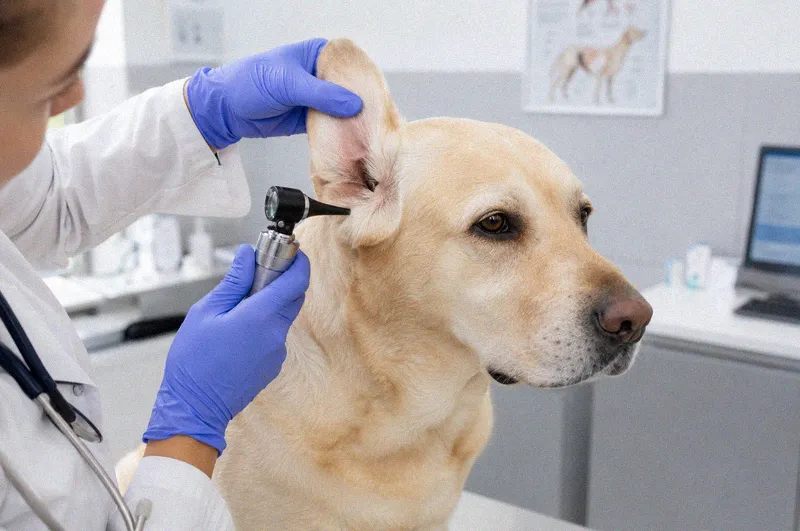
Your vet settles it with a painless swab examined under a microscope. That one step matches the medicine to the actual organism, which is why professionally treated ears clear up so much faster.
Allergies and Itchy Ears
When ear infections keep coming back, allergies are usually pulling the strings. An allergic dog’s immune system inflames the ear canals from the inside, and inflamed canals are where infections start.
Environmental triggers like pollen, mold, and dust mites are common culprits. Food allergies play the same trick in some dogs, with itchy ears as one of the loudest symptoms.
The pattern to watch for is repetition. A dog who gets an ear infection every few months isn’t unlucky, he’s allergic, and each infection is a symptom of the deeper issue.
Allergic dogs usually itch in more places than the ears. Paw licking, face rubbing, and recurring skin problems tend to travel together with allergy-driven ear trouble.
Treating the allergy is what breaks the cycle. Allergy testing, diet trials, and long-term management turn the every-few-months infection into a rare event.
Water in the Ears
A wet ear canal is a head-shaking machine. Water trapped past the bend of that L-shaped canal tickles, and it also soaks the skin into a perfect home for yeast.
Swimmers deal with this constantly. So do dogs whose baths end with a splash of water in each ear.

Prevention is cheap and easy. Tuck a cotton ball loosely at the entrance of each ear before baths, and wipe the visible part of the ear dry afterward.
For dogs who swim regularly, ask your vet about a drying ear rinse. Used after water days, it evaporates the moisture you can’t reach and keeps the canal inhospitable to yeast.
Foreign Objects and Debris
A sudden, frantic burst of head shaking often means something physical just got into the ear. Grass seeds and awns are the classic offenders, especially the barbed foxtail type that works its way deeper with every movement.
The giveaway is the one-sided, all-at-once pattern. Your dog was fine an hour ago, and now he’s shaking hard, tilting toward one side, and pawing at a single ear.
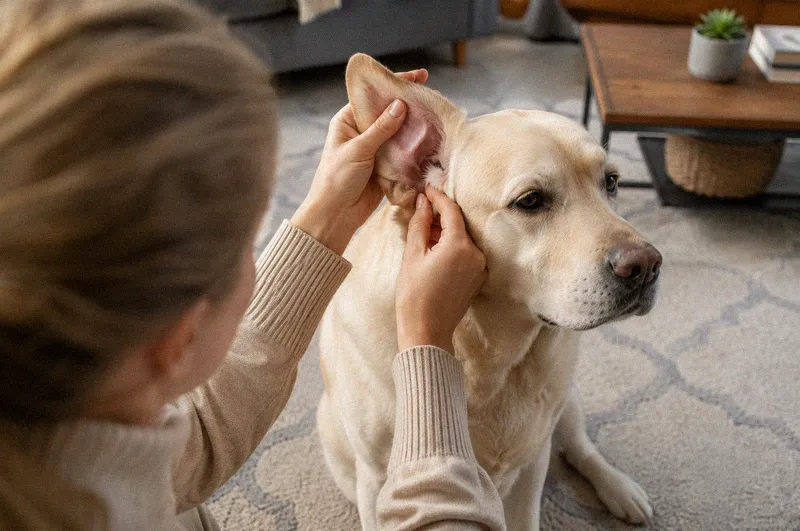
Look inside if your dog will let you, but only at the part you can see. If the object isn’t sitting in plain view at the entrance, don’t go digging after it.
Tweezers and cotton swabs push debris deeper far more often than they retrieve it. A vet with an otoscope can see the whole canal and pull the object in one quick visit, sometimes with light sedation for comfort.
Foxtails deserve special urgency. They don’t dissolve or fall out, and one left in the canal can pierce the eardrum or carry infection deep into the ear.
Ear Mites and Other Parasites
Ear mites cause an itch dogs describe with their whole bodies. The scratching and shaking are intense, constant, and usually paired with a distinctive crumbly discharge that looks like coffee grounds.
Mites are more common in puppies and in dogs from shelters, litters, or multi-pet homes. They spread easily between animals, so a mite diagnosis usually means treating every pet in the house.
The good news is that treatment is simple and effective. Modern vet-prescribed products clear mites quickly, and many monthly parasite preventives stop them from coming back.
Fleas and ticks can drive head shaking too when they bite around the ears and head. It’s one more reason year-round parasite prevention quietly prevents a lot of mystery itching.
When the Ears Look Clean
Some dogs keep shaking even though the ears look spotless. That doesn’t mean nothing is wrong, it means the problem is hiding.
Early infections start deep in the canal, past the bend you can’t see. The visible ear looks fine for days while the deep canal itches, which is why vets trust the otoscope over the naked eye.
Allergy itch works the same way. Inflamed canals feel maddening from the inside long before they produce any discharge you’d notice, and indoor triggers like dust mites keep the itch running year-round.
In senior dogs, persistent head shaking with clean ears earns a closer look. Balance problems, a head tilt, or odd eye movements alongside the shaking can point to vestibular issues that need same-day veterinary attention.
And occasionally, the shake is just a habit that got reinforced. A dog who learned that shaking earns attention will happily repeat the trick, but that diagnosis only comes after the medical causes are ruled out.
The Hematoma Risk: Why You Shouldn’t Wait
Head shaking isn’t just a symptom. Done hard enough for long enough, it becomes its own injury.
Violent shaking ruptures blood vessels inside the ear flap, and the flap inflates with blood into a soft, puffy pillow called an aural hematoma. It’s painful, it usually needs draining or surgery, and untreated it scars the ear into a permanent cauliflower shape.
We cover that condition fully in our guide to swollen ear flaps. The short version is that every day of unchecked shaking is a day of risk to the ear flap itself.
That’s the real argument against waiting a problem out. Solving the itch this week doesn’t just end the discomfort, it protects the ear from the shaking.
What You Can Do at Home
For mild, fresh cases, home care is reasonable. Start with a look and a sniff at both ears so you know what you’re working with.
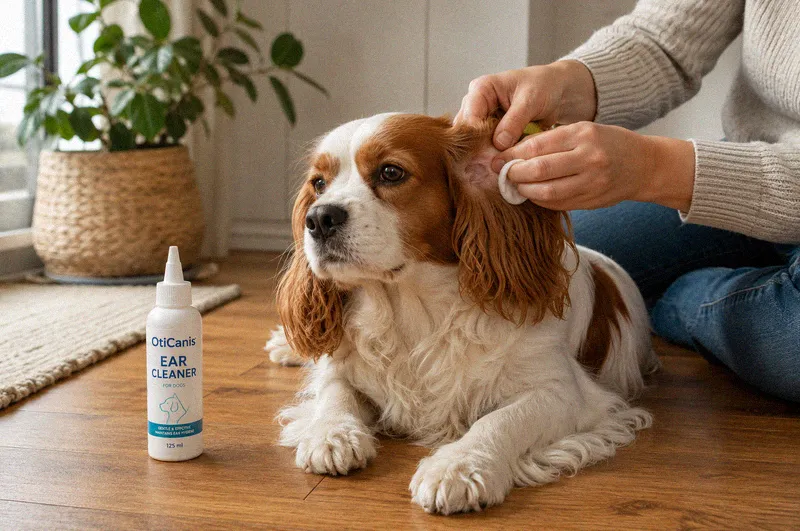
If the ear just looks waxy, clean it with a cleaner made for dogs. Fill the canal as the label directs, massage the base of the ear until it squishes, then stand back and let your dog shake it loose.
Wipe what emerges with a cotton pad on the parts of the ear you can see. Never push anything into the canal itself, including cotton swabs.
Skip the internet remedies while the ear is angry. Vinegar mixes, hydrogen peroxide, and rubbing alcohol all sting inflamed skin, and oils just feed the yeast you’re trying to evict.
Keep ears dry going forward, and manage the allergy side if your dog has one. Regular cleaning plus seasonal allergy care prevents the conditions that ear trouble grows from.
When to See the Vet
Book the appointment when shaking runs past a day or two despite a clean, dry ear. Persistent shaking means the irritant is past where home care can reach.
Go promptly for the louder signs. A foul smell, discharge, redness, pain when touched, or any swelling of the ear flap means infection or hematoma, and both get worse with delay.
Treat balance symptoms as same-day urgent. Head tilt, stumbling, circling, or flicking eye movements alongside the shaking point beyond the ear canal, especially in older dogs.
And mention patterns at every visit. A dog on his third ear infection this year needs an allergy conversation, not just another bottle of drops.
Final Thoughts
A dog that keeps shaking his head is communicating, not misbehaving. The message is almost always about the ears, and the list of causes is mercifully short: infection, allergy, water, mites, or something stuck where it doesn’t belong.
Your job splits cleanly in two. Handle the easy parts at home, keeping ears clean and dry, and hand the persistent cases to a vet before the shaking earns a hematoma on top of the original problem.
Most ear trouble resolves quickly once the actual cause gets named. The dogs who suffer longest are the ones whose shaking got waited out, so let a repeated shake be all the invitation you need.
Frequently Asked Questions
Start with a calm look inside both ears for redness, discharge, odor, or anything stuck. Clean gently with a vet-approved ear cleaner if the ear just looks waxy, and dry the ears after swimming or baths. If the shaking continues past a day or two, or the ear looks angry, book a vet visit rather than guessing at drops.
It's the single most common reason, but not the only one. Allergies, water in the canal, mites, and foreign objects all trigger the same shake. The infection clues are a yeasty or foul smell, discharge, redness, and a dog that flinches when you touch the ear.
Sniff and look. Infected ears smell sour or yeasty and often show brown, yellow, or black discharge on a red, swollen canal. Head shaking, ear scratching, rubbing along furniture, and pain when the ear is handled complete the picture. A vet confirms it with a quick swab under the microscope.
Use a vet-approved canine ear cleaner, let your dog shake it out, and wipe the visible parts with a cotton pad. Never push anything into the canal, and skip home remedies like vinegar or hydrogen peroxide on inflamed skin. Real relief comes from treating the cause, which is why stubborn ears need a vet exam.
Nighttime shaking usually means the irritation never left, you just notice it more in a quiet house. Lying down can also shift fluid or debris in the canal and restart the itch. A dog that repeatedly rattles his ears at night earns the same response as daytime shaking: an ear check, then a vet if it persists.