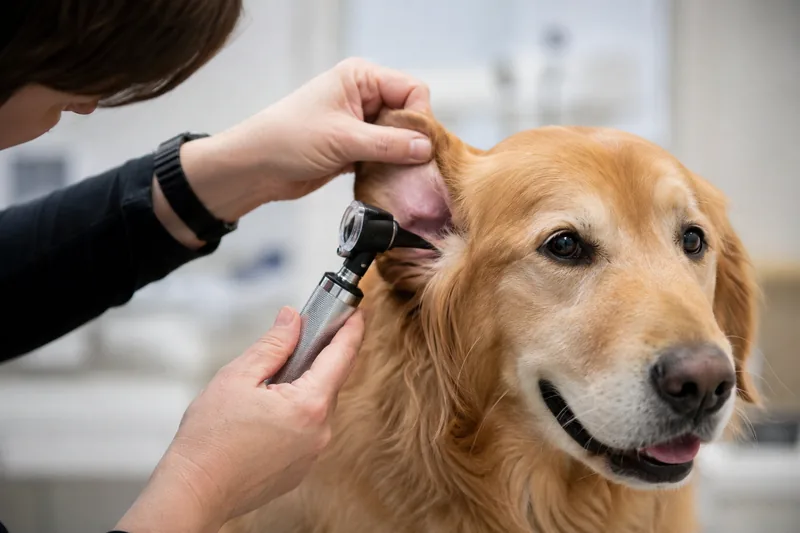
Ear infections are one of the most common reasons dogs end up at the vet, and one of the most likely to come back. For some dogs they are a once-in-a-lifetime nuisance, and for others they become a frustrating, recurring battle.
The reason they repeat so often is that the infection is usually a symptom of something else. Clear the infection without addressing the cause underneath, and it tends to return within weeks.
This guide covers how to recognize an ear infection, what actually triggers it, the yeast and mite culprits behind many cases, and how to break the cycle for good.
This guide is for general education and does not replace veterinary care. Ear problems can damage hearing if mishandled, so have your vet confirm the cause before putting anything into the ear.
Why Dogs Get Ear Infections
A dog’s ear canal is shaped like an L, with a long vertical section that drops down before turning toward the eardrum. That shape traps moisture, wax, and debris far more easily than a human’s straighter canal.
Warm, damp, and dark, the canal is an ideal place for yeast and bacteria to multiply once conditions tip in their favor. This is why an infection can take hold so quickly after a swim or a bath.
Some dogs are simply built for trouble. Floppy-eared breeds like Cocker Spaniels and Basset Hounds, and dogs with hairy or narrow canals, all run a higher risk.
The Warning Signs
The earliest clues are behavioral. Persistent head shaking, scratching at one ear, and rubbing the head along furniture or carpet are the classic opening signs.
Then come the physical signs. Redness, swelling, an unpleasant or yeasty odor, and brown, yellow, or waxy discharge all point to an active infection.
Pain shows up too. A dog may flinch or pull away when you touch the ear, hold the head tilted toward the sore side, or seem unusually grumpy.
Do not wait these out. An untreated outer-ear infection can spread to the middle and inner ear, which is far more serious and can affect balance and hearing.
What Causes Ear Infections
The single biggest driver of chronic ear infections is allergies. Both dog food allergies and environmental allergies inflame the skin lining the ear canal, which sets the stage for yeast and bacteria to overgrow.
Moisture is the other heavyweight. Water trapped after swimming or bathing softens the canal and invites infection, which is why some dogs flare up every summer.
A handful of other triggers round it out. Ear mites, foreign material like grass seeds, excessive hair, hormonal disease, and even the shape of the ear all play a part.
Because ears are skin too, ear trouble often travels with skin trouble. A dog with recurring ear infections frequently has the broader skin problems that signal an allergy underneath.
Yeast Infections
Yeast is behind a large share of canine ear infections. Malassezia, a yeast that normally lives harmlessly on the skin, overgrows when the ear environment changes.
The signature is a musty, sweet odor and a brown, greasy discharge, usually with plenty of itching. It often flares alongside allergies or after moisture gets trapped.
Treatment pairs cleaning with antifungal medication, but the lasting fix is the trigger underneath. Our full guide to yeast infections in dog ears covers the signs, treatment, and how to keep it from circling back.
Ear Mites
Ear mites are a different culprit with a similar itch. These tiny, highly contagious parasites live in the canal and feed on wax and oils.
The telltale sign is dark, dry, crumbly debris that looks like coffee grounds, paired with intense scratching. Mites are far more common in puppies and dogs from shelters or litters.
Because mites spread between pets, every animal in the home usually needs treating at once. Our guide to ear mites in dogs explains how to confirm them and clear them for good.
Head Shaking and What It Means
Occasional head shaking is normal, but frequent or violent shaking is one of the loudest signals of ear trouble. Dogs shake to try to dislodge whatever is irritating the canal.
Persistent shaking deserves a look inside, because it can also cause its own problem. Hard shaking can rupture a blood vessel in the ear flap and create a swollen hematoma that needs veterinary care.
If the shaking won’t stop, our guide to why dogs shake their heads walks through the causes and the point where it becomes urgent.
Cleaning Your Dog’s Ears
Routine cleaning is the single best home habit for ear-prone dogs, when it is done correctly. Done wrong, it can pack debris deeper or irritate an already sore canal.
Use a proper veterinary ear cleaner, never cotton swabs pushed into the canal. Fill, massage the base of the ear, let your dog shake, then wipe what you can reach.
Frequency depends on the dog, and over-cleaning a healthy ear causes its own irritation. Our step-by-step guide to cleaning a dog’s ears shows the safe technique and how often to do it.
How Vets Treat Ear Infections
Treatment starts with a diagnosis, because the cure for yeast does nothing for bacteria or mites. A quick swab under the microscope tells the vet exactly what they are dealing with.
From there the plan is usually a thorough cleaning followed by medicated drops or ointment matched to the organism. Severe or deep infections may also need oral antibiotics or anti-inflammatories.
The most important step is the one owners skip. The vet looks for the underlying cause, because treating the ear without addressing the allergy or moisture problem just resets the clock until the next flare.
Preventing Ear Infections
Prevention comes down to a few steady habits. Dry the ears thoroughly after every swim and bath, since trapped moisture is one of the most avoidable triggers.
Clean on a schedule that fits your individual dog, not a rigid calendar. Ear-prone dogs benefit from regular gentle cleaning, while healthy ears need very little.
Above all, manage the root cause. Since allergies drive most chronic cases, getting the allergy under control with your vet does more than any cleaner to keep the ears quiet.
Home Care: What Helps and What to Avoid
There is a lot you can do at home, and a few things you should never do. Helpful habits include drying the ears after water, gentle cleaning with a proper veterinary ear cleaner, and watching for the early signs.
The avoid list matters just as much. Never push cotton swabs into the canal, which packs debris deeper and risks the eardrum, and skip home remedies like vinegar or hydrogen peroxide on a raw or infected ear.
When something seems off, resist the urge to guess. Putting the wrong product into an ear, or any product into a ruptured one, can turn a simple infection into a lasting problem.
When to See the Vet
Some signs mean it is time to stop home care and book a visit. See the vet for an ear that is painful, swollen, smelly, or discharging, or for head shaking that won’t quit.
Move faster if you notice a head tilt, loss of balance, or any change in hearing. Those can signal that the infection has reached the deeper ear, which needs prompt treatment.
When in doubt, have the ear checked before putting anything in it. Flushing an ear with a possibly ruptured eardrum can do lasting harm.
Sources and Further Reading
These veterinary resources go deeper on canine ear health.
- Ear Infections (Otitis Externa) in Dogs, Merck Veterinary Manual
- Ear Infections in Dogs, VCA Animal Hospitals
- American Veterinary Medical Association (AVMA)
Frequently Asked Questions
The common signs are head shaking, scratching at the ear, redness, swelling, an unpleasant odor, and brown or yellow discharge. Some dogs also tilt the head or seem sensitive when the ear is touched. A vet swab confirms whether yeast, bacteria, or mites are behind it, since the treatments differ.
It usually won't, and waiting often makes it worse and more painful. Ear infections tend to dig in and can spread to the middle and inner ear if ignored. A quick vet visit early is cheaper and kinder than treating a deep, chronic infection later.
Chronic, repeat infections almost always have an underlying driver, most often allergies, followed by trapped moisture, ear anatomy, and hormonal issues. The infection is the symptom, not the root problem. Until the trigger is identified and managed, the infections keep coming back no matter how many times you treat the ear itself.
Treatment starts with a thorough cleaning to clear debris, then medicated drops or ointment matched to the organism, whether yeast or bacteria. Severe cases may need oral medication. Just as important, the vet looks for the underlying cause so the infection doesn't simply return after the medication ends.
Keep the ears dry, especially after swimming or baths, and clean them on a schedule that fits your dog with a proper veterinary ear cleaner. Most importantly, manage any underlying allergies, since they drive the majority of chronic cases. Routine checks help you catch trouble early before it becomes a full infection.