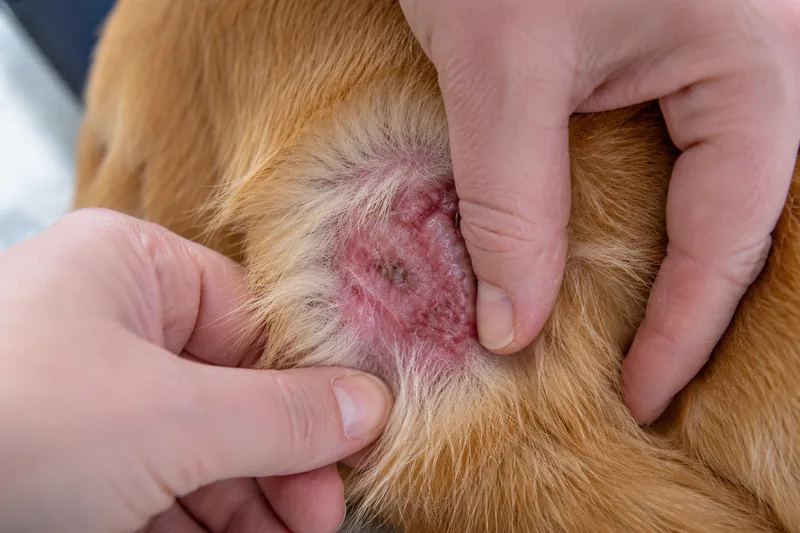
Few skin problems move as fast as a hot spot. A dog can go to sleep with a faint itch and wake up with a raw, oozing patch the size of a coaster.
The medical name is acute moist dermatitis, sometimes called pyotraumatic dermatitis, and both names point at the truth: it’s a wound the dog inflicts on itself. An itch starts it, and the licking, scratching, and chewing turn it into an open sore.
This guide covers what hot spots are, why they erupt so suddenly, how to treat one safely, and how to keep the next one from forming. The fast version is that you have to stop the licking and fix the itch underneath.
What a Hot Spot Actually Is
A hot spot is a localized area of inflamed, infected skin created by self-trauma. The dog licks, scratches, or chews one spot until the surface skin breaks down and bacteria take hold.
It’s a vicious loop more than a single injury. Something itches, the dog works at it, the damaged skin itches and hurts more, and the dog works at it harder.
That self-feeding cycle is why hot spots spread so quickly and rarely heal on their own. The skin never gets a chance to close while the dog keeps reopening it.
What It Looks Like
A classic hot spot is unmistakable once you’ve seen one. It’s a red, raw, moist patch, often oozing or weeping, and it usually looks angry and feels warm to the touch.
The hair over it is typically lost or matted down, and the edges are well-defined against the surrounding fur. Many hot spots ooze a sticky discharge that dries into a crust.
They’re also painful. A dog may flinch, growl, or snap when you touch the area, even a normally gentle dog, so approach a suspected hot spot carefully.
Location offers a clue to the cause. Hot spots near the ears or face often trace to ear or dental problems, those on the rump and tail base point to fleas, and ones on the flanks or feet frequently link to allergies.
The Overnight Explosion
The thing that shocks most owners is the speed. A hot spot can grow from a small red patch to a large, raw lesion in a matter of hours.
That pace comes from the combination of moisture, bacteria, and relentless licking. Warm, damp, broken skin is an ideal environment for bacteria, and a dog can deliver hundreds of licks to one spot while you sleep.
This is exactly why hot spots deserve a fast response. The sooner you interrupt the cycle, the smaller the lesion stays and the quicker it heals.
What Causes Hot Spots
A hot spot is always two things at once: an underlying itch and the self-trauma that follows. Find the itch, and you find the real problem.
Fleas top the list, especially for spots around the tail base. A single flea bite can set off intense itching in a sensitive dog, which is why flea control is central to both treatment and prevention.
Allergies are the other heavyweight. Environmental and food allergies inflame the skin and drive the itching behind many hot spots, and the same triggers fuel the broader seasonal flare-ups that lead dogs to chew at themselves.
Trapped moisture is a frequent culprit too. Water left in a thick coat after swimming or a bath softens the skin and invites bacteria, which is why hot spots spike in warm, humid weather.
A handful of other triggers round it out. Ear infections, anal gland problems, matted fur that traps moisture against the skin, insect bites, and even boredom or anxiety can all start the licking that becomes a hot spot.
Which Dogs Get Them Most
Any dog can develop a hot spot, but some are far more prone. Thick-coated and double-coated breeds like golden retrievers, German shepherds, Saint Bernards, and Newfoundlands lead the pack.
The reason is their coat. Dense fur traps heat and moisture against the skin, creating the warm, damp conditions hot spots love, and it hides early irritation until the sore is well underway.
Allergic dogs of any breed are also high-risk, since their skin is primed to itch. So are dogs who swim often, dogs in humid climates, and dogs with infrequent grooming that lets mats build up.
Hot spots also skew toward warm weather. The combination of heat, humidity, swimming, and allergy season makes summer the classic hot spot season.
How Vets Treat Hot Spots
Vet treatment follows a clear playbook, and it starts with exposure. The fur over and around the hot spot is clipped away, which lets the area dry and lets treatment reach the skin.
Next comes cleaning. The vet cleans the lesion with a gentle antiseptic to remove crust and bacteria, then assesses how deep and infected it is.
Medication depends on severity. Mild hot spots may need only a topical, while larger or deeper ones often call for oral antibiotics, anti-inflammatories or steroids to calm the itch and swelling, and sometimes pain relief.
The cone is non-negotiable. An Elizabethan collar or similar barrier keeps the dog off the spot long enough to heal, and most treatments fail without it because the licking simply resumes.
Finally, the vet hunts for the cause. Treating the sore without addressing the flea problem, allergy, or ear infection underneath just sets up the next hot spot.
Safe Home Care
For a small, mild hot spot caught early, careful home care can help, ideally with a quick vet check to confirm that’s all it is. The steps mirror the clinic’s approach on a smaller scale.
Start by trimming the fur around the area with blunt-nosed scissors or clippers, so air can reach it and it can dry out. Then clean it gently with a vet-approved antiseptic solution and pat it dry.
Keep it dry and keep your dog off it. A cone is the single most useful thing you can do at home, because no topical works while the dog is licking it away.
Apply only a vet-recommended product designed for dogs, and watch closely. If the spot grows, oozes more, smells bad, or your dog seems painful or unwell, stop home care and get to the vet.
What Not to Put on a Hot Spot
The wrong products can stall healing or harm your dog. Skip human ointments like Neosporin unless your vet okays them, since they aren’t made for a constantly licked wound and your dog will swallow them.
Avoid hydrogen peroxide and rubbing alcohol. They sting raw skin and damage the healing tissue, doing more harm than good on an open sore.
Be cautious with thick creams and ointments in general. They can trap moisture and bacteria against the skin, the opposite of the dry environment a hot spot needs to heal.
And never give human medications like Benadryl or pain relievers without veterinary guidance. Dosing is easy to get wrong, and some common human drugs are genuinely dangerous for dogs.
Finding the Underlying Cause
Here’s the part that separates a one-time hot spot from a recurring nightmare. If you only treat the sore, you’re treating a symptom, and the cause will produce another one.
If fleas are the trigger, a consistent flea-control program for every pet in the house is the fix. If allergies are driving it, that’s a longer conversation with your vet about diet trials, environmental management, or medication.
Recurrent hot spots, especially in the same area, are a flag worth chasing. They can point to a stubborn allergy, an ongoing ear problem, or even an underlying joint pain that makes a dog lick one spot, the same pattern behind a lick granuloma.
The behavioral angle matters too. A bored or anxious dog who licks for comfort needs that need met, the same way obsessive paw licking responds to more exercise and enrichment rather than just a topical.
Preventing the Next One
Prevention is mostly about managing the causes you uncovered. Steady, year-round flea control removes the single most common trigger.
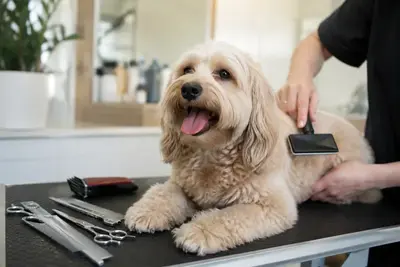
Grooming does a lot of quiet work. Regular brushing prevents the mats that trap moisture, and drying your dog thoroughly after swims and baths denies hot spots the damp skin they need.
Keep up with allergy and ear management if your dog is prone to either. Staying ahead of the itch is far easier than chasing the sore it causes, and it ties into managing your dog’s overall skin health.
For dogs who lick from boredom or stress, a fuller routine helps. More exercise, mental enrichment, and attention reduce the comfort-licking that starts so many hot spots.
When to See the Vet
Some hot spots genuinely need professional care, and it’s better to err toward the visit. Go in if the spot is large, deep, or spreading, if it smells foul or oozes pus, or if your dog is in obvious pain.
Multiple hot spots at once, or a fever and lethargy alongside the sore, signal a deeper infection that needs prescription treatment. Don’t try to manage those at home.
A hot spot that doesn’t start improving within a couple of days of home care also warrants a visit. And recurring hot spots always deserve a vet’s help to find the underlying cause, because the cycle won’t break on its own.
Final Thoughts
Hot spots are dramatic, fast, and genuinely uncomfortable, but they’re also very treatable once you understand the cycle behind them. An itch starts it and the licking finishes it, so healing means interrupting both.
The home version is simple: clip, clean, dry, and cone, with a vet check whenever the spot is large, painful, or stubborn. Skip the human ointments and the peroxide, which slow things down.
The lasting fix lives underneath the sore. Find and manage the flea problem, allergy, or anxiety that lit the fuse, and you stop treating hot spots one at a time and start preventing them for good.
Frequently Asked Questions
Gently clip the fur around it, clean the area with a vet-approved antiseptic, and keep your dog from licking it with a cone. Mild ones may heal with that plus a vet-recommended topical, while larger or infected spots need prescription antibiotics or anti-inflammatories. Treating the underlying itch is what stops it from coming back.
It's better to use a product made for dogs and to check with your vet first. Neosporin isn't designed for the constant licking a dog gives a sore, and a licked wound just reopens while your dog swallows the ointment. A vet-recommended antiseptic or prescribed topical, plus a cone, works far better.
Anything that triggers an itch in one spot. The usual culprits are flea bites, allergies, trapped moisture after swimming or bathing, ear infections, and matted fur. Once the dog licks or scratches that itch, bacteria move in and a small irritation explodes into a raw sore within hours.
No, hot spots can't spread to other dogs or to people. They're a self-inflicted skin infection, not something passed between animals. That said, the things that cause them, like fleas, can spread, so a flea-driven hot spot is a sign to treat every pet in the house.
Rarely, because the itch-lick cycle keeps reopening the wound. Left alone, a hot spot usually grows and gets more infected, not better. The fastest path to healing is to break the licking, clean the area, and treat the cause, which is why most hot spots need at least some hands-on care.