Breathing is one of the most useful health signals a dog gives you, and one of the easiest to overlook until it changes. A shift in how a dog breathes can be the first clue that something is wrong.
The challenge is that respiratory signs cover a huge range. The same dog might have a harmless reverse sneeze one week and a genuine emergency the next, and telling them apart is what matters.
This guide walks through normal versus abnormal breathing, what coughing and sneezing mean, the common causes, and the signs that mean you should not wait.
This guide is for general education and does not replace veterinary care. Breathing trouble can turn serious fast, so when in doubt, treat it as urgent and call your vet.
How Dogs Breathe
A dog’s respiratory system runs from the nose and mouth down the windpipe into the lungs. Along the way it filters air, warms it, and pulls oxygen into the blood while clearing carbon dioxide.
Dogs also breathe to cool down, which is why panting is normal and important. Unlike people, dogs sweat very little, so they rely on rapid, shallow panting to shed heat.
That dual role makes reading a dog’s breathing a little trickier. The trick is knowing what is normal effort and what is a sign of strain.
Normal vs Abnormal Breathing
A healthy dog at rest breathes roughly 15 to 35 times a minute, quietly and with barely visible effort. The best way to know your dog’s normal is to count breaths while it sleeps.
Normal panting after exercise or in warm weather is fast but relaxed, with a loose, open mouth. It should settle within a reasonable time once the dog rests and cools.
Abnormal breathing looks or sounds like work. Exaggerated chest or belly movement, noisy or raspy breaths, a resting rate that stays high, or any color change in the gums all point to a problem.
Coughing
A cough is the airway clearing itself, and an occasional one is normal. Frequent or persistent coughing is not, and the sound often hints at the cause.
The list of causes is long, from kennel cough and other infections to allergies, heart disease, and a collapsing windpipe. A honking cough, a wet cough, and a cough that worsens at night each point in different directions.
Because coughing has so many causes and a few serious ones, it deserves attention when it lingers. Our full guide to coughing in dogs breaks down the types, what each suggests, and when it needs a vet.
Sneezing and Reverse Sneezing
Sneezing clears the nose and is usually harmless, often triggered by dust, pollen, or a tickle. It becomes a concern when it is frequent, violent, or paired with bloody or one-sided discharge.
Reverse sneezing is the odd cousin that scares owners the most. It is a sudden series of snorting inhales that sounds dramatic but is typically harmless and over within a minute.
Knowing which is which saves a lot of worry. Our guide to sneezing in dogs explains normal sneezing, reverse sneezing, and the signs that point to something stuck or infected.
Labored and Fast Breathing
Labored breathing, called dyspnea, is breathing that clearly takes effort. You might see the belly heaving, the elbows pushed out, the neck stretched, or the mouth held open even at rest.
Fast breathing at rest, called tachypnea, is its quieter relative. A sleeping or resting dog should not be breathing rapidly, so a high resting rate is an early warning worth tracking.
Both are different from healthy panting, and both can signal serious problems with the heart or lungs. Sudden or unexplained labored breathing is never something to watch and wait on.
The Common Causes
Most respiratory trouble traces back to a handful of categories. Infections like kennel cough, canine influenza, and pneumonia are common, especially in social or recently boarded dogs.
Allergies are another frequent driver, inflaming the airways and causing coughing and sneezing. The same triggers behind itchy skin can hit the nose and chest, which is why our guide to seasonal allergy treatment overlaps with respiratory care.
Beyond those, heart disease, a collapsing trachea, inhaled foreign objects, and the airway problems of flat-faced breeds round out the list. Each has its own pattern, which is exactly why a vet diagnosis matters.
Respiratory Emergencies
Some breathing signs mean act now, not later. Blue, gray, or pale gums signal that the dog is not getting enough oxygen, which is a true emergency.
Other red flags include open-mouth breathing with the elbows pushed out, a refusal to lie down because it is easier to breathe upright, and any collapse. Constant panting at rest with no heat or exercise to explain it belongs on this list too.
If you see any of these, skip the wait-and-see. Get to an emergency vet, and keep the dog as calm and cool as possible on the way.
How Vets Diagnose It
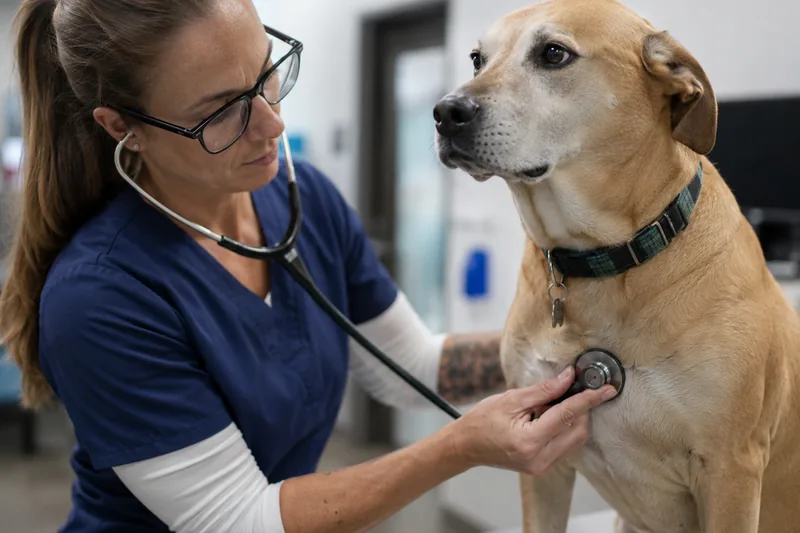
Vets start by watching the dog breathe and listening to the chest with a stethoscope. The pattern, the sound, and the gum color tell an experienced ear a great deal.
From there, imaging does the heavy lifting. Chest X-rays reveal the lungs, heart, and airways, while blood tests and sometimes an echocardiogram fill in the cause.
This step-by-step approach is what separates a simple infection from heart or lung disease. The treatment follows the diagnosis, so pinning down the cause comes first.
When to See the Vet
Mild, brief sneezing or a single cough in a happy dog can be watched at home for a day or two. Most other breathing changes deserve a call sooner rather than later.
Book a visit for a cough lasting more than a few days, frequent sneezing with discharge, or a resting breathing rate that stays high. Move immediately for blue gums, constant labored breathing, or collapse.
When you are unsure how urgent it is, err toward calling. Breathing problems are one area where waiting too long carries real risk.
Sources and Further Reading
These veterinary resources go deeper on canine respiratory health.
- Lung and Airway Disorders of Dogs, Merck Veterinary Manual
- Breathing Problems in Dogs, VCA Animal Hospitals
- American Veterinary Medical Association (AVMA)
Frequently Asked Questions
A healthy dog at rest usually breathes about 15 to 35 times per minute, quietly and with little visible effort. Count the breaths while your dog sleeps for an accurate baseline. A resting rate consistently above 35 to 40, especially with effort, is worth a vet call, since it can be an early sign of heart or lung trouble.
Treat it as an emergency if the gums turn blue, gray, or pale, if your dog breathes with the mouth open and elbows pushed out, or if it can't settle and seems to be struggling for every breath. Collapse, constant panting at rest, and a blue tongue all mean go to an emergency vet immediately rather than waiting.
Coughing has many causes, from kennel cough and other infections to allergies, heart disease, an inhaled object, or a collapsing trachea. The sound and timing offer clues, but coughing that lasts more than a few days, or comes with lethargy or breathing trouble, needs a vet. Our guide to coughing in dogs covers the types and what they mean.
Usually not. Reverse sneezing is a sudden, repeated snorting inhale that sounds alarming but is typically harmless and passes in under a minute. It's common in small and flat-faced breeds. It only needs a vet if it becomes frequent, prolonged, or is paired with nasal discharge or other signs of illness.
Labored or heavy breathing can come from heat and overexertion, but also from serious problems like fluid around the lungs, heart failure, pneumonia, or an airway obstruction. Unlike normal panting, labored breathing looks like work, with exaggerated chest or belly movement. Because the serious causes are dangerous, sudden or unexplained labored breathing is a same-day vet matter.