Some hair on the couch is normal. Bald patches, thinning fur, and bare skin are not, and they are one of the most common reasons dogs end up at the vet.
The tricky part is that hair loss, known medically as alopecia, is a symptom rather than a disease. A dozen different problems can cause it, and they often look nearly identical from the outside.
This guide covers how to tell real hair loss from ordinary shedding, the causes worth knowing, what you can do at home, and the point where it needs a vet.
This guide is for general education and does not replace veterinary care. Hair loss has many causes that look alike, so let your vet pin down the reason before treating.
Shedding vs Real Hair Loss
The first question is whether you are even looking at a problem. Normal shedding is even and all-over, leaving the coat thinner but still covering the skin.
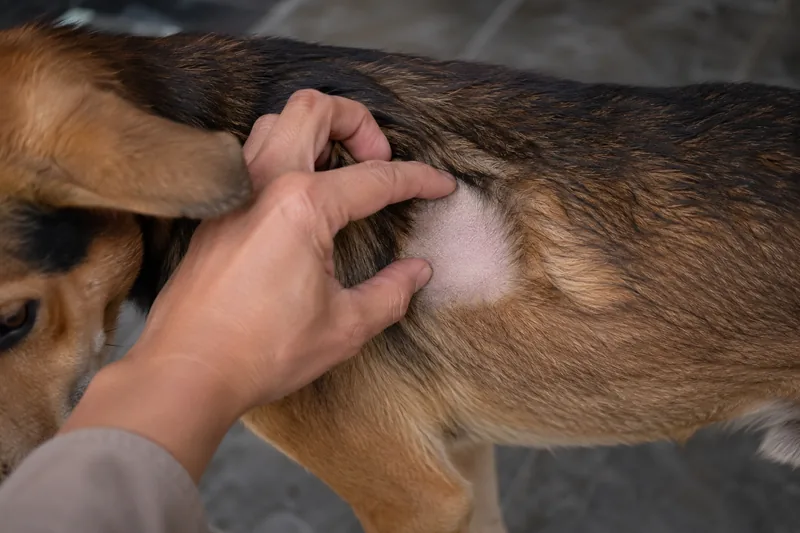
Real hair loss looks different. It tends to come as distinct bald patches, broken hairs, or thinning in specific areas, often with red, scaly, or irritated skin showing through.
Seasonal shedding also follows a rhythm, ramping up in spring and fall. Loss that ignores the calendar, or that bares the skin, is the kind that points to a medical cause.
The Most Common Causes
Hair loss has a long list of culprits, but most cases fall into a few buckets. Parasites, infections, allergies, and hormonal problems account for the large majority.
These causes are part of the broader picture covered in our guide to dog skin problems, since the skin and coat tend to suffer together. The same trigger that inflames the skin often costs the dog its fur.
Because the categories overlap so heavily, the pattern of loss is a clue rather than a diagnosis. Where the hair goes, and what the skin looks like underneath, helps point toward the cause.
Parasites and Infections
Parasites are a leading cause of hair loss, especially when a dog scratches and chews a patch bare. Fleas drive much of it, and the mites behind mange in dogs cause classic patchy loss with crusting and intense itch.
Infections are the other big group. The fungal infection in our ringworm in dogs guide leaves round, scaly bald patches, while the bacterial infection covered in our folliculitis in dogs guide causes circular crusty lesions with fur loss.
Telling these apart takes testing, since they share so many signs. A skin scrape, a fungal culture, or cytology is what separates a mite from a fungus from bacteria.
Allergies and the Skin
Allergies rarely cause hair loss directly. Instead they make a dog itch, and the relentless licking, scratching, and chewing wear the fur away.
Food and environmental allergies are the usual suspects. They tend to hit the paws, belly, face, and rump, leaving thin or bare patches wherever the dog can reach.
Managing the allergy is what regrows the coat. Soothing the skin helps in the meantime, but the hair keeps disappearing until the underlying itch is brought under control.
Hormonal Causes
When hair loss comes without much itching, hormones move up the suspect list. Hypothyroidism is the classic example, often bringing symmetrical thinning, a dull coat, weight gain, and low energy.
Cushing’s disease is another. It tends to cause thinning fur, a pot-bellied look, thin skin, and a noticeable increase in thirst and urination.
These conditions are diagnosed with blood tests and managed with medication rather than shampoo. The upside is that once treated, the coat usually recovers over time.
Stress, Pressure, and Other Causes
A few less common causes round out the picture. Chronic stress and anxiety can drive compulsive licking that thins the fur, much like a nervous habit.
Pressure sores are another. Dogs that lie on hard floors often lose hair over the elbows and hips, where constant pressure wears the coat down.
Poor nutrition and certain breed-related conditions also show up in the coat. A diet short on quality protein and fat leaves hair dull, brittle, and prone to falling out.
Hair Loss by Location
Where the hair goes offers a clue to why. Loss around the ears, face, and rump often points to parasites or allergies, the areas dogs scratch and chew most.
Symmetrical loss on both flanks, with calm skin underneath, leans toward a hormonal cause. Patchy, scattered bald spots with scaly skin suggest an infection like ringworm or folliculitis.
Loss over the elbows and hips usually comes from lying on hard surfaces. No single pattern is proof on its own, but together with the skin’s condition it helps narrow the search.
What You Can Do at Home
Home care supports treatment, but it works best alongside a diagnosis rather than instead of one. Year-round flea control removes one of the most common and avoidable causes.
A quality diet does quiet work for the coat. Protein and omega-3 fatty acids support the skin barrier, and gentle grooming spreads natural oils and lets you spot new patches early.
Targeted baths help too. The picks in our dog shampoo for hair loss guide soothe the skin and support regrowth, though bald patches still deserve a vet’s eye.
How Vets Diagnose It
Because the causes overlap, vets lean on simple tests rather than the look alone. A skin scrape finds mites, a fungal culture catches ringworm, and cytology spots bacteria and yeast.
When the skin is calm but the coat is thinning, blood work enters the picture. Thyroid panels and hormone tests uncover the internal causes that no shampoo can fix.
This step-by-step approach is what prevents wasted weeks. Pinning down the cause is what makes the treatment actually work.
When to See the Vet
Some hair loss can wait a few days, but much of it should not. Book a visit for patchy or spreading loss, bare skin, or any sign of red, scaly, smelly, or sore skin underneath.
Move sooner if your dog is itchy and miserable, or if the loss comes with weight gain, low energy, or increased thirst. Those clues point toward hormonal disease that needs testing.
When you are unsure, an exam beats waiting. The earlier the cause is found, the faster and more completely the coat grows back.
Final Thoughts
Hair loss is a symptom with many possible stories behind it, from a simple flea problem to a hormonal condition. The bald patch is a clue, and the goal is to read it correctly rather than just cover it up.
Pair sharp observation at home with your vet’s testing, and most causes turn out to be very manageable. Treat the reason rather than the symptom, and the coat almost always follows.
Frequently Asked Questions
The most common causes are parasites like fleas and mange, infections such as ringworm or bacterial folliculitis, allergies, and hormonal problems like hypothyroidism. Stress, pressure sores, and poor nutrition can play a role too. Because the causes overlap and look similar, a vet exam and a few simple tests are usually needed to find the real reason.
Shedding is even, all-over, and seasonal, leaving the coat thinner but intact. True hair loss tends to show as distinct bald patches, broken hairs, or thinning in specific spots, often with red, scaly, or irritated skin underneath. If you see bare skin, sores, or patchy loss, that points to a medical cause rather than normal shedding.
Usually yes, once the underlying cause is treated, though regrowth can take weeks to months. Hair returns fastest when the problem is caught early and the skin hasn't been permanently scarred. Some hormonal and breed-related conditions cause longer-lasting or recurring loss, which your vet can help you manage.
Home care supports treatment but doesn't replace a diagnosis. Year-round flea control, a quality diet with omega-3 fatty acids, gentle medicated baths, and regular brushing all help the skin and coat. The most important step is finding the cause with your vet, since the wrong remedy just delays real relief.
See a vet if the hair loss is patchy, spreading, or paired with red, scaly, smelly, or sore skin, or if your dog is itchy or unwell. Sudden or symmetrical loss, and loss with weight gain or low energy, can point to hormonal disease. When in doubt, an exam is the fastest way to a real answer.