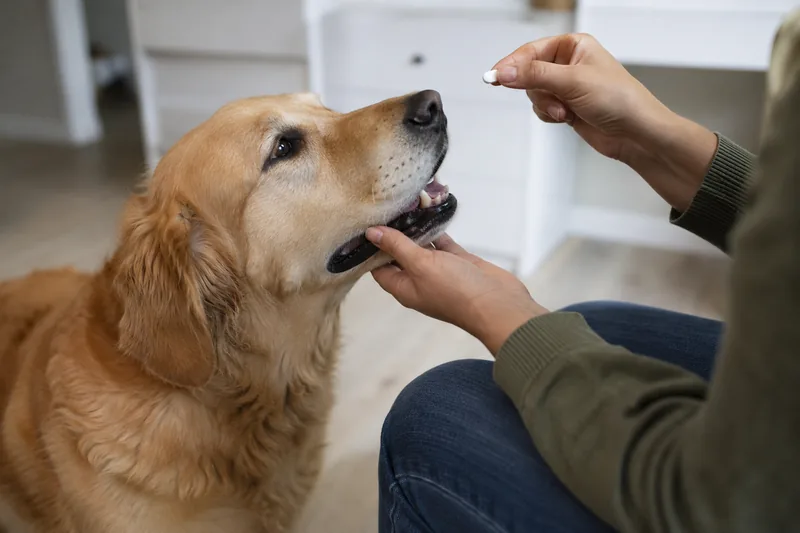
Worms are one of the most common parasites in dogs, and one of the easiest to overlook because they work out of sight. By the time signs appear, the worms have usually been at work for a while.
The reassuring news is that intestinal worms are very treatable and largely preventable. A simple test finds them, the right medication clears them, and routine prevention keeps them away.
This guide covers the main types of worms, the signs to watch for, how dogs catch them, and how treatment and prevention work.
This guide is for general education and does not replace veterinary care. A fecal test is the reliable way to identify worms and choose the right dewormer.
What Intestinal Worms Are
Intestinal worms are internal parasites that live in a dog’s digestive tract and feed off it. They rob the dog of nutrients and can damage the gut lining as they go.
They are part of the broader world of dog parasites, but unlike fleas and ticks, they hide inside the body. That is exactly why they are so easy to miss without testing.
Some are common enough that nearly every puppy needs deworming. Catching and clearing them early prevents the bigger problems they cause over time.
The Main Types of Worms
Four intestinal worms account for most cases. Roundworms are the most common, especially in puppies, and look like spaghetti in stool or vomit.
Hookworms and whipworms are smaller and live by feeding on blood and tissue in the gut, sometimes causing significant anemia. Hookworm larvae can even penetrate a dog’s skin.
Tapeworms are the flat, segmented worms whose pieces look like grains of rice near the tail or in the stool. Dogs usually get them by swallowing an infected flea.
Signs Your Dog Has Worms
Worms cause a recognizable set of signs, though some dogs show none at all. Diarrhea, sometimes bloody, and weight loss despite a normal appetite are common.
Other clues include a dull coat, vomiting, a pot-bellied look especially in puppies, and scooting. You may also spot the worms themselves, spaghetti-like in stool or rice-like segments near the rear.
Because the signs overlap with other digestive problems, they are a prompt to test rather than a diagnosis. A fecal exam confirms what is actually present.
How Dogs Catch Worms
Dogs pick up worms with surprising ease. Puppies often get roundworms from their mother, before birth or through nursing, which is why deworming starts so young.
Adult dogs swallow eggs from contaminated soil, grass, or stool while sniffing and exploring. Hookworm larvae can burrow through the skin, and tapeworms ride in on swallowed fleas or prey.
This easy exposure is the whole argument for routine prevention. A dog does not have to do anything unusual to be at risk.
Can People Catch Them?
Some dog worms are zoonotic, meaning they can infect people. Roundworms and hookworms are the main concern, particularly for children who play in contaminated soil.
The risk comes from contact with infected stool or soil, not from normal petting. Prompt cleanup, hand-washing, and keeping your dog dewormed all sharply reduce it.
This shared risk is one more reason to stay on top of worms. Protecting your dog protects the whole household.
How Worms Are Treated
Treatment is effective and targeted. A fecal test identifies the worm, and your vet prescribes a dewormer matched to it, since no single product covers every type.
Often a second dose follows weeks later to catch worms that were too young to be affected the first time. Puppies usually follow a series of dewormings on a set schedule.
The key is to let the test guide the medication. Guessing with an over-the-counter product often misses the actual worm and wastes time.
Preventing Worms
Prevention is mostly built into good routine care. Many monthly heartworm preventives also control common intestinal worms, doing double duty.
Add a few habits and the gaps close. Pick up stool promptly, keep up flea control to block tapeworms, and stay current on tick prevention and routine fecal tests.
For puppies, follow your vet’s deworming schedule closely. They are the most commonly affected and benefit most from early, consistent treatment.
When to See the Vet
Any suspected worms warrant a vet visit, since identifying the type is what makes treatment work. Book a visit for visible worms, persistent diarrhea or weight loss, or a pot-bellied, unthrifty puppy.
Go sooner if you see blood in the stool, significant weight loss, or weakness, which can signal a heavy infestation or anemia. Puppies in particular can be hit hard and need prompt care.
Routine fecal testing is the easy preventive version of all this. It catches worms before they cause symptoms at all.
Final Thoughts
Intestinal worms are common, sneaky, and easy to underestimate, but they are also very manageable. A test finds them, the right dewormer clears them, and prevention keeps them gone.
Stay current on prevention, test routinely, and act on the signs when they appear. Handle worms that way and they become a minor, controlled footnote rather than a real threat to your dog’s health.
Frequently Asked Questions
Common signs include diarrhea (sometimes with blood), weight loss despite a normal appetite, a dull coat, vomiting, a pot-bellied appearance especially in puppies, and scooting. You may see spaghetti-like roundworms in vomit or stool, or rice-like tapeworm segments near the tail. Some dogs show no signs at all, which is why fecal testing matters.
Dogs catch worms several ways: puppies often get roundworms from their mother before or after birth, dogs swallow eggs from contaminated soil or stool, hookworm larvae can penetrate the skin, and tapeworms come from swallowing infected fleas or prey. Because exposure is so easy, routine fecal testing and prevention are the practical defense.
Some dog worms are zoonotic, meaning they can infect people. Roundworms and hookworms are the main concern, especially for children, through contact with contaminated soil or stool. Good hygiene, prompt poop pickup, regular deworming, and hand-washing greatly reduce the risk, which is another reason to keep your dog parasite-free.
Worms are treated with vet-prescribed deworming medication matched to the type of worm, since no single product covers them all. Your vet uses a fecal test to identify the worm and may repeat treatment to catch newly hatched ones. Avoid guessing with over-the-counter products, since the wrong dewormer simply won't work on the worm your dog has.
Many monthly heartworm preventives also control common intestinal worms, making year-round prevention the easiest defense. Add routine fecal tests, prompt cleanup of stool, flea control to prevent tapeworms, and hand-washing. Puppies need an early deworming schedule from your vet, since they're the most commonly affected.