Some dog problems start small and stay small. A lick granuloma is the opposite, a tiny irritation a dog can slowly turn into a deep, stubborn wound through nothing but persistence.
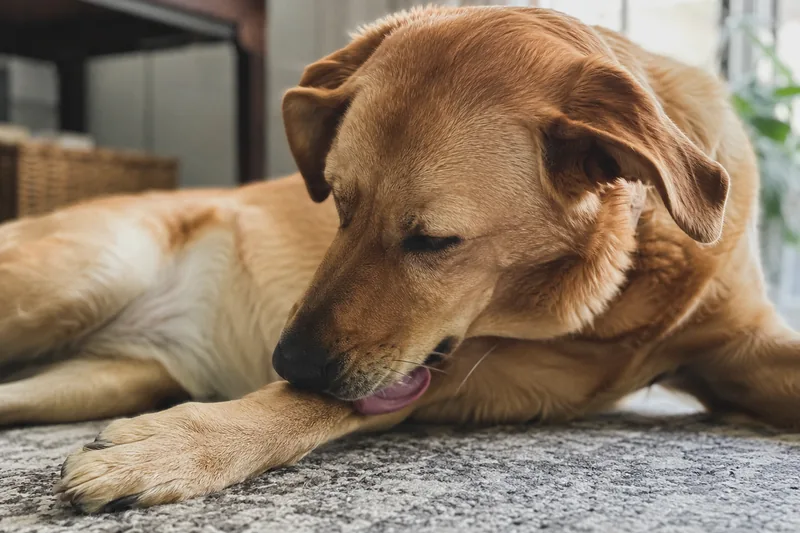
The medical name is acral lick dermatitis, and the “acral” part means it shows up on the extremities, almost always a lower leg or the top of a paw. The dog licks one spot until it becomes a problem all its own.
This guide explains why the licking starts, why it’s so hard to stop, and what actually heals one of these sores. Fair warning up front: patience is the main ingredient.
What a Lick Granuloma Is
A lick granuloma is a firm, raised, hairless sore created by chronic licking of a single spot. The constant moisture and friction inflame the skin, and over time the tissue thickens into a raw, ulcerated plaque.
The word granuloma refers to the mass of inflammatory tissue that builds up. It isn’t a tumor and it isn’t cancer, though it can look alarming enough to make an owner fear both.
What makes it different from an ordinary scrape is the engine behind it. An ordinary wound heals once you leave it alone, but a lick granuloma exists precisely because the dog won’t.
What It Looks Like
The classic lick granuloma sits on the front of a lower leg, the wrist, or the top of a paw, somewhere a dog can comfortably reach while resting. Most dogs pick one favorite spot and work it relentlessly.
The lesion itself is raised and firm, with a hairless center that’s often red, raw, and weepy or ulcerated. The skin around it usually looks thickened and darker than normal from the chronic trauma.
The surrounding fur is frequently stained a rusty brown. That tint comes from porphyrins in saliva, and it’s a telltale sign of how much licking has been going on, even if you’ve never caught your dog in the act.
Because a few skin tumors and fungal lesions can mimic this look, the appearance alone isn’t a diagnosis. That resemblance is one reason a vet visit isn’t optional.
The Self-Feeding Cycle
The hardest thing to understand about lick granulomas is why they persist. The answer is a feedback loop the dog gets trapped inside.
It begins with a sensation, an itch, a twinge of pain, or simple boredom. The dog licks the spot, and the licking brings momentary relief.
But licking damages the skin, which triggers inflammation, which produces more itch and irritation. That fresh discomfort prompts more licking, and the loop tightens.
There’s a behavioral hook too. Licking releases endorphins, so the act becomes genuinely soothing, and the dog returns to it the way an anxious person returns to a nervous habit.
Eventually the original cause barely matters. The licking has become self-sustaining, which is why simply treating the skin almost never works on its own.
That’s the practical lesson behind every treatment plan that follows. You have to break the loop at more than one point.
Physical Causes
Plenty of lick granulomas begin with a real, physical reason to lick, and finding it is half the battle. Allergies top the list, because allergic skin is itchy skin, and a dog with skin problems often zeroes in on one reachable spot.
Both food allergies and environmental allergies can set the stage. So can the seasonal flare-ups covered in our guide to seasonal allergies, where pollen turns a calm dog into a licker for months at a stretch.
Pain is the other big physical driver, and it’s easy to miss. Arthritis in the wrist or elbow, an old injury, or nerve pain can make a dog lick the skin over the sore joint, which is why so many granulomas sit right over a joint.
A short list of other physical triggers rounds it out. A healing wound, an embedded foreign object like a grass seed, a skin infection, or even mites can all start the licking that a granuloma finishes.
Psychological Causes
When the vet finds no physical cause, the trigger is often in the dog’s head, and that’s a real diagnosis, not a shrug. Boredom, anxiety, and stress are well-documented causes of compulsive licking.
Dogs left alone for long stretches, under-exercised, or short on mental stimulation may lick the way a bored person bites their nails. The behavior fills empty time and, thanks to those endorphins, feels good.
Major life changes can trigger it too. A move, a new baby or pet, a change in schedule, or separation anxiety can all surface as a fixation on one patch of skin.
This is the same impulse-control wiring behind a lot of obsessive paw licking. The granuloma is just what happens when that habit lands on one spot and never moves.
Crucially, physical and psychological causes overlap constantly. A dog may start licking over an arthritic joint, then keep going out of habit and stress long after, so the best plans address both possibilities at once.
Which Dogs Are Most at Risk
Lick granulomas can appear in any dog, but some patterns stand out. Large, short-coated breeds are over-represented, including Labradors, Dobermans, Great Danes, German shepherds, golden retrievers, and boxers.
Middle-aged and older dogs develop them more often than puppies. That tracks with the causes, since arthritis, accumulated allergies, and entrenched anxiety all take years to build.
Active, intelligent dogs that need a job are especially prone to the boredom-driven version. A working breed with too little to do will sometimes invent the work of licking.
None of these factors are destiny. They simply tell you which dogs deserve a closer look at the first sign of fixated licking.
How Vets Diagnose It
A lick granuloma is usually recognizable on sight, but the visit is about more than naming it. The real job is finding the cause and ruling out lookalikes.
Expect the vet to take a history and examine the lesion, then likely run a few tests. Skin cytology or a swab checks for the bacterial or yeast infection that almost always colonizes these sores.
Because the lesion can resemble a tumor or a deep fungal infection, a stubborn or unusual one may get a biopsy. X-rays of the underlying joint are common too, since they reveal the arthritis or old injury that started the licking.
Allergy workups and food trials often follow when nothing physical turns up locally. It can feel like a lot, but each test removes a possible cause, and the cause is what makes or breaks the treatment.
Treating the Wound
Healing the sore itself is the more straightforward track, though even this takes time. The skin is almost always infected, and the infection runs deep into the tissue.
That means long antibiotic courses, often six to twelve weeks, far longer than a typical skin infection. Stopping early is a classic reason these sores relapse.
Anti-inflammatory medications help calm the itch and swelling, and topical treatments may be layered on to ease discomfort and discourage licking. Some vets use bandaging or laser therapy to support healing.
Then there’s physical protection, the unglamorous cornerstone. An Elizabethan collar, a bandage, or a protective sleeve keeps the tongue off the spot long enough for skin to actually close, and most plans fail without it.
Treating the Cause
This is the part owners are tempted to skip, and skipping it is why lick granulomas earn their stubborn reputation. Heal the wound without addressing the driver, and the dog simply starts again.
If allergies are the root, the plan shifts to long-term allergy management, whether that’s a diet trial, environmental control, or medication. If pain is the culprit, treating the arthritis or injury removes the reason to lick.
When the cause is behavioral, the prescription looks different. More exercise, puzzle feeders, training, enrichment, and a more predictable routine all reduce the anxiety and boredom feeding the habit.
For severe compulsive cases, vets sometimes prescribe anti-anxiety or anti-compulsive medication. These can quiet the urge enough for the other treatments to work, and they’re a legitimate tool, not a last resort to feel guilty about.
Why Home Remedies Fall Short
It’s tempting to treat a lick granuloma like a minor wound with a drugstore fix. The trouble is that almost everything about this sore defeats that approach.
Topical drying agents and home antiseptics don’t reach the deep infection and only irritate raw, inflamed skin. Bitter anti-lick sprays rarely deter a truly compulsive dog and do nothing for the cause.
The deeper problem is time. Every week spent on home remedies is a week the granuloma grows deeper, more infected, and more scarred, which makes the eventual real treatment harder and longer.
There’s also the lookalike risk. Treating a presumed granuloma at home means you might be ignoring a tumor or a deep fungal infection that needed a very different response.
The Honest Prognosis
Here’s the truth most owners want and few sites state plainly: lick granulomas are treatable but notoriously persistent. Many improve dramatically, and some resolve completely, but relapses are common.
The single biggest factor in the outcome is whether the underlying cause gets found and managed. Dogs whose allergy, pain, or anxiety is controlled do far better than dogs who only get the wound treated.
Timing matters almost as much. A granuloma caught early, before deep scar tissue forms, has a much better shot at full healing and hair regrowth than one that’s been worked for a year.
Set expectations for a marathon, not a sprint. Treatment often runs for months, and some dogs need lifelong management of the root cause to stay clear, which is a manageable reality once you know it’s coming.
Preventing a Relapse
Preventing the next granuloma is really about managing the cause you uncovered. If allergies drive it, staying ahead of flares with your vet’s plan is the front line.
For the behavioral cases, a fuller life is the prescription. Adequate exercise, mental enrichment, and a stable routine keep an anxious or bored dog from drifting back to the spot.
Catch early licking fast. The moment you notice your dog fixating on one patch of leg again, intervene with a recheck before a small irritation becomes another deep sore.
Keep up whatever maintenance the vet set, including joint support for arthritic dogs and any long-term allergy or anxiety management. The habit is always waiting, and steady management is what keeps it idle.
Final Thoughts
A lick granuloma is a small problem that a dog turns into a large one, and reversing that takes a plan as patient as the licking that caused it. The sore on the surface is only ever half the story.
The dogs that heal are the ones whose owners chase the why, not just the wound. Find the itch, the ache, or the anxiety underneath, and you take away the reason the cycle keeps restarting.
If your dog has started working away at one spot, treat it as a real signal and call your vet early. These sores are far easier to beat before they’ve had months to dig in.
Frequently Asked Questions
Treatment runs on two tracks at once: heal the sore and stop the licking. Vets clear the infection with long courses of antibiotics, block access with an e-collar or bandage, and hunt down the underlying cause, whether that's allergy, pain, or anxiety. Skipping the cause is why these sores come back.
Most dogs improve a lot with committed treatment, but honesty matters: lick granulomas are famous for being stubborn and prone to relapse. The dogs that do best are the ones whose underlying cause gets found and managed. Caught early, before deep scar tissue forms, the odds are much better.
Often it does once the sore fully heals and the licking stops, though it can take months. In long-standing cases the skin scars and thickens enough that hair never fully returns to that patch. The earlier the cycle is broken, the more likely a normal coat comes back.
You don't, not on your own. These sores are infected, inflamed, and driven by a deeper cause, so home drying agents just irritate raw skin and waste time. The real fix is a vet plan, because an untreated granuloma only gets deeper and harder to heal.
No, but they can look alike, which is exactly why a vet check matters. A lick granuloma is inflammatory scar tissue from chronic licking, not cancer. Because a few skin tumors mimic that raised, hairless look, vets sometimes biopsy a stubborn lesion to rule cancer out.