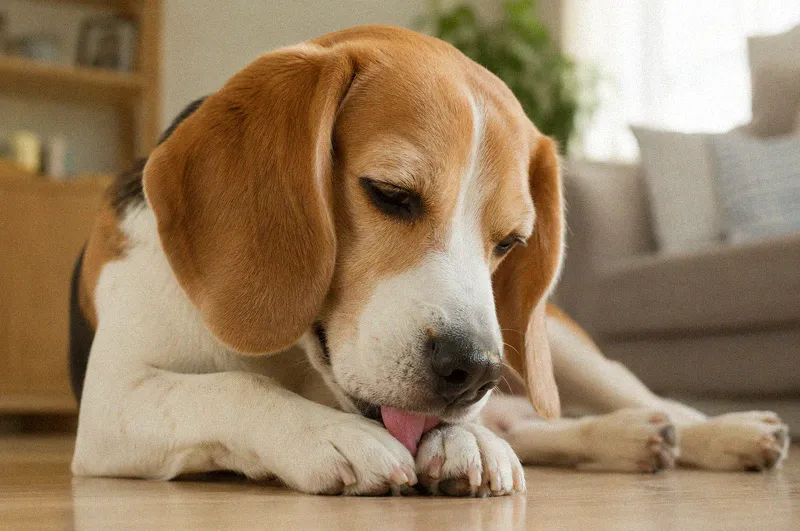
Dogs lick their paws the way we wash our hands. A little of it is hygiene, and nobody should worry about it.
The problem version sounds different. It’s the wet, rhythmic licking that starts every time your dog settles down, goes on for minutes, and returns to the same paw again and again.
That kind of licking is your dog treating a problem himself. This guide covers what that problem usually is, how to narrow it down at home, and what finally makes the licking stop.
Normal Grooming vs Problem Licking
A few licks after a walk, a quick clean after stepping in something, a brief session during wind-down: all normal. Paws collect the day, and dogs tidy them up.
Problem licking has volume and a schedule. It happens daily, lasts long enough to soak the fur, and often focuses on one or two favorite paws.
The paws themselves keep score. Rusty brown staining on light fur, redness between the toes, thinning fur, or skin that looks wet and angry all say the licking has crossed the line.
One-sided licking is its own clue. A dog who suddenly can’t leave a single paw alone usually has something physical going on in that exact paw.
Trust the pattern more than any single session. A week of repeated licking is a message, and the rest of this guide is about decoding it.
Allergies: The Number One Culprit
Ask any vet what drives most chronic paw licking and you’ll get one word: allergies. Paws are where canine allergies love to show themselves.
The logic is simple contact. Paws touch grass, pollen, mold, and lawn chemicals on every walk, and in allergic dogs that contact lights up the skin.
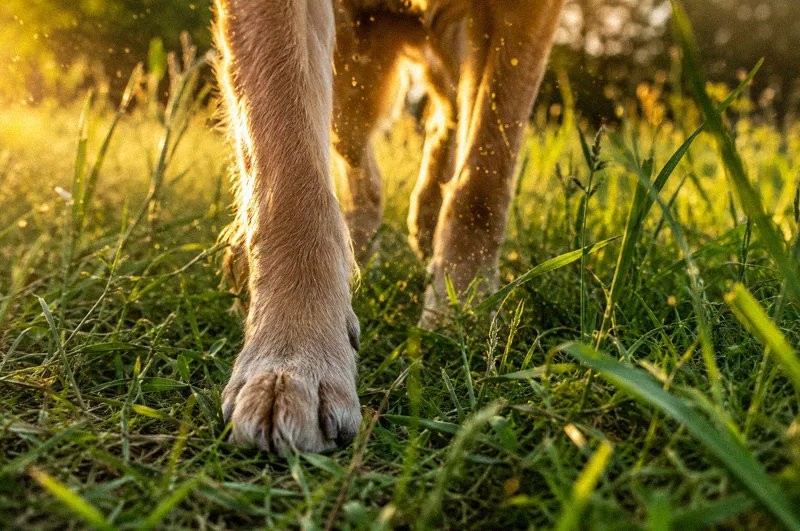
Food allergies pull the same trigger from the inside. Beef, chicken, dairy, and egg are the usual suspects, and itchy paws are one of the loudest symptoms in our guide to dog food allergies.
Allergic paw licking rarely travels alone. Look for the supporting cast: face rubbing, ear trouble, belly redness, and the general pattern of recurring skin problems.
Season is another tell. Licking that surges in spring and fall points environmental, while licking that never takes a day off points at the food bowl or indoor allergens.
The fix is allergy management rather than a single cure. Paw rinses after walks, vet-guided antihistamines or anti-itch medication, and elimination diets for food cases each carry part of the load.
Pain, Injuries, and Things Stuck in the Paw
Before assuming allergies, inspect the paw. A surprising share of sudden, one-paw licking has a simple physical cause sitting right there.
Spread the toes gently and look between every pair. Burrs, thorns, grass seeds, pebbles, and clumps of matted fur all hide in there, and foxtail seeds can even pierce the skin and keep migrating.
Check the pads and nails while you’re in there. Cracked pads, small cuts, torn or overlong nails, and blisters from hot pavement all produce dedicated licking.
Winter adds its own irritants. Road salt and ice-melt chemicals burn paw skin, and snow packs into painful ice balls between the toes.
Anything you can’t easily remove, or any wound deeper than a scratch, goes to the vet. Embedded foxtails especially, since they don’t come out on their own.
Yeast and Bacterial Infections
Sometimes the licking causes its own next problem. Constantly wet paws become the perfect greenhouse for yeast and bacteria, which itch worse than whatever started the licking.
Yeast announces itself with a smell most owners compare to corn chips. Add rusty staining, greasy brown buildup in the nail folds, and skin that darkens over time.
Bacterial infections look angrier. Think red, swollen toes, pimples or crusts, and sometimes a limp when the infection bites deeper.
Both infections are diagnosable in minutes at a vet clinic. A quick tape or swab sample under the microscope tells the vet exactly which organism it is, and the right medicated shampoo, wipes, or oral medication follows.
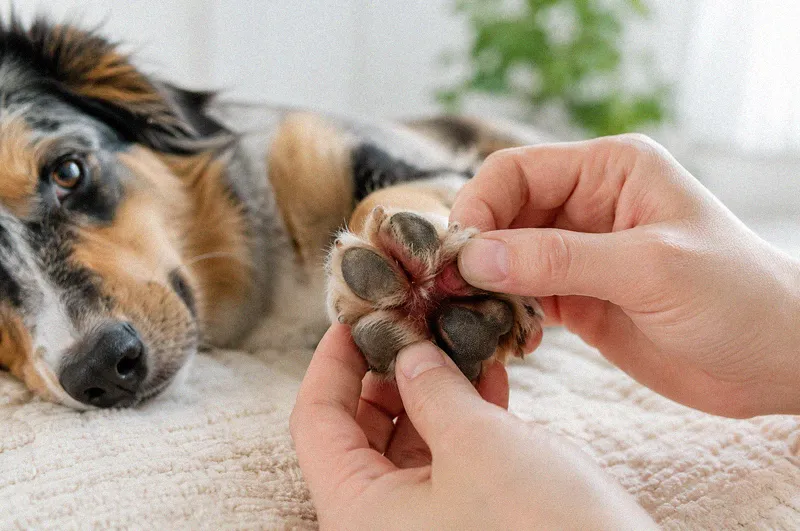
Skip the guesswork phase where weeks go by on random sprays. Infections that get the correct treatment early clear fast, and the ones that don’t turn into chronic conditions like folliculitis.
Fleas, Ticks, and Mites
Parasites earn a quick check on every itchy dog. A single flea bite can keep an allergic dog licking and chewing for days.
Look where fleas like to hide: the belly, groin, and tail base. Black pepper-like flea dirt in the coat counts as evidence even if you never spot a live flea.
Ticks occasionally set up between toes, where they’re easy to miss and very lickable. Mites are invisible to you but show up on a vet’s skin scrape.
The fix here is mostly prevention. Year-round flea and tick protection removes a whole category of mystery itch, which is exactly why vets push it even for indoor dogs.
Arthritis and Joint Pain
Not all paw licking is about skin. Dogs lick the skin over a painful joint, and the wrist sits right where a front paw gets licked.
This is the pattern to suspect in seniors and big breeds. The licking targets one leg, often near a joint, and pairs with stiffness after rest, slower stairs, or hesitation on jumps.
Licking soothes pain the way rubbing a sore shoulder works for us. It also releases endorphins, so the habit reinforces itself.
A vet exam sorts this out quickly with some flexing, feeling, and possibly an X-ray. Managed arthritis, through weight control, joint supplements, and pain medication where needed, takes the reason for the licking away.
Boredom, Stress, and Habit Licking
When the body checks out fine, the mind is the next stop. Under-stimulated and anxious dogs discover that licking passes time and feels calming, and a habit is born.
The risk is that habit licking escalates. Enough repetition on one spot creates a lick granuloma, a thickened, ulcerated patch that becomes its own stubborn medical problem.
Look at the dog’s day for the diagnosis. Long stretches alone, little exercise, and licking that starts the moment the house goes quiet all point behavioral.
The treatment is a fuller life rather than a bitter spray. More walks, food puzzles, scent games, training sessions, and chew outlets give the mouth and mind better employment.
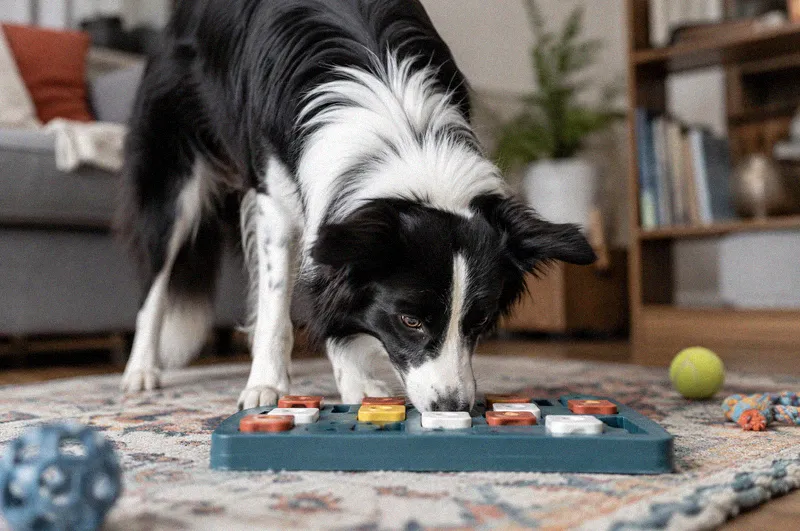
Anxious lickers may need more targeted help. Separation anxiety and noise stress respond to behavior plans, and your vet can help build one.
One caution before settling on this diagnosis: boredom is the conclusion you reach last. Medical causes get ruled out first, because a bored-looking licker with an itchy disease will keep licking through every puzzle toy you buy.
Why Paw Licking Gets Worse at Night
Plenty of owners only notice the licking at bedtime. The quiet house turns a background habit into the loudest sound in the room.
There are real reasons night is worse, though. The day’s allergens are still sitting on the paws at bedtime, which is why an evening rinse helps allergic dogs sleep.
Pain also speaks up at rest. Joints stiffen when the body settles, and a dog with nothing else to focus on notices every ache he outran during the day.
Boredom peaks at night too, especially for under-exercised dogs. If the licking stops the moment something interesting happens, you’ve learned something useful about the cause.
How to Stop the Licking
Start with the two-minute paw exam: toes spread, pads checked, nails inspected, smell test included. Anything visible gets addressed first.
Make paw rinses routine if allergies are in the picture. A quick rinse or wipe-down after every walk strips off pollen and chemicals before they soak in, and thorough drying between the toes denies yeast its favorite habitat.
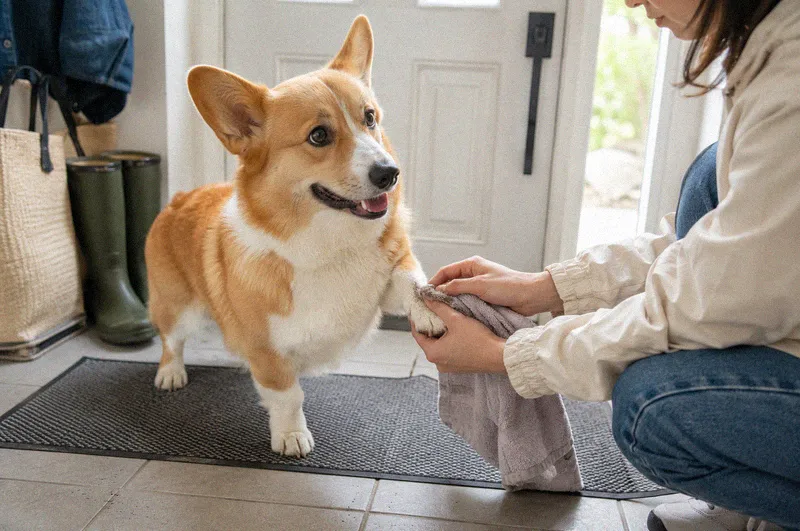
Keep the paw hardware maintained. Trimmed nails, tidy fur between pads, and booties for salted winter sidewalks all remove everyday irritants.
Support the skin from the inside. Omega-3 fatty acids strengthen the skin barrier over time, and they’re one of the safest additions to an itchy dog’s routine.
Use deterrents honestly. Bitter sprays and recovery cones interrupt the habit and protect healing skin, but they treat the symptom, so pair them with an actual diagnosis.
And give the licking a replacement job. A stuffed food toy or long-lasting chew at the usual licking hour redirects the mouth somewhere productive.
When to Call the Vet
Persistent licking that survives a week of home care has earned a professional look. So has any licking paired with physical evidence.
The evidence list is short and clear. Red or swollen paws, brown staining, a corn-chip smell, broken skin, limping, or a raised thickened patch all mean the problem has roots.
Sudden obsessive licking of one paw is worth a same-week call. That pattern usually means pain or something embedded, and both are quick fixes when caught early.
Bring the timeline to the appointment. When the licking started, which paws, what season, and what the diet looks like all shortcut the vet straight toward the cause.
Final Thoughts
Paw licking sits on a spectrum that runs from normal grooming to a flashing warning light. The position on that spectrum comes down to frequency, focus, and what the paws themselves look like.
The cause list is short, and that works in your favor. Allergies lead it by a wide margin, with injuries, infections, parasites, joint pain, and boredom filling out the lineup.
Check the paw, rinse after walks, and enrich the routine, then let a vet take it from there if the licking outlasts your home care. A dog who finally stops licking isn’t just quieter at night, he’s more comfortable in his own paws.
Frequently Asked Questions
Worry when licking becomes a daily soundtrack, targets one paw, or leaves evidence: redness, brown saliva staining, swelling, limping, or broken skin. Occasional grooming licks after a walk are normal. A dog who licks through the night or returns to the paw every time he settles needs the cause found.
Treat the cause, not the tongue. Rinse and dry paws after walks to remove allergens, check between the toes for burrs or wounds, keep up flea prevention, and add enrichment for bored lickers. Bitter sprays and cones only buy time. If licking persists past a week or the skin looks angry, let a vet diagnose it.
Because the itch is under the skin, not on it. Allergies inflame paws without leaving anything visible, early yeast infections itch before they stain, and joint pain makes dogs lick the skin over an aching wrist. Invisible to you doesn't mean imaginary, it usually means allergic.
Mostly that something itches, hurts, or stresses him. Licking soothes irritated skin, numbs sore joints, and releases calming endorphins, so it's your dog's all-purpose coping tool. Your job is working out which message it is, and the rest of this guide walks through exactly that.
Two reasons stack together. The licking itself stains light fur rusty brown through pigments in saliva, and constant moisture inflames the skin and invites yeast, which adds genuine redness. Red, stained paws mean the licking has gone on long enough to need treatment, not just monitoring.