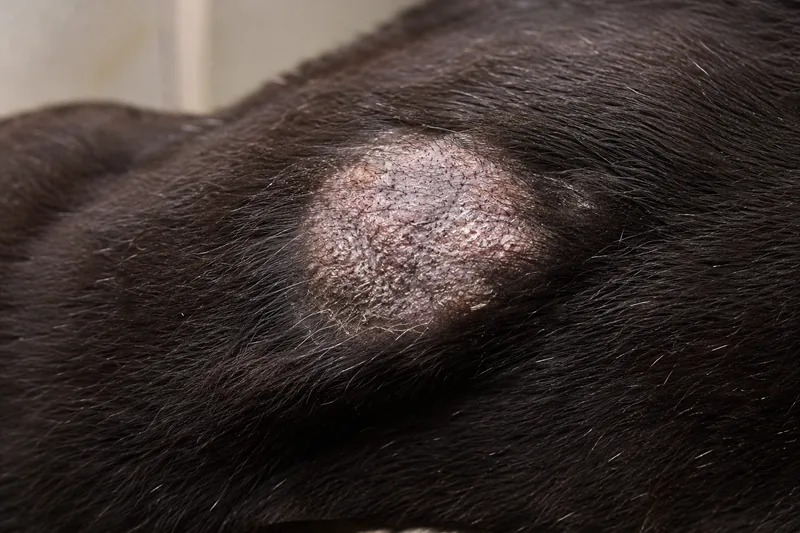
Ringworm has one of the most misleading names in dog health. There is no worm involved at all, and picturing one sends owners down the wrong path entirely.
What ringworm actually is, is a common, contagious fungal infection of the skin and coat. It is rarely dangerous, but it is stubborn and spreads easily, which makes catching it early worthwhile.
This guide covers what ringworm looks like on a dog, how it spreads, how vets treat it, and the home cleanup that keeps it from coming back.
This guide is for general education and does not replace veterinary care. Ringworm spreads to other pets and to people, so confirm it with your vet rather than guessing.
What Ringworm Actually Is
Ringworm is a fungal infection, named for the ring-shaped lesion it sometimes leaves on human skin. The fungi responsible feed on keratin, the protein in skin, hair, and nails.
That keratin diet explains the symptoms. As the fungus consumes the hair shafts, the hair breaks and falls out, leaving the bald, scaly patches that define the infection.
It belongs to the larger family of skin conditions covered in our guide to dog skin problems, and like many of them, it is easy to confuse with other causes of hair loss and itching.
What Ringworm Looks Like on a Dog
The classic sign is a roughly circular patch of hair loss with flaky, crusty skin. The center often looks healing while the edge stays active, which is what creates the ring appearance.
In dogs, though, it does not always read as a neat ring. Lesions show up most on the face, ear tips, paws, and tail, and they can be irregular, scaly, or red rather than perfectly round.
Itching varies a lot. Some dogs barely scratch, while others are clearly bothered, and brittle or misshapen claws can appear when the infection reaches the nails.
How Dogs Catch It
Ringworm spreads through direct contact and through the environment. A dog can pick it up from an infected animal, from people, or from contaminated soil, bedding, and grooming tools.
The spores are remarkably tough. They can survive in a home or yard for many months, which is why an environment that is not cleaned can reinfect a dog that has otherwise recovered.
Not every exposed dog gets sick. Puppies, senior dogs, and animals with weaker immune systems are the most susceptible, and crowded or shared housing raises the odds.
Ringworm or Something Else?
Plenty of skin problems mimic ringworm, which is exactly why guessing fails. Round patches of hair loss can also point to mange, allergies, or a bacterial infection.
Two look-alikes are worth naming. Demodectic mange can cause similar bald patches, so our guide to mange in dogs is worth a read, and the bacterial infection covered in our folliculitis in dogs guide produces circular crusty lesions of its own.
Because so many conditions overlap, the look alone rarely settles it. A vet test is what separates ringworm from its imitators.
How Vets Diagnose It
Vets have a few tools, and they often use more than one. A Wood’s lamp, a special ultraviolet light, makes some ringworm species glow, but it misses others and is only a starting point.
The more reliable answer comes from the lab. A fungal culture grown from a hair or skin sample confirms the infection, though it can take a week or two to develop.
Microscopic exam of plucked hairs offers a faster clue. Between these methods, the vet can confirm ringworm rather than treating blindly for the wrong thing.
How Ringworm Is Treated
Treatment almost always combines two fronts. Oral antifungal medication works from the inside, while a topical treatment tackles the fungus and spores on the coat.
On the topical side, medicated baths do a lot of work. The options in our ringworm shampoo for dogs guide, along with an antifungal dog shampoo, help clear the coat and reduce the spores being shed.
Consistency is everything here. Finish the entire course even after the skin looks healed, because stopping early is the most common reason ringworm comes roaring back.
Is It Contagious to People?
Ringworm is zoonotic, which means it passes between animals and people. In humans it shows up as the namesake itchy, ring-shaped rash, usually on the arms or hands.
Some people are more vulnerable than others. Children, older adults, and anyone with a weakened immune system should take extra care around an infected dog.
Simple precautions go a long way. Wash your hands after handling your dog, wear gloves when you apply treatments, and check the whole household, pets included, if a rash appears.
Cleaning Your Home
Treating the dog is only half the battle, because the spores live on in the environment. Without cleanup, a recovered dog walks right back into a contaminated home.
Focus on what the dog touches most. Wash bedding in hot water, vacuum floors and furniture often, and disinfect hard surfaces and grooming tools, throwing the vacuum bag out each time.
Confining an infected dog to easy-to-clean rooms makes the job manageable. The less carpet and upholstery in play, the faster you can break the cycle of reinfection.
How Long It Takes to Clear Up
With proper treatment, most ringworm clears in about three to six weeks, though widespread or stubborn cases run longer. The skin often looks better well before the infection is actually gone.
That gap is exactly why finishing the full course matters. Stopping when the lesions fade is the most common reason ringworm returns a few weeks later.
Many vets confirm the cure with a repeat fungal culture rather than trusting the eye. A clear culture is the real finish line, especially in a multi-pet home where reinfection is easy.
When to See the Vet
Any suspected ringworm is worth a vet visit, since it spreads and looks like several other conditions. Book a visit for round bald patches, scaly or crusty skin, or brittle, deformed claws.
Move sooner if other pets or people in the home develop signs, or if the lesions spread quickly. A multi-pet household in particular benefits from a fast, coordinated plan.
When in doubt, do not treat on a guess. The wrong product wastes weeks while the real infection spreads to everyone the dog touches.
Final Thoughts
Ringworm is rarely serious, but it is contagious and persistent, which makes it a problem worth respecting. The dogs that clear it fastest are the ones whose owners treat early and clean thoroughly.
Pair your vet’s treatment plan with diligent home cleanup and patience through the full course. Do that, and the misleadingly named fungus becomes a manageable few weeks rather than a months-long ordeal.
Frequently Asked Questions
No. Despite the name, ringworm is a fungal infection of the skin, hair, and nails, named for the ring-shaped lesion it can create. It has nothing to do with worms or parasites. The fungus feeds on keratin in the skin and coat, which is why it causes hair loss and scaling.
Yes, ringworm is zoonotic, meaning it spreads between animals and people. Children, older adults, and anyone with a weakened immune system are most at risk. Wash your hands after handling an infected dog, wear gloves when applying treatment, and see a doctor if you develop an itchy, ring-shaped rash.
With proper treatment, most cases resolve in about three to six weeks, though stubborn or widespread infections can take longer. It's important to finish the full course of treatment even after the skin looks better, since stopping early lets it return. Your vet may repeat a fungal culture to confirm the infection is truly gone.
Treatment is guided by your vet and usually combines oral antifungal medication with a topical, such as a medicated shampoo, dip, or cream. Clipping the hair around lesions can help. Just as important is cleaning the environment, since spores shed into bedding, carpets, and furniture and can reinfect your dog.
Dogs catch ringworm through direct contact with an infected animal or person, or from a contaminated environment like soil, bedding, grooming tools, or furniture. The spores are hardy and can survive in the environment for many months. Puppies, seniors, and dogs with weaker immune systems are the most susceptible.