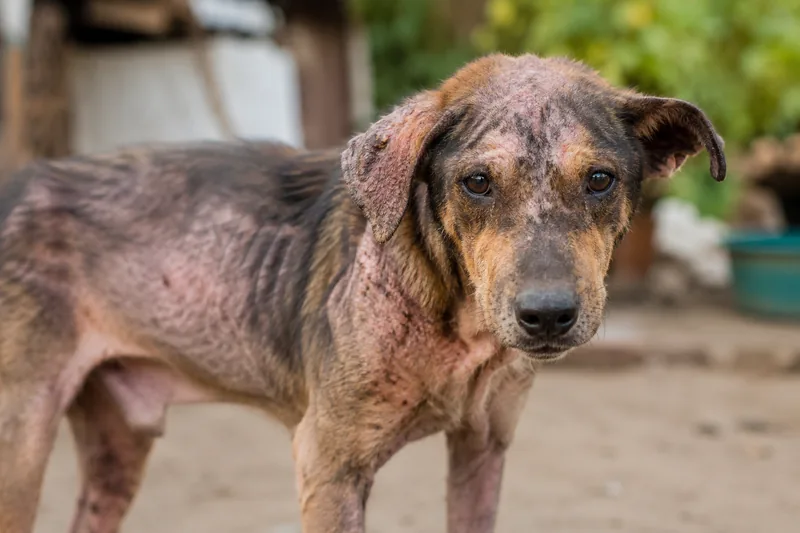
Mange is one of the most misunderstood skin conditions in dogs, partly because the word covers two genuinely different diseases. They share a cause, microscopic mites, but almost nothing else.
One type flares when a dog’s immune system falters and can’t be caught. The other is wildly contagious and miserable enough to keep a whole household scratching.
This guide separates the two clearly, walks through the symptoms and treatment for each, and answers the question every owner asks: can I catch it? Getting the type right is the whole key, because it changes everything that follows.
What Mange Actually Is
Mange is a skin disease caused by tiny parasitic mites that live on or in a dog’s skin. The mites trigger inflammation, itching, hair loss, and skin damage.
What makes mange confusing is that two completely different mites cause it. The species involved decides how contagious it is, how it’s treated, and how worried you should be.
Both forms damage the skin and coat, and both can lead to painful secondary infections. But lumping them together is exactly the mistake that leads to wrong treatment, so the first job is always to identify the type.
The Two Types, Side by Side
The two forms of mange are demodectic and sarcoptic. They look similar at a glance and very different under a microscope.
Demodectic mange, caused by Demodex mites, is linked to a weakened or immature immune system and is not contagious. Sarcoptic mange, caused by Sarcoptes mites, is the canine version of scabies, and it’s both intensely itchy and highly contagious.
The simplest way to keep them straight: demodex is an inside job tied to immunity, while scabies is an outside invader that spreads. The rest of this guide takes each in turn.
Demodectic Mange (Demodex)
Demodex mites actually live on nearly every healthy dog in small numbers, causing no trouble at all. They’re a normal resident of the skin, passed from mother to pup in the first days of life.
The problem starts when those mites multiply out of control, which happens when the immune system can’t keep them in check. That’s why demodectic mange shows up most in puppies, seniors, and dogs with underlying illness.
Because it’s driven by immunity rather than contagion, demodectic mange does not spread between dogs or to people. A localized case in a young dog is often mild and may even resolve as the immune system matures.
Generalized demodectic mange is more serious, covering large areas and often inviting secondary infection. It usually signals a deeper immune or health issue that needs addressing alongside the mites.
Sarcoptic Mange (Scabies)
Sarcoptic mange is the opposite story. The Sarcoptes mite is an invader that burrows into the skin to lay eggs, and it spreads easily from dog to dog through direct contact.
The burrowing triggers an intense allergic reaction, which is why scabies is famous for relentless, frantic itching. Affected dogs scratch and chew themselves raw, often within days of exposure.
It spreads through contact with infected animals or contaminated bedding, kennels, and grooming tools. Wildlife like foxes are a common source, and shelters or dog parks can be too.
Crucially, sarcoptic mange is zoonotic, meaning it can pass to humans. People usually get a temporary itchy rash rather than a full infestation, since the mites can’t complete their life cycle on us.
Symptoms to Watch For
The two types share a core set of signs, with the intensity of itching being the biggest tell. Both cause hair loss, redness, and skin changes, but scabies itches far more dramatically.
Common symptoms include patchy hair loss, intense scratching, red and inflamed skin, and crusty, scaly, or thickened patches. Sores and scabs often follow from the self-trauma.
Location offers clues. Sarcoptic mange tends to hit the ears, elbows, hocks, and belly first, while demodectic mange often starts around the face and eyes or in localized patches.
As things progress, secondary bacterial or yeast infections frequently set in, adding odor and oozing. These complications are part of why mange belongs in the broader family of skin problems that need prompt care.
How Dogs Get Mange
The how depends entirely on the type, which is why the distinction matters so much. The two routes are completely different.
Demodectic mange isn’t caught at all in the usual sense. The mites are already present, and the disease appears when the immune system can’t control them, often due to youth, age, stress, or illness.
Sarcoptic mange is caught through contact. An infected animal, shared bedding, a kennel, a grooming table, or wildlife can all transfer the mites, and it moves fast through groups of animals.
This split explains why one mangy dog in a litter might reflect demodex from a shared genetic and immune picture, while a suddenly itchy dog after a kennel stay points toward scabies.
How Vets Diagnose It
Diagnosis starts with a skin scraping, the standard test for mange. The vet scrapes the skin surface and examines the sample under a microscope to find mites or eggs.
Demodex mites are usually easy to find this way. Sarcoptes mites are notoriously hard to catch on a scraping, so a vet may diagnose scabies based on symptoms and response to treatment even when the scrape comes back negative.
The vet will also check for secondary infections and may run tests to uncover the underlying issue behind demodectic mange. That bigger-picture look is what separates treating the symptom from treating the cause.
Don’t try to self-diagnose mange at home. It mimics allergies, infections, and other parasites like the mites behind ear problems, and the treatments differ enough that guessing wastes time.
Treatment That Works
Modern mange treatment is highly effective, and it has improved dramatically. The core is a vet-prescribed anti-parasite medication, often one of the same isoxazoline chewables used for fleas and ticks, or a spot-on product.
Medicated baths and dips play a supporting role, especially for sarcoptic mange and for clearing crusts and debris. A vet-recommended medicated shampoo can soothe the skin and help control mites alongside the main medication, and an antifungal or antibacterial shampoo helps when secondary infection takes hold.
Secondary infections get their own treatment, usually antibiotics or antifungals. Pain and inflammation may be managed too, since severe mange genuinely hurts.
For demodectic mange, the underlying health issue gets attention as well, because clearing the mites without supporting the immune system invites a relapse. Treatment typically runs several weeks with follow-up scrapings to confirm the mites are gone.
Is Mange Contagious to People?
This is the question that decides how you handle your dog, and the answer is split. Demodectic mange is not contagious to humans or other pets, full stop.
Sarcoptic mange is contagious. The scabies mite can transfer to people and cause an itchy, bumpy rash, usually on the arms, chest, or abdomen where you hold the dog.
The good news is that the human version is self-limiting. The mites can’t reproduce on human skin, so the rash typically clears on its own once the dog is treated and the mites are gone.
Until you know the type, treat a mangy dog as potentially contagious. Wear gloves, wash thoroughly after contact, keep other pets away, and launder bedding in hot water.
Why Home Remedies Fall Short
The internet is full of mange home remedies, from oils to dips to apple cider vinegar. Most range from ineffective to actively harmful, and they all share one fatal flaw.
That flaw is the missing diagnosis. Treating a presumed case of mange at home means you might be treating the wrong disease entirely, while an actual infestation digs in deeper.
Some popular remedies are genuinely dangerous. Used motor oil, harsh chemical dips, and concentrated essential oils can burn skin or poison a dog, and borax-and-peroxide mixes can irritate raw skin badly.
Even the gentler ideas just delay real treatment. Modern prescription options are so effective and well-tolerated that there’s little reason to gamble on a home brew when a vet visit settles both the diagnosis and the cure.
Recovery and Prevention
With proper treatment, the outlook for mange is generally very good. Most dogs recover fully, with the coat regrowing over weeks as the skin heals.
Recovery hinges on finishing the full course and attending rechecks. Stopping early because the dog looks better is a classic way to let a stubborn case rebound.
Prevention differs by type. Sarcoptic mange is reduced by avoiding contact with infected animals and keeping up routine parasite prevention, while many monthly flea-and-tick products also guard against mites.
Demodectic mange is harder to prevent outright, since it depends on immunity. Supporting overall health with good nutrition, parasite control, and prompt care of any illness gives the immune system its best shot at keeping demodex in check.
When to See the Vet
Mange is a vet diagnosis, so any suspicion is reason enough to book a visit. Go in for unexplained hair loss, persistent intense itching, or crusty, inflamed, or scabby skin.
Move quickly if itching is severe and sudden, if multiple pets or people are affected, or if the skin looks infected with odor and oozing. Those point toward contagious scabies or secondary infection.
Don’t wait mange out. Because one form spreads and both worsen without treatment, an early diagnosis is the difference between a few weeks of medication and a long, miserable, expensive battle.
Final Thoughts
Mange sounds like one disease but behaves like two, and telling them apart is the entire game. Demodectic mange is an immune story that doesn’t spread, while sarcoptic mange is contagious scabies that demands fast action.
The good news is that both respond well to modern treatment once a vet identifies the type. A simple skin scraping points the way, and prescription medication does the rest.
So skip the home remedies and the guesswork. A dog losing hair and scratching nonstop deserves a real diagnosis, because the right answer is usually a few weeks away once treatment starts.
Frequently Asked Questions
The hallmarks are hair loss, intense itching, redness, and crusty or scaly skin, often starting around the face, ears, legs, or belly. Sarcoptic mange is ferociously itchy, while demodectic mange may itch less but still causes bald patches. Only a vet can confirm it, usually with a quick skin scraping looked at under the microscope.
It depends on the type. Sarcoptic mange (scabies) can spread to people and cause a temporary itchy rash, though the mites can't complete their life cycle on humans and the rash resolves once the dog is treated. Demodectic mange is not contagious to people or other pets, so the answer hinges on which type your dog has.
Treatment is a vet-prescribed plan, usually a modern anti-parasite medication given as a spot-on or chewable, sometimes with medicated baths or dips. Secondary skin infections get antibiotics, and the underlying health issue behind demodectic mange is addressed too. Most cases clear over several weeks with consistent treatment and rechecks.
Mild, localized demodectic mange in a young dog sometimes resolves on its own as the immune system matures. Sarcoptic mange, however, does not clear without treatment and only spreads and worsens. Because the two look similar and one is contagious, never wait it out without a vet diagnosis first.
With demodectic mange, yes, it isn't contagious. With sarcoptic mange, the mites can transfer to you and cause temporary itching, so wear gloves, wash up after contact, and clean bedding during treatment. Until you know which type it is, it's sensible to handle the dog carefully and keep other pets separate.