Finding fleas on your dog is the start of a battle that’s bigger than it looks. The few fleas you can see are a tiny fraction of the problem, because most of the infestation is hiding in your home.
That single fact explains why so many flea treatments fail. People treat the dog, see fleas again a week later, and assume the product didn’t work, when really the carpet just restocked the supply.
This guide takes the whole problem at once: the dog, the other pets, and the environment. Win on all three fronts and break the life cycle, and the fleas actually leave for good.
First, Confirm It’s Fleas
Before you treat, make sure fleas are really the culprit. The classic signs are intense scratching, biting at the base of the tail and hind legs, and visible tiny dark insects moving through the fur.
The most reliable clue is flea dirt. Comb your dog over a white paper towel, and if you find small black specks that turn reddish-brown when dampened, that’s digested blood, the signature of fleas.
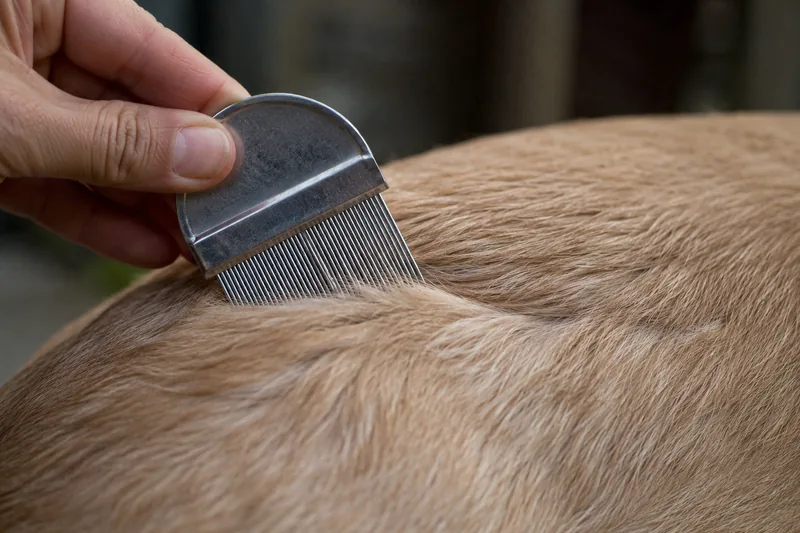
A flea comb is your best diagnostic tool. Run it through the coat, especially around the tail base, neck, and belly, and check the teeth for live fleas and flea dirt.
If you see the signs of irritated skin but no fleas or flea dirt, the cause might be something else, like allergies or the broader skin problems that mimic flea itching. When in doubt, a vet can confirm it.
Why the Flea Life Cycle Matters
Understanding the flea life cycle is what separates people who clear fleas from people who fight them forever. Fleas spend most of their lives off the dog.
A flea goes through four stages: egg, larva, pupa, and adult. Only the adult lives on your pet, and adults make up roughly five percent of the total population.
The other ninety-five percent, the eggs, larvae, and pupae, live in carpets, cracks, furniture, and bedding throughout your home. Eggs fall off the dog and scatter wherever it goes.
The pupae are the real problem, because they can lie dormant for weeks or months, shielded from sprays, then hatch when conditions are right. That’s why infestations seem to come back, and why treatment has to continue for several weeks to outlast every hatching wave.
Step 1: Treat Your Dog
Start with the dog, using a vet-recommended flea product. Modern options include oral medications and spot-on treatments that kill fleas effectively, and your vet can match the product to your dog’s age, weight, and health.
A flea bath can knock down the live fleas on board right away. Use a flea shampoo made for dogs, or a gentle dog shampoo with a flea comb, and let warm soapy water do its work.
The flea comb is worth using regularly during an outbreak. Comb in sections, dunk the comb in soapy water to kill what you catch, and pay special attention to the tail base and neck.
A quick caution on products: never use a cat flea treatment on a dog or vice versa, and follow every label exactly. Puppies have special restrictions, so check with your vet before treating a young or tiny dog.
Step 2: Treat Every Pet
Fleas don’t respect boundaries between your pets. If one animal has fleas, they all need treatment at the same time, or the untreated pet becomes a reservoir that reinfests everyone.
That means every dog, cat, and other furry pet in the household, each with a species-appropriate product. A single untreated cat can undo all your work on the dog.
Treat them together and keep them all on prevention afterward. Consistency across the whole household is what closes the door for good.
Step 3: Treat Your Home
Since most of the infestation lives in your home, this step is non-negotiable. Skipping it is the single most common reason fleas come back.
Vacuum every day during an outbreak, hitting carpets, rugs, upholstery, baseboards, and especially where your dog sleeps. The vibration even coaxes pupae to hatch into reach of treatment, so empty the canister or bag into an outside bin immediately after.
Wash all pet bedding, and any washable blankets or covers your dog uses, in hot water weekly. Heat kills fleas at every life stage.
For heavier infestations, ask your vet about safe environmental treatments, including products with an insect growth regulator that stops eggs and larvae from developing. Follow all safety directions, and keep pets and people away from treated areas as instructed.
What Kills Fleas Fast
When you want fleas gone now, a few approaches act quickly. Certain vet-recommended oral medications start killing adult fleas within hours, which is the fastest route for the dog itself.
A thorough flea bath and combing physically removes and drowns adults on contact. It won’t stop reinfestation, but it brings instant relief to a miserable dog.
For the home, daily vacuuming plus hot-water laundry gives the fastest environmental knockdown. The key word, though, is patience: even the fastest plan takes weeks to fully resolve because of the eggs and pupae still hatching.
There’s no single product that ends an infestation in a day. Anyone promising an instant, permanent fix is overselling, since biology sets the timeline.
Home Remedies: What Helps, What Doesn’t
Search flea remedies and you’ll find dozens of home brews. A few have a small supporting role, several do nothing, and some are genuinely risky, so it pays to know the difference.
The genuinely useful “home” methods are the mechanical ones: a flea comb, frequent vacuuming, and hot-water laundry. These physically remove fleas and eggs and are safe to lean on.
Many popular remedies are weak or unproven. Apple cider vinegar, baking soda, and dish soap baths might kill or repel a few fleas at best, but they don’t touch the environmental population or prevent reinfestation.
Some remedies are outright dangerous. Many essential oils are toxic to dogs, especially in the concentrations people use, and food-grade diatomaceous earth is messy and can irritate the lungs if inhaled.
When in doubt, skip the home brew and use a proven product.
When Nothing Seems to Work
If you’re treating diligently and still seeing fleas, don’t panic, and don’t assume failure. Persistent fleas almost always trace to one of a few fixable gaps.
The usual culprit is an untreated environment or an untreated pet, so revisit both. Daily vacuuming, hot-water laundry, and every-animal coverage are the steps people most often shortcut.
Timing is the other factor. Because pupae keep hatching for weeks, you’ll keep seeing some new fleas during that window even when everything is working, so give it a full month before judging.
If you’ve covered all of that and fleas persist, call your vet. They can confirm the products are appropriate, rule out a resistance or re-exposure issue, and recommend a stronger environmental plan.
The Health Risks of Fleas
Fleas are more than an itchy nuisance, which is why fast treatment matters. The bites alone can drive a dog to scratch and chew until the skin breaks down.
Flea allergy dermatitis is common, where a single bite triggers an outsized allergic reaction, intense itching, and the raw, infected patches known as hot spots. For an allergic dog, even a stray flea is a real problem.
Fleas also transmit tapeworms when a dog swallows an infected flea while grooming. And in heavy infestations, especially in puppies and small dogs, blood loss from feeding fleas can cause dangerous anemia.
They bite people too, and they share the parasite stage with other mites behind conditions like mange and ear mites. All of it adds up to a strong case for taking fleas seriously.
Preventing the Next Infestation
Once you’ve won, staying flea-free is far easier than the cleanup. The cornerstone is year-round flea prevention for every pet.
Keep all pets on a vet-recommended preventive, even indoor ones and even in winter, since fleas survive happily in heated homes. Consistency is what stops the cycle from ever restarting.
Maintain the environment too. Regular vacuuming and washing bedding keep stray eggs from ever building up, and keeping the yard tidy reduces outdoor flea habitat.
Check your dog regularly with a flea comb, especially after time outdoors or around other animals. Catching one or two fleas early is far easier than clearing a full infestation later.
When to See the Vet
A vet is worth a call at several points in the flea fight. Reach out if home treatment isn’t working, if your dog has an allergic reaction or hot spots, or if you have a puppy or sick dog that needs careful product selection.
Get prompt care if you see signs of anemia, such as pale gums, weakness, or lethargy, especially in a small dog or puppy. That’s an emergency, not a wait-and-see.
Your vet is also the best source for the safest, most effective products for your specific dog. Starting there often saves money and weeks of frustration compared with trial and error.
Final Thoughts
Getting rid of fleas comes down to one principle: treat everywhere at once. The dog, every other pet, and the home all need attention, because the fleas you see are a fraction of the fleas you have.
Lean on the proven tools, vet-recommended products, hot-water laundry, daily vacuuming, and a flea comb, and skip the risky home brews. Then give it the few weeks the life cycle demands.
Finish with year-round prevention, and the fight becomes a one-time event rather than a recurring season. A little consistency keeps the fleas out long after the last one is gone.
Frequently Asked Questions
Vet-recommended fast-acting flea products, including certain oral medications, can start killing adult fleas within hours. A bath with dog-specific flea shampoo and a flea comb also remove live fleas quickly. None of these prevent reinfestation on their own, though, so you still need to treat the home and start a long-term preventive to keep fleas gone.
Vacuum thoroughly every day, focusing on carpets, baseboards, and where your dog sleeps, and throw the vacuum contents away outside. Wash all pet bedding and washable fabrics in hot water. For heavy infestations, ask your vet about safe environmental products, and remember it takes weeks, because new fleas keep hatching from eggs.
Use a flea shampoo formulated for dogs, following the label exactly, or a gentle dog shampoo plus a flea comb to physically remove fleas. Warm, soapy water drowns adult fleas during the bath. Skip human shampoos and home concoctions, and never use cat flea products on dogs, since the dosing and ingredients can be unsafe.
Almost always because the environment wasn't treated. Only about five percent of a flea population lives on the pet, while the rest, as eggs, larvae, and pupae, sit in carpets and bedding waiting to hatch. If fleas return despite treatment, you need consistent home treatment, every-pet coverage, and a few weeks of patience to outlast the life cycle.
They can be more than an itch. Fleas cause flea allergy dermatitis and hot spots, transmit tapeworms, and in heavy infestations, especially in puppies and small dogs, can cause dangerous anemia from blood loss. They can also bite people. That's why fast, thorough treatment and year-round prevention matter.