Brushing a dog’s teeth sounds like a luxury until you see the numbers. Most dogs show signs of dental disease by the age of three, making it one of the most common health problems in dogs and one of the most preventable.
The mouth isn’t an isolated problem, either. The bacteria behind dental disease don’t just cause bad breath and tooth loss, they can travel through the bloodstream and strain the heart, liver, and kidneys.
The good news is that home brushing is the single most effective thing you can do, and almost any dog can learn to accept it. This guide covers the right supplies, the gradual method that wins over reluctant dogs, and how to keep it up.
Why Brushing Matters So Much
Dental disease starts with plaque, a film of bacteria that forms on the teeth constantly. Brushing removes that plaque before it can do harm.
Left alone, plaque hardens into tartar within days, and tartar can’t be brushed away. It builds under the gumline, inflames the gums, and eventually destroys the tissue and bone holding the teeth in place.
That process, periodontal disease, is painful and irreversible once advanced. It leads to tooth loss, infection, and a dog that hurts every time it eats, often without obvious signs until it’s serious.
Brushing interrupts the whole chain at the start. By removing plaque daily, you prevent the tartar, the gum disease, and the systemic strain that follow, which is why vets push it so hard.
What You’ll Need
The kit is short and inexpensive. You need a dog toothbrush and a dog-specific toothpaste, plus a calm setting and some treats.
For the brush, you have options. A long-handled dog toothbrush reaches the back teeth well, a rubber finger brush gives you more control and feels gentler to many dogs, and even a piece of gauze around your finger works to start.
Match the brush to your dog’s size, since a tiny mouth needs a small brush. Whatever you pick, soft bristles are a must, because firm ones irritate the gums.
Never Use Human Toothpaste
This is the one hard rule, so it gets its own section. Human toothpaste is not safe for dogs, full stop.
It commonly contains fluoride, which is toxic if swallowed in quantity, and some brands contain xylitol, a sweetener that’s dangerous to dogs even in small amounts. Dogs can’t rinse and spit, so they swallow whatever you use.
Dog toothpaste is formulated to be swallowed safely, and it skips the foaming agents that upset canine stomachs. It also comes in flavors dogs actually like, such as poultry, beef, or peanut, which turns the paste itself into part of the reward.
Skip the homemade baking soda mixes too. They taste unpleasant to dogs and don’t offer the benefits of a proper enzymatic dog toothpaste.
How Often to Brush
Daily brushing is the gold standard, and there’s a clear reason for it. Plaque begins mineralizing into tartar within about two to three days, so brushing every day keeps it from ever getting a foothold.
If daily truly isn’t possible, aim for at least three times a week as a practical minimum. Below that, plaque starts winning between sessions.
The best schedule is the one you’ll actually keep. A quick, consistent brush built into a daily routine, like right before bed, beats an occasional deep clean you dread and skip.
Tie it to an existing habit to make it stick. Many owners fold it into the evening wind-down alongside other grooming, the way a bath schedule or nail-trimming routine becomes habit once it has a rhythm.
Step by Step: The Gradual Method
The secret to easy brushing is to introduce it in stages over days or weeks, not to wrestle a brush into a surprised dog’s mouth on day one. Each stage builds comfort for the next.
Start with taste. For the first few days, let your dog lick a little dog toothpaste off your finger so it learns the paste is a treat, not a threat.
Next, handle the mouth. Once the paste is welcome, gently lift the lips and touch the teeth and gums with your finger, rewarding calm cooperation each time.
Then introduce the brush. Put a dab of paste on the brush or finger brush and let your dog lick it off, so the tool itself becomes familiar before it does any work.
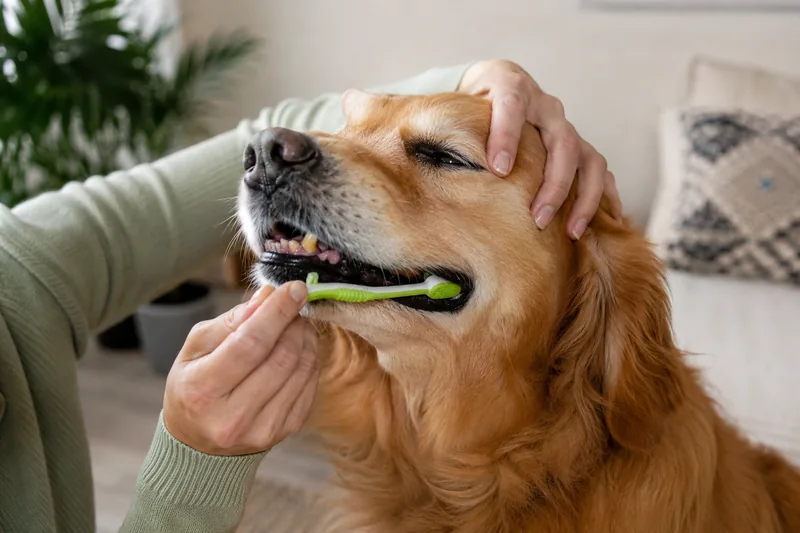
Finally, brush a few teeth. Lift the lip and brush just the outer surfaces of a few teeth, then stop and reward, adding more teeth over subsequent sessions until you’re doing the whole mouth.
Getting the Technique Right
When you do brush, technique makes it count. Focus on the outer surfaces of the teeth, the sides facing the cheek, since that’s where plaque and tartar build most and where your dog will tolerate the brush best.
Hold the brush at about a 45-degree angle to the gumline and use gentle, small circular motions. The gumline is the critical zone, because that’s where periodontal disease begins.
Pay special attention to the back teeth, the large molars and the upper canines, which collect the most tartar. The inner surfaces matter less, since the tongue does some natural cleaning there and most dogs resist having the brush turned inward.
Keep sessions short and pressure light. Thirty seconds to a couple of minutes of calm brushing beats a long struggle, and gentle is the rule near tender gums.
The Dog Who Refuses
Some dogs resist no matter how careful your introduction, and pushing harder never helps. Back up to an earlier stage and move slower.
Drop to a finger brush or even gauze if the toothbrush is the sticking point, since the texture and control feel less invasive. Some dogs accept a finger long before they accept a brush.
Dental wipes are another gentle entry point. They don’t clean as well as brushing, but they let a wary dog get used to having its teeth touched while still removing some plaque.
Keep every session positive and brief, and end before your dog gets fed up. Forcing a frightened dog creates a lasting aversion, while patience and treats slowly turn resistance into routine.
Beyond the Brush
Brushing is the foundation, but a few extras support it. Dental chews and toys designed to reduce plaque give a mechanical scrubbing as your dog gnaws, which helps between brushings.
Look for products carrying the Veterinary Oral Health Council seal, which means they’ve been shown to reduce plaque or tartar. Plenty of products claim dental benefits without the evidence to back it.
Water additives and dental diets can play a supporting role too. None of these replace brushing, but they help slow buildup, especially for dogs that tolerate chewing better than a toothbrush.
Then there are professional cleanings. Even with great home care, most dogs benefit from periodic veterinary dental cleanings, which remove tartar below the gumline that no home method can reach.
Signs of Dental Trouble
Brushing also gives you a regular look inside the mouth, which helps you catch problems early. The most common warning sign is bad breath, which is not normal and usually signals bacteria and disease.
Watch for yellow or brown tartar on the teeth, red or swollen gums, and gums that bleed easily. Any of these point to dental disease taking hold.
Behavior tells you too. A dog that drops food, chews on one side, paws at its mouth, or suddenly hesitates at the bowl may be in pain, which overlaps with the patterns in our guide on a dog that won’t chew its food.
Loose or discolored teeth, excessive drooling, and facial swelling are more advanced signs. Don’t wait on those, since they usually mean infection or a tooth that needs attention.
When to See the Vet
Home brushing prevents disease, but it doesn’t cure what’s already there. If your dog has bad breath, visible tartar, sore or bleeding gums, or any pain signs, book a vet exam.
Existing tartar needs a professional cleaning before home care can do its job. Brushing a mouth that already has hardened tartar and inflamed gums won’t fix it and may hurt.
Most dogs need professional dental checks as part of routine wellness care. Your vet can assess the mouth, recommend a cleaning schedule, and show you the spots that need the most attention on your particular dog.
Final Thoughts
Brushing your dog’s teeth is one of the highest-payoff habits in dog care, and it’s far more doable than most owners expect. The two rules that matter most are using dog toothpaste, never human, and introducing the whole thing gradually.
Aim for daily, settle for a few times a week, and keep every session short and rewarding. Consistency is what keeps plaque from ever becoming the painful, expensive problem it turns into when ignored.
Pair brushing with dental chews and regular vet checkups, and you give your dog a genuinely better shot at keeping its teeth, and its comfort, for life. Your nose will thank you too.
Frequently Asked Questions
No, never use human toothpaste. It often contains fluoride and sometimes xylitol, both of which are toxic to dogs, and dogs swallow toothpaste rather than spitting it out. Use a toothpaste made for dogs, which is safe to swallow and comes in flavors like poultry or beef that make brushing easier.
It's almost never too late, though older dogs need patience and may already have dental disease that a vet should check first. Start slow with an adult dog, building tolerance over days rather than forcing it. If there's existing tartar or sore gums, a professional cleaning first gives you a fresh, comfortable mouth to maintain.
Daily is ideal, because plaque starts hardening into tartar within a couple of days. If daily isn't realistic, aim for at least three times a week to stay ahead of buildup. Consistency matters more than perfection, so a quick brush most days beats a thorough one once in a while.
Slow it down and break it into steps over days: first let your dog lick the toothpaste, then touch the mouth and lift the lip, then introduce the brush on just a few teeth. Reward every stage and never force it. A finger brush or dental wipes can be a gentler starting point for resistant dogs.
Brushing removes soft plaque before it hardens, which is the whole point of doing it regularly. Once plaque mineralizes into tartar, brushing can't remove it, and only a professional dental cleaning at the vet can. Dental chews and water additives help slow buildup, but they don't replace brushing or cleanings.