Your female dog is in heat for the first time and you’re not sure what to do. The bleeding, the mood swings, the male dogs appearing out of nowhere.
It can feel like a lot.
The fertile window is the biggest thing to manage. During that stretch she can get pregnant quickly, so keeping her safe and supervised is the priority.
This guide walks through ten practical steps, from using dog diapers to tracking her heat cycle and finding indoor activities. It also covers the four stages of the cycle and when to call your vet.
Here’s the full step-by-step.
10-Step Definitive Guide On How To Care For A Dog In Heat
Even if this is your first time dealing with a dog in heat, these steps will give you a clear path forward. Follow them and you’ll get through the cycle in good shape.
1. Get a Dog Diaper
Bleeding is a normal part of the heat cycle, but keeping up with it’s a real chore. Dog diapers exist specifically for this reason and they make the hygiene side much more manageable.
They’re easy to use and generally affordable.
Types of Diapers
There are a few different types available. Choose whichever fits your dog’s size and your budget.
- Reusable Dog Diapers
- Disposable Dog Diapers
- Premium Diapers for Female Dogs
If you’re not sure which type to get, your vet can point you in the right direction.
How to Use It?
Put the diaper on your dog and change it as soon as she uses it. Clean the area with wet wipes each time you do.
Leaving a soiled diaper on too long can lead to bacterial infections, so prompt changes matter. Check in with your vet if anything looks off.
2. Create a Comfort Zone for Your Dog
Dogs feel things, and heat can make those feelings run high. Some dogs want to be left alone during this time, while others get restless and hard to settle.
Read her mood and give her space when she needs it. If she’s wound up, use games and rewards to bring her back down, not force.
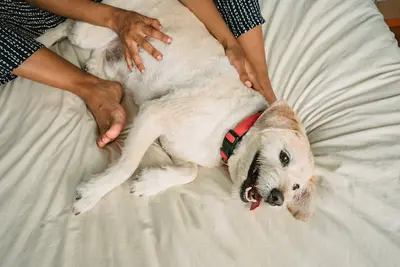
A dedicated comfort zone, her own quiet spot with familiar bedding, helps her feel secure and tends to reduce anxious barking. If she’s struggling badly, ask your vet about options to help her through it.
3. Record Your Dog’s Heat Cycle
Knowing where your dog is in her cycle tells you what she needs right now. Most dogs cycle about twice a year, and the full process runs about 28 days.
The cycle has four stages. Proestrus and estrus each last roughly a week, diestrus runs 60-90 days, and anestrus lasts about 100-150 days.
Proestrus Stage
This is when bleeding starts and behavior shifts become noticeable. She may need to go to the bathroom more often and may tuck her tail to avoid sending signals to male dogs.
Some dogs get quiet during proestrus, others get restless. It depends on the breed.
Estrus Stage
Also called the “flagging stage,” estrus is when the bleeding stops but the real risk begins. She’s fertile now, so this is the stage where preventing an unwanted pregnancy matters most.
She’ll raise and move her tail, “flagging,” to signal male dogs. Spot that behavior and you know exactly where she’s in the cycle.
Diestrus Stage
Whether she conceived or not, diestrus is when she stops seeking male company and is no longer fertile. If she’s not pregnant, she’ll generally return to normal behavior during this stage.
If she’s pregnant, it ends with puppies.
Anestrus Stage
Also called the “Resting Stage,” this is the quiet period where your dog’s body recovers and prepares for the next cycle.
How to Understand When the Dogs are in Heat?
Bleeding tells you she’s in proestrus. Start using diapers then and keep up with hygiene.
Once the bleeding stops and she starts flagging her tail, she’s entered estrus and she’s fertile. That’s when you need to be most careful about keeping her away from male dogs.
When the flagging stops, she’s moved into diestrus and is no longer fertile. You can ease back into your normal routine from there.
What to Do if She is Pregnant?
Don’t give your dog pregnancy pills. If you think she might be pregnant, take her to your vet.
An ultrasound can confirm the pregnancy safely. While you’re there, ask any questions you have about what she needs going forward.
Pregnant dogs often need adjusted nutrition to keep their energy up, so ask your vet about the right foods for this stage.
4. Hide Your Dog From Male Dogs
During her fertile window, keeping male dogs away is the most direct way to prevent an unwanted pregnancy. If you have unneutered males in the house, sending them to stay with a friend is the safest move.
Even littermates will attempt to mate, and breeding closely related dogs raises the risk of genetic disease in the offspring. Physical separation is the only reliable solution.
Male dogs from the neighborhood can also detect her hormones and start showing up. A securely fenced yard helps, but skipping the dog park entirely during estrus is the simpler call.
Your dog may be restless and seeking male company herself during this stage. Redirecting her with new activities helps keep her occupied and calm.
5. Don’t Do Off-leash Walks
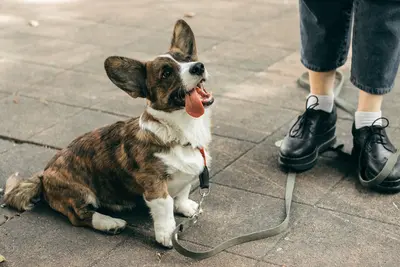
Keep her on leash for every walk during her fertile stage. Even a well-trained dog can override her recall when her instinct to reproduce kicks in.
If a male dog approaches, get her out of the area quickly. Once two dogs begin mating, separating them forcibly can injure both animals, so prevention is far better than intervention.
Some owners apply a small amount of menthol to the dog’s tail to mask her scent and deter male dogs. Talk to your vet before trying this, since menthol can be toxic to dogs if used incorrectly.
A dog walked off-leash during estrus will very likely come home pregnant. Keep her leashed and keep your eyes on her at all times.
6. Find Alternatives to Walks
Dogs need 30-60 minutes of exercise per day, and cutting that back entirely isn’t good for them. When outdoor walks aren’t safe during heat, indoor activities fill the gap.
Here are some options that work well.
Playing hide and seek
You can play this with your dog directly, or hide a treat somewhere in the house and let her sniff it out.
Setting Obstacles
Setting up a simple indoor obstacle course burns energy and gives your dog something to think about at the same time.
Keep Away
Toss an object and let her chase and retrieve it. A hallway or backyard works fine, and if you have two dogs they can keep the game going without you.
Wrestle With the Dog
A quick wrestle session burns energy and keeps your bond strong. If you have multiple dogs, they can do this on their own, but watch for signs it’s getting too competitive.
Replacing the Toys
Rotating toys in and out keeps them feeling new. Dogs revisit toys they haven’t seen in a while with much more enthusiasm.
Which Hand Game
This is a simple mental game that works especially well when your dog is stressed and needs to focus on something calm.
Teach Your Dog Treadmill
With some patience, dogs can learn to use a treadmill just like we do. It’s a great way to get real exercise on days when going outside isn’t an option.
There are plenty of ways to keep her active and mentally engaged inside. You can also invent your own games, and your dog won’t care that they don’t have a name.
7. Be Careful with Possible Diseases
A dog in heat has a weakened immune defense and is more vulnerable to infection than usual. Pyometra is the one to know about.
What is Pyometra?
The name comes from Latin meaning “pus-uterus,” and it’s a life-threatening uterine infection that primarily strikes older or unspayed female dogs. It can develop within 1-2 months after a heat cycle.
Spaying is the most reliable way to prevent it. Veterinary treatment exists, but it’s difficult and carries real risk, so prevention is far preferable.
Your dog is also more susceptible to other infections during heat. If you’re not planning to spay, stay on top of hygiene and keep her diet and food quality strong to support her immune system.
Risk Of Having Cancer
Unspayed female dogs carry a higher risk of certain serious cancers. Regular vet checkups are the best way to catch anything early and keep her healthy.
8. Use a GPS tracker
Tracking your dog during heat adds an extra layer of protection against an unwanted pregnancy. A GPS tracker is one of the most practical ways to do that.
Here’s why it’s worth it.
Benefits of Using a GPS Tracker
You can follow her route from your phone while you’re at work and step in if she ends up somewhere she shouldn’t be. That kind of oversight is hard to get any other way.
Beyond heat, a GPS tracker gives your dog more freedom and you more peace of mind year-round. Some models include health tracking features, waterproofing for dogs who love to swim, and daily activity goal features.
9. Consider Spaying Your Dog
Spaying comes with real health and practical benefits worth knowing. Here’s a look at the main ones.
Benefits of Spaying
Avoid Cancer Types
Breast cancer alone carries a 50% survival rate in dogs. Factor in the risks of uterine, cervical, and ovarian cancer, and spaying starts to look like a straightforward health decision.
Avoid Dealing with Female Dog When She is in Heat
Managing a dog in heat takes real effort: diapers, cleanup, supervision, keeping males away, and watching for pregnancy. It’s a lot to stay on top of for weeks at a time, twice a year.
Spaying removes all of it.
Keeping Other Dogs
If you have unneutered male dogs at home, spaying your female means you won’t have to separate them during her heat. They can just live together normally.
Decreased Cost
Diapers, wipes, and other heat supplies add up over time. Spaying eliminates those ongoing costs, and you can put that money toward treats instead.
Happier Dog
The drive to find a mate during heat can make a dog anxious and unsettled. A spayed dog doesn’t have that pull, and she can just get on with being happy.
Good For Community
Shelters are full of dogs that need homes. If you want to add another dog to your family, adopting from a shelter saves a life and reduces the strain on already stretched resources.
You can often find your preferred breed in shelters too. And your current dog will always be your dog, whatever you decide.
When to Spay Your Dog
According to the American Animal Hospital Association (AAHA), the ideal window is 4 to 6 months, and spaying within that range can significantly reduce cancer risk.
Newer research suggests that for some breeds, waiting until later is actually better. There’s no settled answer that applies to every dog, so ask your vet what timing makes sense for yours.
As for weight gain after spaying, that’s largely a myth. A dog on the right diet stays healthy regardless.
10. Contact Your Vet
No guide can fully account for every dog. Yours is unique, and your vet knows her in ways a general article can’t.
Talk to your vet about her specific heat cycle and follow their guidance. If you’re planning to spay, schedule that conversation before her next cycle starts so there’s time to prepare.
Choose your vet carefully, since any procedure carries more risk if it’s done under less-than-ideal conditions.
How to Choose the Correct Vet?
Start with personal recommendations from people you trust. Good word-of-mouth tells you more than any online listing.
From there, check that the vet has experience with the specific issue you’re dealing with. Verify they’re licensed, and take a close look at the clinic’s hygiene when you visit.
You want confidence that your dog is in good hands whether you’re in the room or not.
Location and price matter too. Don’t overlook them.
What You Should Do?
If you’re still not sure where to start, here’s the short version.
First time? Don’t panic.
Watch your dog and confirm she’s in proestrus, then get diapers and focus on keeping her clean to avoid infection.
When the bleeding stops and she starts flagging her tail, she’s fertile. Keep her leashed, keep males away, and swap outdoor walks for indoor games and yard play.
After that, she’s either pregnant or heading back to normal. If she’s pregnant, call your vet.
If not, you’re done until the next cycle.
Give her extra treats and patience throughout. It’s harder on her than it’s on you.
The Four Stages of a Dog’s Heat Cycle
Knowing which stage your dog is in takes most of the guesswork out of care. The full reproductive cycle moves through four distinct phases.
Proestrus kicks things off and usually lasts around 9 days. You’ll notice a swollen vulva and blood-tinged discharge, and males will show plenty of interest while your dog wants nothing to do with them.
Estrus is the fertile window, typically another 5 to 9 days. The discharge lightens to a pink or straw color, and this is the stage where she’ll accept males, which makes it the highest-risk stretch for accidental pregnancy.
Diestrus follows for roughly two months. The discharge stops and hormone levels stay elevated whether or not she’s pregnant, which is why false pregnancies tend to show up during this phase.
Anestrus is the quiet recovery stretch between cycles, often four to five months. No discharge, no swelling, and her behavior returns fully to normal.
Most dogs run through this cycle about twice a year. Small breeds can manage three heat cycles annually, while giant breeds may only have one.
Tracking the stages pays off in practical ways. Diaper duty peaks in proestrus, supervision matters most during estrus, and a cycle that turns unusually long, short, or foul-smelling is worth a call to your vet.
Final Thoughts
A dog in heat needs more from you than usual, and the fertile window in particular calls for close supervision to avoid an unwanted pregnancy. Understanding the four stages of the cycle, from proestrus through anestrus, makes it much easier to know what your dog needs at each point.
The practical side is manageable once you have the basics in place. A diaper, a comfort zone, indoor activities to replace off-leash walks, and a GPS tracker for extra peace of mind can get you through the cycle with far less stress.
If you aren’t planning to breed your dog, spaying is worth discussing with your vet, since it eliminates the heat cycle entirely and significantly reduces the risk of serious conditions like pyometra and certain cancers. Whatever you decide, staying consistent and calm during this time helps your dog feel safe.
Your vet is the best resource for anything that doesn’t seem right, from unusual bleeding to behavior that concerns you. No guide replaces a professional who knows your dog personally.
Frequently Asked Questions
Comfort and containment, in that order. Set up a quiet zone with washable bedding, use a dog diaper for the discharge, switch to leash-only walks away from other dogs, and give her more affection than usual. Track the dates so you know exactly where she is in the cycle.
Plan on two to four weeks from first swelling to back to normal. First heats arrive anywhere from six months in small breeds to two years in giant breeds, and they're often irregular. Light or split first cycles are common and usually nothing to worry about.
It's not considered painful the way human cramps are, but hormones cause real discomfort for some dogs, showing up as restlessness, clinginess, or moodiness. Comfort measures help. Actual signs of pain like crying, hunching, or refusing food aren't normal heat behavior and warrant a vet call.
No off-leash walks, no dog parks, and no unsupervised yard time, since determined males can clear a fence. Don't punish accidents from the discharge, and don't schedule a spay mid-cycle without your vet's guidance, since many vets prefer to wait until the heat ends.
You can't stop the discharge, only manage it. Dog diapers or washable heat pants handle the worst of it, with changes several times a day during the heaviest week. Confine her to rooms with hard floors, lay washable blankets in her favorite spots, and expect the flow to taper after about ten days.