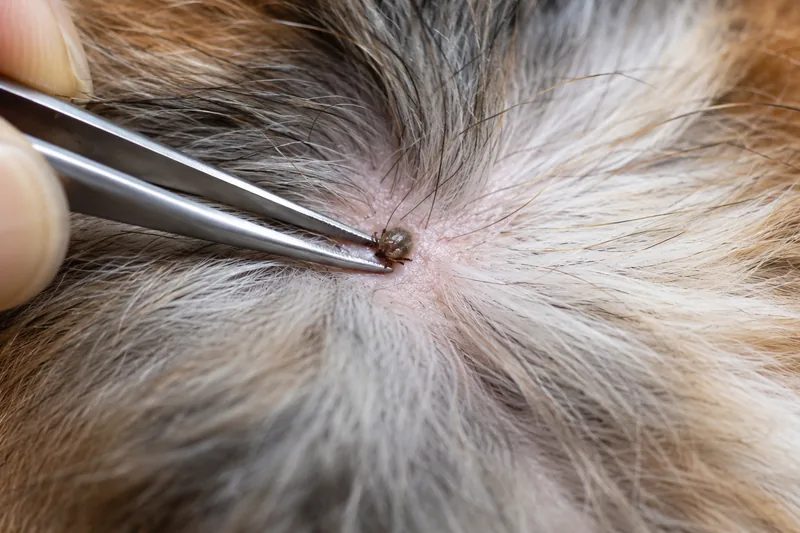
A tick is easy to dismiss as a gross hitchhiker, but it is one of the more dangerous parasites a dog can pick up. The bite itself is minor, while the diseases a tick can carry are not.
That gap between harmless-looking and genuinely risky is what makes ticks worth taking seriously. The good news is that checking, removing, and preventing them is straightforward once you know how.
This guide covers how to check your dog for ticks, how to remove one safely, the diseases to know about, and how to keep ticks off in the first place.
This guide is for general education and does not replace veterinary care. See your vet if your dog shows illness after a tick bite or if you are unsure about removal.
What Ticks Are and Why They Matter
Ticks are external parasites, relatives of spiders and mites, that attach to the skin and feed on blood. They are most active in warm months but can be a year-round threat in many regions.
The bite itself is rarely the problem. The danger is what a tick can inject while feeding, since they transmit several serious diseases.
That is why ticks are part of the bigger picture of parasite prevention. A single bite from the right tick in the wrong place can cause months of illness.
How to Check Your Dog for Ticks
Checking your dog after outdoor time is one of the most valuable habits in tick country. Run your hands slowly over the whole body, feeling for small bumps.
Ticks favor warm, hidden spots. Pay special attention to the head, around and inside the ears, the neck and collar area, the armpits, the groin, and between the toes.
A daily check during tick season catches most ticks before they have been attached long enough to transmit disease. The sooner you find one, the lower the risk.
How to Remove a Tick Safely
Removing a tick correctly matters as much as removing it quickly. Use fine-tipped tweezers or a dedicated tick-removal tool, not your fingers.
Grasp the tick as close to the skin as possible and pull straight out with steady, even pressure. Do not twist or jerk, which can leave mouthparts behind, and do not crush the tick’s body.
Afterward, clean the bite area and your hands, and consider saving the tick in a sealed bag in case your vet wants to identify it. Skip folk remedies like burning or coating it in petroleum jelly, which can backfire.
Tick-Borne Diseases
The reason ticks earn their bad reputation is the diseases they spread. Lyme disease is the best known, but ehrlichiosis, anaplasmosis, and Rocky Mountain spotted fever are all on the list.
The signs often appear days to weeks after a bite. Watch for lethargy, fever, loss of appetite, swollen joints, and lameness that may shift from leg to leg.
Because the signs are easy to miss or mistake, a known tick bite is worth noting on the calendar. If your dog seems off in the weeks after, tell your vet about the bite.
When Ticks Are a Risk
Ticks are most active in warm, humid weather, peaking in spring through fall, though mild climates see them year-round. They lurk in tall grass, brush, wooded edges, and leaf litter.
Dogs that hike, hunt, or roam wooded and grassy areas face the highest exposure. But suburban yards harbor ticks too, so no dog is entirely out of reach.
Knowing your local tick season helps you stay vigilant when it counts. In many areas, that means year-round prevention rather than a seasonal mindset.
Preventing Ticks
Prevention is far easier than dealing with a tick-borne illness. Year-round, vet-recommended tick preventives come as chews, spot-on treatments, and collars, and many also cover fleas.
The same products that handle fleas on dogs often protect against ticks too, which simplifies the routine. Pair medication with environmental steps like keeping grass trimmed and avoiding tick-heavy brush.
Daily checks complete the defense. Even the best preventive works alongside a quick once-over after outdoor adventures.
When to See the Vet
Most tick bites are handled at home with proper removal, but some situations need a vet. Call if you cannot remove the tick fully, if the bite area becomes badly inflamed or infected, or if part of the tick is left behind.
More importantly, watch your dog in the following weeks. Lethargy, fever, lameness, swollen joints, or loss of appetite after a bite all warrant a vet visit and a possible test for tick-borne disease.
When in doubt, mention the bite to your vet. Catching a tick-borne illness early makes it far easier to treat.
Internal parasites like worms deserve the same routine vigilance, since year-round prevention guards against them too.
Final Thoughts
A tick is small, but the diseases it can carry are not, which is why ticks earn more caution than their size suggests. The reassuring part is how much a simple routine accomplishes.
Check your dog after time outdoors, remove any ticks promptly and correctly, and keep up year-round prevention. Do that, and you turn a real disease risk into a manageable part of dog ownership.
Frequently Asked Questions
Use fine-tipped tweezers or a tick-removal tool. Grasp the tick as close to the skin as possible and pull straight out with steady, even pressure, without twisting or crushing it. Clean the bite area and your hands afterward, and watch the spot for a few weeks. Avoid folk methods like burning or smothering, which can make the tick release more saliva.
Ticks transmit several serious illnesses, including Lyme disease, ehrlichiosis, anaplasmosis, and Rocky Mountain spotted fever. Signs can include lethargy, fever, lameness or shifting leg pain, loss of appetite, and swollen joints, often appearing days to weeks after a bite. If your dog shows these after a known or possible tick bite, see your vet.
It varies by disease, but many tick-borne illnesses require the tick to be attached for a day or more, often 24 to 48 hours, before transmission. That's exactly why prompt removal matters so much. Checking your dog daily during tick season and removing any attached ticks quickly significantly lowers the risk.
One tick is usually not cause for panic, but it should be removed promptly and the bite watched. Most bites don't lead to disease, especially with quick removal. Call your vet if your dog later develops lethargy, fever, lameness, or loss of appetite, or if you're concerned about the tick or unsure how to remove it.
Year-round, vet-recommended tick prevention is the foundation, available as chews, spot-ons, and collars. Beyond medication, avoid tall grass and brush on walks, check your dog thoroughly after outdoor time, and keep your yard trimmed. Prevention plus daily checks during tick season is the most reliable combination.