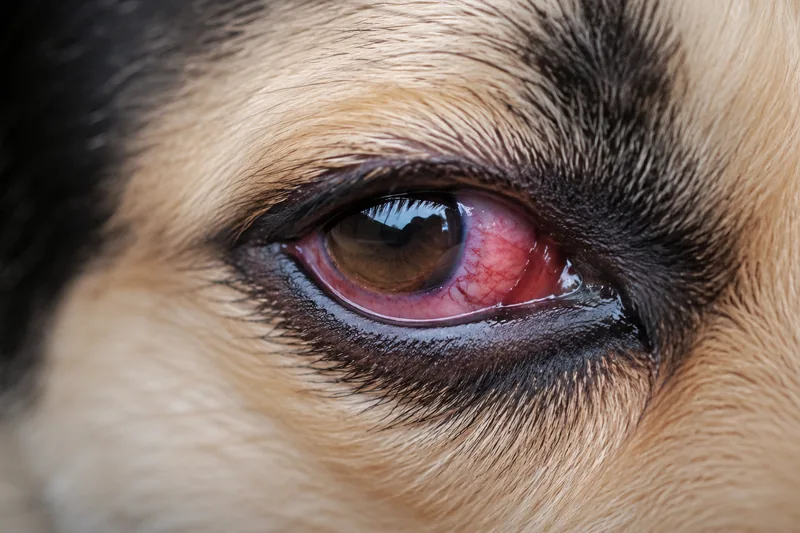
A red eye is one of the more common eye complaints in dogs, and one of the trickiest, because the same redness can mean almost anything. It might be a speck of dust or it might be glaucoma.
Redness itself is just inflammation, the body’s all-purpose response to trouble. The job is to read what comes with it, since that is what separates a minor irritation from an emergency.
This guide covers what red eyes mean, the range of causes, what you can safely do at home, and the signs that mean your dog needs a vet right away.
This guide is for general education and does not replace veterinary care. A suddenly red, painful, or cloudy eye is an emergency, so do not wait on those.
What Red Eyes Mean
The white of a healthy eye is, well, white. When the small blood vessels there become inflamed and dilated, the eye looks pink, bloodshot, or red.
That inflammation is a symptom, not a diagnosis. It tells you the eye is irritated or under stress, but not why, which is what makes the surrounding clues so important.
The pattern matters most. One eye or both, with or without pain, and what else is going on all point toward the cause.
Allergies and Irritants
Allergies are a frequent cause of red, watery eyes, usually affecting both at once. Pollen, dust, mold, and smoke can all inflame the surface of the eye.
Allergic red eye often travels with other signs, like sneezing, face rubbing, and itchy skin. It tends to follow the seasons or a specific exposure.
Physical irritants act the same way. Wind on a car ride, shampoo during a bath, or a bit of debris can redden an eye briefly until it clears.
Conjunctivitis (Pink Eye)
Conjunctivitis is inflammation of the tissue lining the eye and lids, and it is one of the most common causes of a red eye. It usually brings redness, swelling, and discharge together.
The discharge can be watery or thick and yellow-green, and it often pairs with squinting. Because heavy discharge and redness travel together, our guide to eye discharge in dogs covers the overlap in detail.
Conjunctivitis has several causes, from allergies to infection. A vet confirms which and prescribes the matching treatment.
Dry Eye
Dry eye, or keratoconjunctivitis sicca, happens when a dog does not produce enough tears. Without that lubrication, the surface becomes inflamed, red, and irritated.
It often causes a thick, sticky discharge as the eye tries to compensate, along with persistent redness. Certain breeds are predisposed to it.
Dry eye is diagnosed with a simple tear test and managed with medication that restores moisture. Left untreated, it can damage the surface of the eye over time.
Injuries and Foreign Objects
A scratch, a poke from a branch, or a foreign object can redden an eye quickly. These often cause a painful, watery, squinting eye, sometimes just on one side.
Corneal scratches and ulcers are particularly important, because they can worsen fast and become serious. A grass seed or bit of debris trapped under the lid causes similar misery.
Because an injured eye can deteriorate quickly, this is not one to watch and wait on. A painful, suddenly red eye after activity outdoors deserves a prompt look.
Serious Causes: Glaucoma and Uveitis
Some red eyes signal pressure or deep inflammation inside the eye. Glaucoma, a buildup of pressure, is painful and can cost vision within hours if not treated quickly.
Uveitis, inflammation inside the eye, is another serious cause that needs prompt veterinary care. Both can look like a simple red eye at first glance.
These are exactly why a painful or cloudy red eye should never be brushed off. Our guide to eye problems in dogs covers these emergencies and how they are handled.
When Red Eyes Are an Emergency
Most red eyes can wait for a regular appointment, but some cannot. Treat it as urgent if the eye is suddenly very red, painful, cloudy, or bulging.
Other red flags include a red eye with vision loss, an obvious injury, or a dog holding the eye shut in clear pain. These can mean glaucoma, an ulcer, or trauma.
When any of these appear, skip the home care. Keep your dog from rubbing the eye and head to a vet or emergency clinic.
What to Do at Home
For mild redness with no pain, gentle care is enough while you watch it. Keep the area clean, and flush a suspected irritant with plain sterile saline if your dog tolerates it.
Prevent rubbing, since a dog scratching at an itchy eye can turn a minor irritation into an injury. A recovery collar helps if your dog keeps going after the eye.
What you should not do is reach for human eye drops. Many are unsafe for dogs, and the wrong one over a scratch can do real harm, so let your vet guide treatment.
How Vets Diagnose It
The vet examines the eye closely with light and magnification, looking at the redness, the surface, and the surrounding tissue. The exam alone rules a lot in or out.
Targeted tests confirm the cause. A stain reveals scratches and ulcers, a tear test checks for dry eye, and a pressure test screens for glaucoma.
What you share guides it all. Which eye, how suddenly, and whether your dog seems in pain all help the vet zero in fast.
Final Thoughts
A red eye is your dog’s eye signaling inflammation, and the message ranges from trivial to urgent. The skill is reading the company the redness keeps, especially pain, discharge, and cloudiness.
Watch those companion signs, prevent rubbing, and lean on your vet for anything painful or sudden. Handle it that way and you will soothe the minor irritations and catch the red eyes that genuinely threaten sight.
Frequently Asked Questions
A red or bloodshot white means the blood vessels there are inflamed, which has many causes: allergies, irritants, infection, dry eye, an injury, or pressure problems like glaucoma. Mild redness alone may be minor irritation, but redness with pain, squinting, discharge, or cloudiness needs a vet, since some causes can threaten sight.
Mild redness from a brief irritant, like dust or wind, can clear on its own within a day. But redness from infection, dry eye, glaucoma, or injury won't resolve alone and can worsen. If redness lasts more than a day, returns, or comes with any pain or discharge, have a vet check it rather than waiting it out.
Don't use human eye drops or medications without your vet, since the wrong product can worsen an unseen scratch or ulcer. Plain sterile saline can flush a mild irritant. For anything more, a vet needs to find the cause first, because treatment for allergies, infection, dry eye, and glaucoma are all completely different.
It can be. A suddenly very red, painful, or cloudy eye, a bulging eye, or red eye with vision loss should be treated as an emergency, since glaucoma and some other causes can damage sight within hours. Mild redness with no pain can usually wait for a regular appointment, but when in doubt, call.
Conjunctivitis, or pink eye, shows up as redness and swelling of the tissue around the eye, usually with discharge that can be watery or thick and yellow-green. The dog may squint or paw at the eye. It has several causes, including allergies and infection, so a vet should confirm it and prescribe the right treatment.