Find a little crust in the corner of your dog’s eye and it is almost always nothing. Eye discharge is one of those signs that is usually normal but occasionally important, and the difference is in the details.
The color, the amount, and whether one eye or both are affected all change the meaning. Reading those clues helps you tell an everyday tear from a brewing problem.
This guide covers what normal discharge looks like, what the different colors mean, the common causes, and when discharge is a reason to call the vet.
This guide is for general education and does not replace veterinary care. Colored discharge or discharge with pain or redness needs a vet rather than home care alone.
What’s Normal
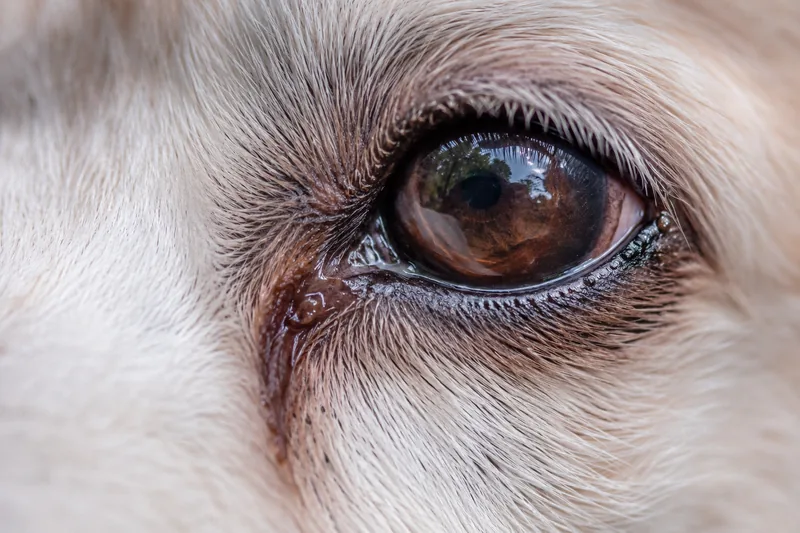
A small amount of clear or slightly cloudy discharge is part of how the eye keeps itself clean. It often collects overnight, which is why a little crust in the morning corner is normal.
Normal discharge is minimal, clear, and the same in both eyes. Your dog is comfortable, the eyes are not red, and a gentle wipe clears it.
The moment to pay attention is when that baseline changes. More discharge, a new color, or one eye looking different all move it out of the normal range.
Clear, Watery Discharge
Heavy clear, watery discharge usually is not infection. More often it points to allergies, an irritant in the air, or a blocked tear duct that keeps tears from draining normally.
Allergic tearing tends to hit both eyes and often comes with sneezing or itchy skin. A blocked duct, by contrast, may cause constant tearing and staining on one side.
This type rarely needs urgent care, but persistent watering deserves a diagnosis. The fix depends on whether the cause is allergy, anatomy, or irritation.
Yellow or Green Discharge
Color is where discharge gets more serious. Yellow or green discharge is thicker and stickier than normal tearing, and it usually signals an infection.
It may crust heavily, glue the eyelids together after sleep, and come with redness or squinting. Conjunctivitis, sometimes called pink eye, is a common culprit.
This is a clear reason for a vet visit. Eye infections respond well to the right medicated treatment, but they can worsen and threaten the eye if ignored.
Tear Stains
The reddish-brown marks below the eyes are tear stains, caused by constant tearing rather than discharge in the usual sense. They show up most on light-coated breeds.
The color comes from pigments in the tears, and the dampness can also invite a low-grade yeast or bacterial tinge. Keeping the area clean and dry minimizes it.
Because steady tearing has a cause, stains are worth investigating. A blocked tear duct, shallow eye sockets, or irritation can all keep the tears flowing.
The Common Causes
Most discharge traces back to a familiar set of causes. Allergies and irritants, infections, blocked tear ducts, dry eye, and foreign material lead the list.
Eye discharge also travels with other eye signs. It frequently appears alongside the redness covered in our guide to red eyes in dogs, since the same irritation drives both.
Breed plays a role too. Flat-faced breeds with prominent eyes and breeds prone to inward-rolling eyelids see more discharge than average.
When It’s an Emergency
Most discharge is not an emergency, but some pairings are. Discharge with a suddenly red or painful eye, with cloudiness, or with squinting and pawing needs prompt attention.
Discharge after an obvious injury, or thick discharge that appears suddenly in one eye, also warrants a fast call. These can signal an infection, ulcer, or trauma covered in our guide to eye problems in dogs.
When discharge comes with signs of pain, treat it as urgent. The eye does not give much margin for waiting.
Cleaning Eyes Safely at Home
For normal discharge, gentle cleaning is all most dogs need. Use a clean, damp, lint-free cloth or a vet-approved eye wipe, and wipe outward from the inner corner.
Use a fresh area of the cloth for each eye to avoid spreading anything between them. Plain sterile saline can flush a mild irritant if your dog will tolerate it.
What to avoid is medicating on your own. Human eye drops can harm a dog’s eye, especially if there is an unseen scratch, so leave medicated treatment to your vet.
How Vets Diagnose It
The vet starts by examining the eye and the discharge itself. The color, the texture, and whether one or both eyes are involved all point toward the cause.
Simple in-office tests fill in the rest. A tear test checks for dry eye, a stain reveals scratches or ulcers, and a look at the tear ducts can find a blockage.
What you have noticed helps a lot. When it started, which eye, and the color and amount all speed the diagnosis.
When to See the Vet
A little clear discharge in a comfortable dog needs nothing but a gentle wipe. Beyond that, several patterns are worth a call.
Book a visit for yellow or green discharge, a sudden increase, one-sided discharge, or discharge with redness, squinting, or pain. Persistent tear staining is also worth investigating for an underlying cause.
When you are unsure, the color is your guide. Anything beyond clear and minimal earns a vet’s look.
Final Thoughts
Eye discharge is usually your dog’s eye doing its everyday job, and a quick wipe handles it. The skill is noticing when the color or amount shifts into problem territory.
Watch for color, volume, and whether one eye differs from the other, and loop in your vet when those change. Read it that way and you will calmly handle the normal gunk and catch the discharge that matters.
Frequently Asked Questions
Yellow or green discharge usually means an infection, often bacterial, sometimes alongside conjunctivitis. It's thicker and stickier than normal tearing and may glue the eyelids together. This type of discharge warrants a vet visit, since infections respond well to the right treatment but can worsen and affect the eye if left alone.
A small amount of clear discharge is normal, especially first thing in the morning. Heavier or constant clear, watery discharge is usually a sign of allergies, an irritant, or a blocked tear duct rather than infection. If it persists, comes with redness or squinting, or affects only one eye, have your vet take a look.
Tear stains are the reddish-brown marks under the eyes from constant tearing, most visible on light coats. Gently wipe the area daily with a damp cloth or vet-approved wipe and keep the hair trimmed. Since persistent tearing has an underlying cause, ask your vet to rule out blocked ducts or irritation rather than only treating the stain.
Yes, gently. Use a clean, damp, lint-free cloth or a vet-approved eye wipe and wipe outward from the inner corner, using a fresh area for each eye. Plain sterile saline can flush a mild irritant. Don't use human medicated drops without your vet, and see a vet if discharge is colored, heavy, or paired with pain.
See a vet for yellow or green discharge, a sudden increase, discharge from only one eye, or any discharge with redness, swelling, squinting, cloudiness, or pawing at the eye. These can signal infection, a blocked duct, dry eye, or an injury. Quick attention keeps a minor issue from becoming a threat to the eye.