Constipation is one of those problems that’s easy to miss until your dog is visibly struggling. Unlike diarrhea, which announces itself, a dog that isn’t pooping can go unnoticed for a day or more.
Most of the time it’s mild and responds well to simple home care. But constipation also has a serious end, and knowing where the line falls is what keeps a minor problem from becoming a major one.
This guide covers what constipation is, the common causes, the home remedies that genuinely help, and the warning signs that mean it’s time for the vet. The theme throughout is simple: hydration and fiber fix a lot, but straining shouldn’t drag on.
What Constipation Is
Constipation means infrequent, difficult, or absent bowel movements. The stool that does come out is usually hard, dry, and small, because it has sat in the colon too long and lost moisture.
The colon’s job is to absorb water from waste before it passes. When stool moves too slowly, the colon pulls out too much water, leaving it hard and tough to pass.
Most dogs have a bowel movement once or twice a day. A meaningful drop from your dog’s normal pattern, paired with straining, is the basic definition of constipation.
The Symptoms
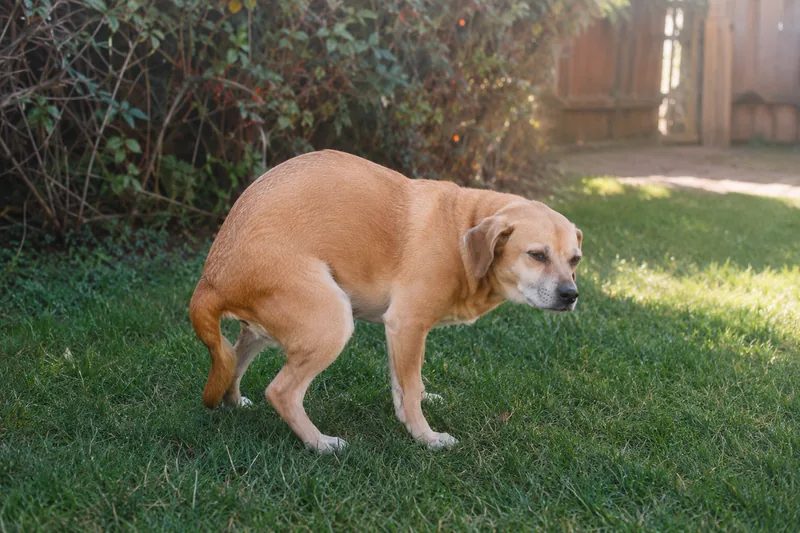
The clearest sign is straining to defecate with little or nothing produced. You might see your dog repeatedly assume the position, circle, and strain without success.
Other signs include hard, dry stool, sometimes with mucus or a streak of blood from the effort. Some dogs pass only small, pebble-like pieces.
Watch for the whole-dog signs too. Reduced appetite, lethargy, discomfort or crying when trying to go, and a tense or bloated abdomen can all accompany constipation.
One important caution: straining can look the same whether a dog is constipated or has diarrhea, or even a urinary problem. A dog straining and producing liquid may actually have diarrhea, so look at what is and isn’t coming out before assuming.
How Long Is Too Long?
Since most dogs go at least once a day, a useful rule of thumb is to take notice after about 48 hours without a bowel movement. That’s the point to start home measures and consider a call.
Sooner if other signs are present. Hard straining, crying, a swollen belly, vomiting, or lethargy alongside the constipation move it from watch-and-wait to call-the-vet.
Don’t let constipation drag on indefinitely, hoping it resolves. Prolonged constipation can progress to a blockage the dog can’t clear on its own, which is far harder to treat than an early case.
Common Causes
Constipation has a long list of triggers, and dehydration tops it. A dog that isn’t drinking enough produces dry, hard stool, which is why water is central to both cause and cure.
Diet plays a big role. Too little fiber, or sometimes too much of the wrong kind, slows things down, and so does swallowing indigestible material like hair, bones, or bits of toys.
Lifestyle matters too. Lack of exercise slows the gut, and older, more sedentary dogs are more prone as a result.
Several physical causes round out the list. Blocked or impacted anal glands, an enlarged prostate in unneutered males, certain medications, ingested foreign objects, and pain from arthritis or injury that makes posturing to poop hard can all cause constipation.
Finally, there are the serious medical causes. Tumors, neurological problems, and the colon disorder megacolon can all present as constipation, which is part of why persistent cases need a vet rather than endless home remedies.
Safe Home Remedies
For a mild, early case in an otherwise healthy dog, several gentle measures often help, ideally with a quick okay from your vet first. The goal is to add moisture and get things moving.
Boost hydration first. Make sure fresh water is always available, and consider adding water or broth to meals or switching to moist or canned food to increase fluid intake.
Add a little fiber. Plain canned pumpkin, not pie filling, is the classic choice, and a small amount mixed into food adds both fiber and moisture.
Get your dog moving. Exercise stimulates the gut and encourages normal bowel movements, so a few extra walks can help nudge things along.
Give it a short window, not an open-ended one. If these measures don’t produce a bowel movement within a day or so, or your dog is uncomfortable, it’s time to stop and call the vet rather than escalating home treatments.
The Role of Fiber and Water
Constipation usually comes down to two things in short supply: water and fiber. Understanding how they work makes the remedies make sense.
Water keeps stool soft enough to pass. Since the colon absorbs water from waste, a well-hydrated dog produces stool that moves easily, while a dehydrated one produces hard pellets.
Fiber adds bulk and holds moisture in the stool, helping it move through the colon at a healthy pace. That’s why pumpkin and fiber-rich foods are so commonly recommended.
The balance matters, though. Too little fiber causes problems, but piling on fiber without enough water can backfire, so the two work as a pair, and your vet can help dial in the right amount for your dog.
What Not to Give
Some well-meaning home remedies do more harm than good. The most important rule: never give human laxatives or stool softeners unless your vet specifically directs you, since many are unsafe or dangerous for dogs.
Skip mineral oil as a home treatment too. It’s a common suggestion, but it can be aspirated into the lungs and cause serious problems, and it should only be used under veterinary supervision.
Avoid milk as a laxative. The old idea that milk loosens stool relies on causing digestive upset, and many dogs are lactose intolerant, so it can trigger diarrhea and dehydration instead of helping.
When in doubt, don’t improvise. The safe home remedies are water, fiber, and exercise, and anything beyond that belongs in a conversation with your vet.
When It Turns Serious
Constipation has a serious progression that every owner should know about. Left unresolved, it can advance to obstipation, where the dog is so backed up it can’t pass stool at all.
Chronic or severe obstipation can lead to megacolon, a condition where the colon becomes stretched, weakened, and unable to contract normally. Megacolon is difficult to manage and sometimes requires surgery.
Constipation can also be a symptom of a dangerous underlying problem, such as an intestinal obstruction from a swallowed object. A blockage is an emergency, and it sometimes brings vomiting along, overlapping with the warning signs of serious vomiting.
The takeaway is that constipation isn’t always trivial. Most cases are mild, but the ones that aren’t can become genuinely dangerous, which is the whole reason not to wait too long.
How Vets Treat It
When constipation warrants a visit, the vet first confirms it really is constipation and looks for the cause. An exam, and often X-rays, reveal how backed up the colon is and whether an obstruction or other problem is involved.
Treatment depends on severity. Mild cases may get fluids to rehydrate, dietary changes, and a prescribed stool softener or laxative suited to dogs.
More severe cases need more intervention. The vet may administer an enema, and in serious obstipation, manually remove the impacted stool under sedation.
The vet also treats the underlying cause, whether that’s dehydration, a blockage, prostate trouble, or another condition. Addressing the root is what keeps the constipation from simply returning.
When to See the Vet
Some situations call for the vet rather than more home remedies. Go in if your dog hasn’t had a bowel movement in more than about two days despite home measures.
Seek prompt care for hard straining with no result, crying or obvious pain when trying to go, a swollen or tender belly, vomiting, lethargy, or blood. These suggest a more serious blockage or an underlying problem.
Lower the threshold for puppies, seniors, and dogs with known health issues. And if your dog is straining but you’re unsure whether it’s constipation, a urinary problem, or something else, let the vet sort it out, since a straining dog who can’t urinate is a true emergency.
Preventing Constipation
Most constipation is preventable with steady habits, and they’re the same ones that support overall digestive health. Keep fresh water available at all times and encourage drinking.
Feed a balanced diet with appropriate fiber, and consider moist food or a little added water for dogs prone to hard stool. Make any diet changes gradually.
Keep your dog active, since regular exercise keeps the gut moving. This matters even more for older and less mobile dogs.
Finally, manage the physical contributors. Keep up with anal gland health, grooming to prevent hair ingestion, and routine vet care that catches the prostate, orthopedic, and other issues that can cause constipation before they do.
Final Thoughts
Constipation sits on a spectrum, from a minor, easily fixed slowdown to a genuine emergency. Most cases land at the mild end and respond to the simple trio of water, fiber, and exercise.
The skill is knowing when you’ve crossed into serious territory. Straining that drags past a day or two, pain, vomiting, a bloated belly, or a complete inability to go are all signals to stop the home remedies and get to the vet.
Treat constipation early and it usually resolves quickly and uneventfully. Wait too long, and a backed-up colon can become a real problem, so when simple measures don’t work fast, let your vet take it from there.
Frequently Asked Questions
For a mild case, make sure your dog is well hydrated, add a little fiber such as plain canned pumpkin, encourage exercise, and switch to or add moist food. Always check with your vet before trying remedies, and never give human laxatives. If there's no bowel movement within a day or two, or your dog seems to be in pain, stop home care and call the vet.
Vet-approved options include plain canned pumpkin for fiber, increased water intake, moist or canned food, and sometimes a vet-prescribed stool softener. Probiotics and gentle exercise can help too. Avoid human laxatives, mineral oil, and milk, which can be harmful or make things worse, and always confirm doses and choices with your vet first.
Plain canned pumpkin is the most popular natural option, since its fiber and moisture help move stool along. Adding water to food, offering more fresh water, and increasing exercise all act as gentle, natural aids. These suit mild cases, but they're not a fix for a true blockage, so see a vet if home measures don't work quickly.
Many dogs poop once or twice a day, so going more than about 48 hours without a bowel movement is a reason to take notice and call your vet. Sooner if your dog is straining hard, crying, vomiting, lethargic, or has a swollen belly. Prolonged constipation can progress to a serious blockage, so don't wait it out indefinitely.
Yes. Untreated constipation can progress to obstipation, a severe blockage the dog can't clear, and over time to megacolon, where the colon stretches and loses function. It can also signal an underlying problem like an obstruction, prostate issue, or dehydration. That's why constipation lasting more than a day or two warrants veterinary care.