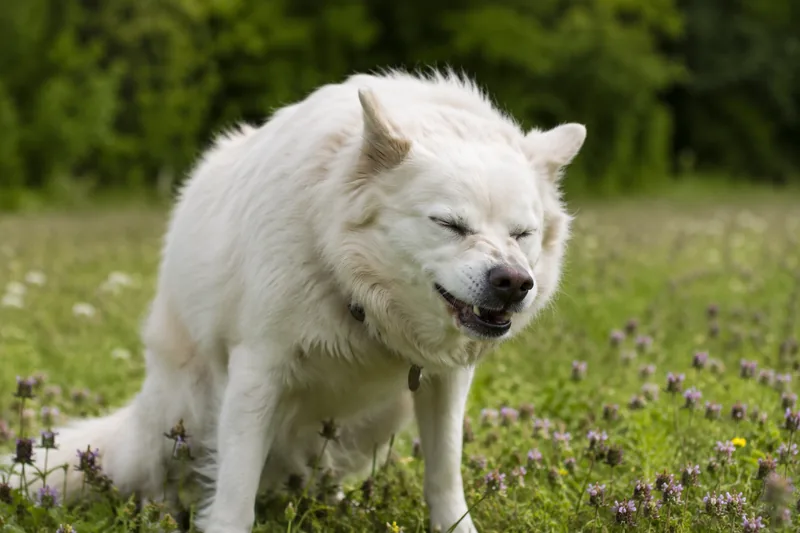
Sneezing is one of those dog behaviors that is almost always harmless and occasionally a real clue. The trick is knowing which sneeze is which.
A dog clears its nose the same way we do, and dust or a tickle sets off a normal sneeze that means nothing. But frequent, violent, or one-sided sneezing can point to something that needs a closer look.
This guide covers normal sneezing, the alarming-but-harmless reverse sneeze, the causes worth knowing, and the signs that mean it is time to call the vet.
This guide is for general education and does not replace veterinary care. Sudden nonstop sneezing or bloody discharge needs prompt attention.
Normal Sneezing
A sneeze is the nose clearing an irritant, and an occasional one is completely normal. Dust, pollen, a strong smell, or a bit of grass can all set it off.
Normal sneezing is brief and infrequent, with no discharge and no other signs. The dog sneezes a few times, shakes it off, and carries on as usual.
This kind of sneezing needs nothing from you. It is simply the nose doing its job.
Reverse Sneezing
Reverse sneezing is the one that sends owners into a panic, and it is usually nothing to fear. Instead of pushing air out, the dog pulls air in with a rapid series of loud snorts, often with the neck stretched and elbows back.
It looks dramatic, like the dog cannot breathe, but an episode is typically over within a minute and the dog is instantly fine afterward. It is especially common in small breeds and flat-faced breeds like Pugs and Bulldogs.
You can gently help by calming the dog and lightly massaging the throat, or briefly covering the nostrils so the dog swallows. It only needs a vet if it becomes frequent or prolonged.
Allergies and Sneezing
Allergies are a common cause of repeated sneezing, often alongside itchy skin and watery eyes. Pollen, mold, and dust are the usual triggers, and the sneezing may follow the seasons.
Allergic sneezing tends to come in clusters and pair with other allergy signs. A dog rubbing its face, licking its paws, and sneezing through spring is painting a familiar picture.
Managing the allergy is what settles the sneezing. Our guide to seasonal allergy treatment covers the antihistamines, washes, and other options worth discussing with your vet.
Something Stuck in the Nose
Sudden, frantic, nonstop sneezing that starts out of nowhere is a classic sign of something inhaled. Grass seeds and awns are the usual culprits, especially after a dog has been sniffing through grass.
A lodged foreign object irritates the nasal passage and triggers violent sneezing as the body tries to expel it. The dog may also paw at its nose or shake its head.
This one does not resolve on its own and can work deeper or cause infection. A grass seed up the nose is a same-day vet trip for removal.
Infections and Nasal Problems
Infections of the nose and sinuses cause sneezing too, usually with thick or colored discharge. Bacterial, viral, and fungal infections can all be behind it.
Dental disease is a sneaky cause worth knowing. The roots of the upper teeth sit close to the nasal passages, so an infected tooth can drive sneezing and one-sided discharge.
In older dogs, persistent one-sided sneezing with bloody discharge deserves prompt attention. It is usually something treatable, but it needs a vet to identify.
Play Sneezing
Not all sneezing is medical. Many dogs sneeze during excited play, a normal behavior that seems to signal friendly, happy energy.
Play sneezing happens only during play and comes with a loose, wiggly, happy body. There is no discharge and no distress.
This is one to simply enjoy. It is a sign your dog is having a good time, nothing more.
When Sneezing Is a Red Flag
Most sneezing is harmless, but a few patterns mean a vet visit. Frequent or violent sneezing, one-sided discharge, blood from the nose, a swollen muzzle, or constant pawing at the face all qualify.
Sneezing that comes with broader signs matters too. When it pairs with lethargy, appetite loss, coughing, or labored breathing, it may be part of a bigger respiratory picture covered in our guide to breathing problems in dogs.
These signs do not mean panic, but they do mean a call. They separate a harmless sneeze from a problem that needs treatment.
How Vets Diagnose It
The vet starts with the story and a look at the nose and face. When the sneezing started, whether it is one-sided, and what discharge looks like all guide the next step.
For stubborn or one-sided cases, imaging and a closer look follow. Nasal X-rays or a scope can find a foreign object, a mass, or signs of infection, and a dental check rules out a tooth-root cause.
Matching the workup to the pattern is what gets the answer. A simple allergic sneeze and a lodged grass seed lead down very different paths.
When to See the Vet
Occasional sneezing and the odd reverse-sneeze episode need nothing but a calm owner. Most other patterns are worth a call.
Book a visit for frequent or violent sneezing, one-sided or bloody discharge, pawing at the face, or sneezing with coughing or low energy. Treat sudden nonstop sneezing after time in grass as a same-day issue.
When you are unsure, note what the discharge looks like and whether it is one-sided. That detail helps your vet judge how quickly your dog needs to be seen.
Final Thoughts
Sneezing is mostly a harmless quirk, from the everyday tickle to the dramatic reverse sneeze that turns out to be fine. The job is to spot the smaller set of sneezes that are trying to tell you something.
Watch for frequency, discharge, and whether it comes from one side, and loop in your vet when those appear. Read the signs that way, and you will calmly handle the harmless sneezes and catch the few that matter.
Frequently Asked Questions
Occasional sneezing is normal and usually means dust, pollen, or an irritant in the nose. Frequent or persistent sneezing can point to allergies, an infection, dental disease near the nasal passages, or a foreign object like a grass seed. If it keeps up, comes from one nostril, or includes discharge or blood, see your vet.
Reverse sneezing is a sudden series of rapid, snorting inhales through the nose, often with the head and neck extended. It looks and sounds frightening but is typically harmless and over within a minute. It's common in small and flat-faced breeds. It only needs a vet if it becomes frequent, prolonged, or comes with other signs of illness.
Most episodes stop on their own quickly. You can gently help by calming your dog, lightly massaging the throat, or briefly covering the nostrils so the dog swallows, which often ends the spasm. If episodes become frequent or long, see your vet to rule out allergies, irritants, or a nasal problem.
Play sneezing is a normal, healthy behavior. Dogs often sneeze during excited play as a kind of signal that they're having fun and it's all friendly. This kind of sneezing is nothing to worry about, comes only during play, and has no discharge or other signs with it.
See a vet for sneezing that's frequent or violent, comes from one side of the nose, or includes bloody or thick discharge, pawing at the face, or a swollen muzzle. Sudden nonstop sneezing right after sniffing grass can mean an inhaled grass seed, which needs prompt removal. Sneezing with lethargy or appetite loss also warrants a visit.