Of all the things dogs do that baffle their owners, eating poop might top the list. It’s revolting to us and apparently delightful to them, and that gap is hard to accept.
Here’s the reassuring part: it’s extremely common and usually not a sign that anything is wrong. The technical name is coprophagia, and most dogs that do it are perfectly healthy.
This guide explains the real reasons behind the habit, both behavioral and medical, when it’s worth a vet visit, and the practical steps that actually get a dog to stop. The good news is that management works.
What Coprophagia Is
Coprophagia is simply the technical term for eating feces. It covers a dog eating its own stool, another dog’s, or the droppings of other animals entirely.
It’s one of the most common behavior complaints vets and trainers hear. Surveys suggest a large share of dogs do it at least occasionally, so if your dog does, it’s in plenty of company.
Importantly, it’s a behavior with many possible drivers rather than a single cause. Sorting out which reason applies to your dog is the key to stopping it, which is what the rest of this guide tackles.
When It’s Normal
In several situations, eating poop is completely normal dog behavior. Recognizing these saves you from worrying about something that needs no fixing.
Mother dogs eat their puppies’ waste instinctively to keep the den clean and hidden from predators. This is hardwired and entirely natural during the nursing weeks.
Puppies also explore the world with their mouths, and that includes investigating and sometimes eating poop. Most grow out of it as they mature, especially with gentle redirection.
The behavior also traces back to ancestry. Dogs descend from scavengers, and eating waste was part of that opportunistic past, so the impulse isn’t a defect so much as an old instinct surfacing.
Behavioral Reasons
For adult dogs, most coprophagia is behavioral rather than medical. Understanding the motivation points you to the right fix.
Boredom and lack of stimulation are big drivers. A dog with too little to do may eat poop simply for something to engage with, much like the under-stimulated grazing behind some dogs that eat grass.
Anxiety and stress play a role too, with the behavior acting as a coping mechanism. Confinement, isolation, or upheaval at home can all trigger it.
Attention-seeking is another classic. A dog that learns eating poop sends you running, even to scold, may repeat it precisely because it earns a reaction.
Then there’s house-training fallout. A dog that was punished for accidents may eat its stool to hide the evidence, which is one reason punishment backfires so badly.
And for some dogs, the simplest explanation holds: they just like the taste.
Medical Reasons
A minority of cases have a medical driver, and these are worth ruling out, especially if the habit is new or intense. Several health issues can prompt a dog to eat feces.
Nutritional deficiencies or poor diet quality can play a part, leaving a dog seeking nutrients it isn’t absorbing. A complete, high-quality diet is the baseline defense.
Problems with digestion and absorption are another factor. Conditions that keep a dog from fully digesting its food can leave stool that still smells like a meal, along with the broader sensitivities seen in food allergies.
Parasites are a classic medical cause, since worms rob a dog of nutrients and can increase appetite. Diseases that ramp up hunger, such as diabetes, Cushing’s disease, or thyroid problems, can also drive it.
Any condition causing increased appetite or malabsorption belongs on the list. That’s exactly why a sudden or obsessive case deserves a vet’s evaluation rather than training alone.
Their Own vs Other Animals’ Poop
It helps to distinguish what kind of poop your dog is eating, because the risk differs. Eating its own stool is the most common and generally the lowest-risk version.
Eating other dogs’ feces raises the chance of picking up parasites or infectious disease, since you don’t know the other animal’s health. It’s more of a hygiene and health concern than self-coprophagia.
Cat poop is a special temptation for many dogs, thanks to the high protein content of cat food carrying through to the litter box. It’s worth blocking access, both for hygiene and because litter can cause its own problems.
Wildlife droppings and livestock manure carry the highest risk of parasites and toxins. A dog that scavenges these on walks needs closer supervision and a reliable leave-it cue.
When It Starts Suddenly
Context around timing matters. A puppy nibbling poop or a long-standing mild habit is different from a sudden change in an adult dog.
If an older dog that never ate poop suddenly starts, treat it as a possible medical signal. New coprophagia can accompany the increased appetite or malabsorption of an underlying illness.
The same goes for a sudden spike in intensity, or the behavior appearing alongside other changes like weight loss, increased thirst, or low energy. Those combinations point toward a health cause.
In these cases, start with the vet rather than the training plan. Ruling out or treating a medical driver comes first, because no amount of training fixes a problem that’s physical.
Is It Dangerous?
For most dogs eating their own stool, the direct risk is low, and the bigger downside is the hygiene factor and the unpleasantness of dog kisses afterward. But it isn’t entirely risk-free.
Eating other animals’ feces can transmit intestinal parasites, bacteria, and viruses. This is the main health reason to take the habit seriously and to keep up parasite prevention.
There’s also the chance of ingesting something passed in another animal’s waste, including medications or toxins. That’s an uncommon but real concern with scavenged droppings.
And while it rarely causes direct illness from a dog’s own stool, the behavior can occasionally upset the stomach, contributing to the kind of digestive grumbling behind some bouts of vomiting. On balance, it’s worth stopping for both health and hygiene.
Coprophagia in Puppies
Puppies are the most common poop-eaters, and in them it’s usually a passing phase rather than a problem. Young dogs explore everything with their mouths, and stool is just one more thing to investigate.
Most puppies outgrow the habit on their own as they mature, especially with good supervision. Gentle redirection works far better than scolding, which only confuses a puppy still learning house-training.
The key during puppyhood is prevention through cleanup and management, not correction. Pick up waste promptly, supervise potty trips, and reward your puppy for moving away from poop.
If a puppy’s habit is intense, comes with a poor appetite for real food, or persists well past the first year, mention it to your vet. Most of the time, though, patience and consistency are all a puppy needs to grow out of it.
Multi-Dog Households
Homes with several dogs see coprophagia more often, and the dynamics are worth understanding. Dogs may eat each other’s stool, which spreads the habit and raises the parasite risk.
One dog can also pick up the behavior by watching another, turning a single dog’s quirk into a household one. That social spread makes early management especially important with multiple dogs.
Cleanup becomes a bigger job too, since there’s simply more waste and more opportunity. Picking up promptly after every dog, every time, removes the temptation at its source.
If you use a deterrent supplement, remember that every dog in the home usually needs treating for it to work. Otherwise the untreated dog’s stool stays appealing and the habit continues.
How to Stop It
The most effective approach combines management, training, and addressing the cause. Management is the foundation, because a dog can’t eat what isn’t there.
Clean up waste immediately, in the yard and on walks, so there’s nothing to eat. Supervise outdoor time, keep the litter box out of reach, and use a leash in areas where droppings are likely.
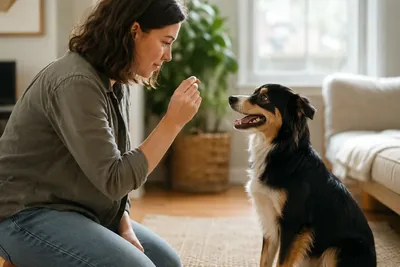
Teach and reward a strong leave-it and a reliable recall. When your dog turns away from poop and comes to you for a treat instead, you’re replacing the habit with a better-paying one.
Tackle the underlying driver too. Boost exercise and enrichment for a bored dog, ease anxiety for a stressed one, feed a complete diet, and have your vet rule out medical causes.
Consistency across all of these is what makes the change stick.
What Not to Do
Some common reactions make the problem worse. The biggest is punishment, which tends to backfire in several ways.
A dog punished for eating poop, or for accidents, may simply eat faster to hide the evidence or do it out of your sight. Punishment can also increase the anxiety that drives the behavior in the first place.
Don’t make a big dramatic reaction, either, since attention of any kind can reinforce an attention-seeking dog. Calm management beats theatrics.
And don’t rely on a single deterrent product as a magic fix while ignoring cleanup, training, and diet. The behavior almost always needs the combined approach, not one tool.
Do Deterrents Work?
Plenty of products promise to end coprophagia, from food additives to taste deterrents. Their track record is mixed, which is worth knowing before you spend.
Deterrent supplements aim to make stool taste bad to the dog. They help some dogs and do nothing for others, and in a multi-dog home every dog usually has to be treated for them to work.
The pineapple trick, adding a bit of pineapple to food so the stool tastes unpleasant, is a popular home version. Like commercial deterrents, it works for some and not others, and it’s no substitute for management.
The honest takeaway is that no product reliably beats the basics. Prompt cleanup, supervision, training, a good diet, and addressing the cause outperform any additive, though a deterrent can be a useful extra for the right dog.
When to See the Vet
A vet visit is wise in several situations, even though most coprophagia is behavioral. Go in if the behavior starts suddenly in an adult dog, becomes obsessive, or appears alongside other symptoms.
Book a check if your dog eats other animals’ feces regularly, both to deworm and to discuss prevention. Weight loss, increased appetite or thirst, low energy, or digestive upset with the habit all warrant a medical look.
Your vet can run a fecal test for parasites, assess the diet, and check for the conditions that increase appetite or impair absorption. Ruling those out lets you focus the rest of your effort on training and management with confidence.
Don’t overlook the behavioral angle either. If the habit seems driven by anxiety or has hardened into a compulsive pattern that management and training aren’t resolving, your vet can refer you to a veterinary behaviorist for a targeted plan.
Persistent coprophagia that resists the usual steps is worth that extra help. Living with it isn’t your only option, and a tailored approach often succeeds where general advice stalls.
Final Thoughts
Eating poop is one of the most off-putting things our dogs do, but it’s rarely the alarming sign it feels like. For most dogs it’s a normal, if unsavory, behavior with an everyday cause like boredom, instinct, or simple taste.
The path to stopping it is refreshingly practical: remove access, supervise, train a solid leave-it, enrich your dog’s day, and feed a complete diet. Skip the punishment, which only makes things worse.
Keep an eye out for the version that points to a health issue, a sudden start, an obsessive intensity, or other symptoms riding along. For everything else, patience and consistent management turn a gross habit into a memory.
Frequently Asked Questions
The most reliable fix is management: clean up waste immediately so there's nothing to eat, supervise outdoor time, and teach a solid leave-it and recall. Keep your dog mentally and physically engaged, feed a complete diet, and ask your vet to rule out medical causes. Deterrent products work for some dogs, but removing access and rewarding the right behavior work best.
Coprophagia shows up across all breeds, but studies suggest it's more common in certain groups, including some hounds and terriers, and in homes with multiple dogs. Greedy eaters and food-motivated dogs also tend to do it more. That said, any dog of any breed can develop the habit, so behavior and environment matter more than breed alone.
Some owners try deterrent supplements or additives that make stool taste unpleasant, and they help certain dogs. Ensuring a complete, high-quality diet matters more, since deficiencies or poor digestion can drive the behavior. There's no guaranteed vitamin or additive fix, so pair any product with cleanup, training, and a vet check rather than relying on it alone.
No. Punishment usually backfires, because a dog scared of being scolded for poop may simply eat the evidence faster or do it out of sight. It can also worsen anxiety, which is itself a cause. Focus instead on prevention and positive reinforcement, rewarding your dog for leaving poop alone and coming to you.
Eating their own stool is usually low-risk, but eating other animals' feces can transmit intestinal parasites, bacteria, or viruses. There's also a risk of ingesting medications or toxins passed in another animal's waste. It's worth stopping for hygiene and health, and worth deworming and a vet check if your dog regularly eats other animals' poop.