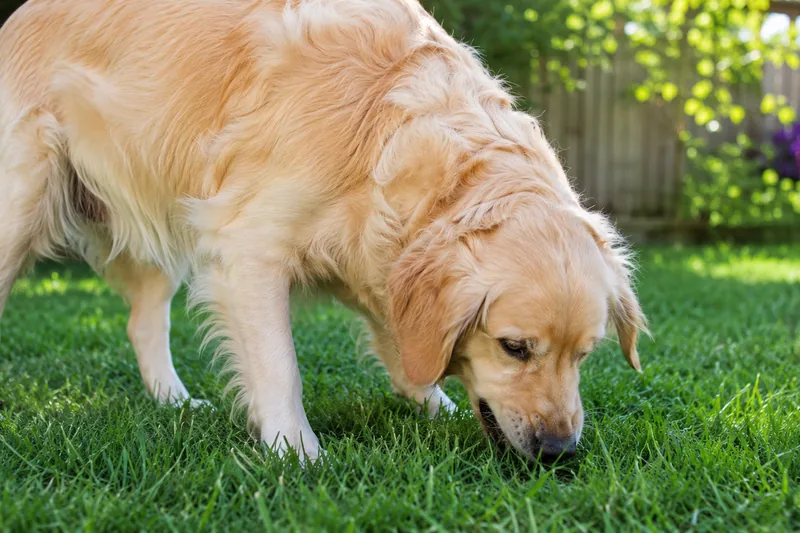
Few dog habits get explained as confidently, or as wrongly, as eating grass. Every owner has a theory, and most of them trace back to the same tidy myth.
The reality is both simpler and more interesting. Grass eating is one of the most normal things a dog does, and the science behind it is far less dramatic than the folklore.
This guide separates what’s actually known from what’s just repeated. It covers the genuine reasons dogs graze, the one big myth to drop, and the handful of situations that do deserve a closer look.
First Things First: It’s Usually Normal
Let’s lead with the reassuring part. Eating grass, technically a mild form of pica, which means eating non-food items, is extremely common and almost always harmless.
Surveys of dog owners find that the large majority of dogs with regular outdoor access eat plants at least sometimes. It shows up across ages, breeds, and sizes.
Most importantly, the grazers are overwhelmingly healthy. In the research, the vast majority of dogs that eat grass show no signs of illness before they do it and no ill effects after.
So if your otherwise happy, healthy dog nibbles grass on walks, you’re looking at normal dog behavior, not a symptom. The interesting questions are why they do it and when, if ever, to step in.
The Vomiting Myth
The most repeated explanation is that dogs eat grass to make themselves throw up and settle an upset stomach. It’s intuitive, it’s everywhere, and it mostly isn’t true.
The evidence doesn’t support it as the main reason. In the best-known survey, fewer than a quarter of dogs regularly vomited after eating grass, and only about one in ten showed signs of illness beforehand.
In other words, most grass eating is not preceded by sickness and not followed by vomiting. If grass were a deliberate self-cure, you’d expect those numbers to be flipped.
That doesn’t mean it never happens. Some dogs clearly do gulp grass when nauseated and bring it back up, but that’s a minority pattern, not the rule that explains the whole behavior.
The takeaway is to retire grass eating as an automatic sign your dog feels sick. It occasionally is, but treating every graze as a stomachache misreads what’s usually just a snack.
It Might Just Taste Good
The least mysterious explanation may be the right one for most dogs: they like it. Fresh grass has a taste and a texture that plenty of dogs simply enjoy.
Spring grass in particular is tender, sweet, and appealing, which is why so many owners notice more grazing when the new growth comes in. To a dog, a good patch of grass can be a treat, not a treatment.
Curiosity feeds it too. Dogs explore the world with their mouths, and an interesting smell or a novel patch of greenery is an open invitation to taste-test.
Seen this way, a lot of grazing is just a dog being a dog. No deficiency, no distress, just a flavor and a texture worth a few bites.
An Ancestral Instinct
There’s a deeper-rooted explanation as well. Dogs descend from wild ancestors that were opportunistic scavengers, not pure meat-eaters, and plant matter was a normal part of that diet.
Wild canids regularly consume grasses and plants, sometimes from the stomach contents of prey and sometimes directly. The behavior is baked into the lineage rather than being a quirk of modern pets.
From that angle, your dog nibbling the lawn is echoing an ancient foraging habit. It’s instinct expressing itself in a backyard, even though the modern dog has a full bowl waiting indoors.
Some researchers think this instinctive grazing may have once helped with intestinal parasites in the wild, scouring the gut. In today’s dewormed, well-fed pet, that original function is largely obsolete, but the urge can linger.
Boredom, Anxiety, and Habit
Not all grazing is about the grass. For some dogs, eating it is something to do, and that’s its own kind of signal.
An under-stimulated dog left alone in a yard may turn to grass the way a bored person reaches for snacks. The behavior fills empty time and offers a bit of sensory engagement.
Anxiety can drive it too. Some dogs graze more when stressed, and a sudden new fixation on eating grass occasionally tracks with a change at home or simple loneliness.
There’s even a bid-for-attention version. A dog who has learned that munching the lawn brings an owner running to intervene may repeat it precisely because it works.
If the grazing seems compulsive and your dog is short on exercise or company, the grass may be a symptom of an unmet need rather than a craving. More activity and enrichment often quiet it.
A Gap in the Diet
Diet is a popular theory and a partial one. The idea that dogs eat grass to correct a nutritional deficiency, especially a lack of fiber, has some logic but limited proof.
There are documented cases where increasing dietary fiber reduced a dog’s grass eating, which suggests it can be a factor for some individuals. A few dogs may be seeking roughage their food doesn’t provide.
But it’s not a blanket explanation. Most grass-eating dogs are on complete, balanced diets and aren’t deficient in anything, so hunger or nutrition rarely accounts for the whole habit.
If your dog grazes a lot and you suspect diet, that’s a conversation for your vet, who can assess whether the food fits the dog. The same logic applies to dogs whose grazing comes alongside other diet quirks, like the picky patterns behind food allergies.
Either way, it’s worth checking before assuming the lawn is the answer.
When It Signals an Upset Stomach
While the vomiting myth is overblown, the kernel of truth inside it still matters. A subset of dogs genuinely do eat grass when their stomach is bothering them.
The pattern to watch for is different from casual grazing. A nauseated dog tends to eat grass frantically and indiscriminately, gulping rather than nibbling, and may lick their lips, drool, or swallow repeatedly first.
If grass eating like that is followed by vomiting, your dog may be trying to relieve real discomfort. One episode that resolves is usually nothing, but a repeating cycle of frantic grazing and throwing up is worth investigating.
This is also where digestion timing matters. If a dog brings up grass mixed with undigested food hours after a meal, that overlaps with the patterns in our guide to regurgitating food after eating.
A persistent version of either deserves a vet’s read.
Grass Eating vs a Grass Allergy
It’s worth clearing up a common mix-up, because two very different problems share the word grass. Eating grass is a behavior, while a grass allergy is an immune reaction, and they have almost nothing to do with each other.
A dog who eats grass is usually just grazing. A dog who is allergic to grass reacts to contact or pollen with itchy skin, paw chewing, redness, or sneezing, whether or not they ever take a bite.
If your dog’s main issue is itching, licking, or breaking out after time on the lawn, you’re likely dealing with the allergy, not the appetite. That’s a separate condition covered in our guide to a dog allergic to grass.
The two can coexist, of course. A dog can both enjoy nibbling grass and be allergic to it, which is all the more reason to match the symptom to the right problem before you act.
Is Eating Grass Actually Safe?
For most dogs, the occasional graze on clean grass is harmless. The grass itself is rarely the danger, but what’s on it and in it can be.
Lawn chemicals top the list. Pesticides, herbicides, and fertilizers are toxic, and a dog eating treated grass is eating those chemicals along with it, so treated lawns are genuinely worth avoiding.
Parasites are the second concern. Grass in areas frequented by other animals can carry intestinal parasites and their eggs, which is one more reason to keep up routine parasite prevention.
A few physical risks round it out. Certain grasses have barbed seeds or awns that can lodge in the mouth or skin, and some ornamental and wild plants are toxic, so it pays to know what’s growing where your dog grazes.
Gulping huge amounts in one go can also cause an upset stomach or, rarely, a blockage. The sensible line is that a little clean grass is fine, while large quantities and treated or unknown plants are not.
When to Worry
The behavior crosses from quirky to clinical in a few specific situations. A sudden, dramatic increase in grass eating is the clearest flag, since abrupt behavior changes can signal an underlying medical issue.
Grazing paired with other symptoms is the next. Repeated vomiting, diarrhea, lethargy, appetite loss, or signs of stomach pain alongside the grass eating all warrant a vet visit rather than a wait-and-see.
Frantic, desperate grazing stands apart from relaxed nibbling. A dog who seems driven to eat grass, especially while showing nausea cues, is telling you something is off.
And obsessive, compulsive grazing that takes over walks or yard time deserves attention too, whether the root turns out to be medical or behavioral. When in doubt, a quick vet conversation beats guessing.
How to Cut Back the Grazing
If your dog is healthy and you simply want less of it, start by ruling out medical causes with your vet. Once that’s clear, the rest is management, not cure.
Cover the basics first. A well-fed, well-exercised, mentally engaged dog has fewer reasons to graze out of boredom, so more walks, play, and puzzle feeders often help on their own.
On walks, redirection works well. Keep your dog’s attention with treats, toys, or training cues when you pass tempting patches, and reward the choice to stay with you.
If you suspect a fiber gap, ask your vet about diet adjustments rather than guessing. And manage the environment by steering clear of treated lawns and keeping your own yard chemical-free and safe.
For a content, healthy grazer, though, the kindest approach is often acceptance. Letting a dog have the occasional bite of clean grass is usually fine, and trying to ban a normal behavior entirely tends to frustrate everyone.
Final Thoughts
Grass eating is one of those dog behaviors that looks like it should mean something dramatic and usually doesn’t. For most dogs, it’s normal, instinctive, and harmless, not a hidden cry for help or a self-prescribed cure.
The myth to drop is the automatic one, that grass always means a sick dog reaching for relief. The evidence says most grazers feel fine, so the behavior alone isn’t cause for alarm.
What deserves your attention is change. A sudden spike, frantic gulping, or grazing alongside other symptoms is the version worth a vet’s eyes, and the rest is just a dog enjoying a bite of green.
Frequently Asked Questions
Usually nothing worrying. It's normal, common behavior driven by instinct, taste, curiosity, or boredom rather than illness. Occasionally it points to an upset stomach, a fiber gap in the diet, or a behavioral need. A sudden change in how much your dog grazes is the part worth paying attention to.
Some do, but it's the exception, not the rule. Studies show fewer than a quarter of dogs vomit after eating grass, and most seem perfectly well before and after. If your dog eats grass frantically and then repeatedly throws up, that's a stomach issue worth a vet visit, not routine grazing.
A little nibbling of clean, untreated grass is generally fine. The real risks aren't the grass itself but pesticides, herbicides, fertilizers, and parasites it can carry. Keep your dog off treated lawns, discourage gulping large amounts, and there's usually no harm in a casual graze.
A sudden, intense change deserves attention. Frantic grazing paired with lip-licking, drooling, or vomiting can signal nausea or stomach upset, while a new obsessive habit can stem from boredom or anxiety. Because sudden behavior changes sometimes mark a medical issue, a vet visit is the safe call.
Rule out medical causes first, then manage the behavior. Make sure your dog is well-fed, well-exercised, and mentally stimulated, redirect attention on walks with treats or toys, and consider whether more dietary fiber helps. For a happy, healthy grazer, gentle management usually beats trying to ban it entirely.