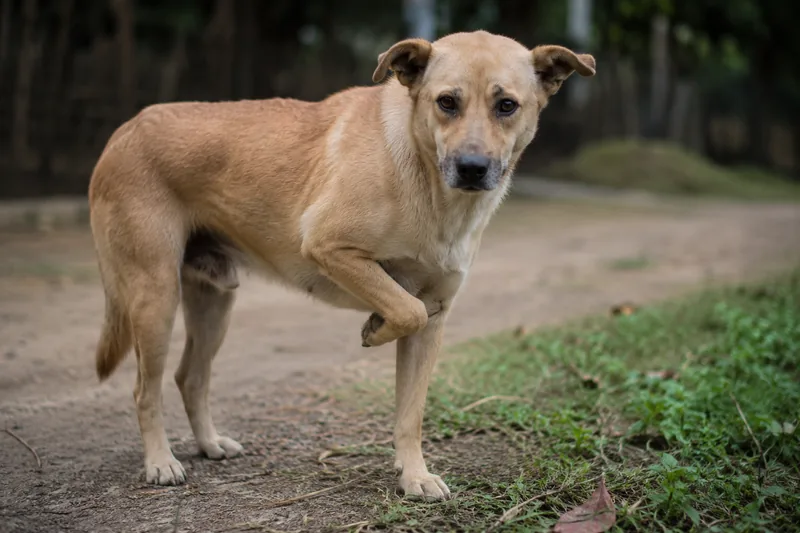
A limping dog is one of the more worrying things to see, partly because the cause can be anything from trivial to serious. The same limp might be a thorn in the paw or a torn ligament.
The good news is that a few simple observations narrow it down fast. How the limp started, which leg, and whether your dog will bear weight all point toward the answer.
This guide covers the common causes of limping, what you can safely check at home, and the signs that mean your dog needs a vet now rather than later.
This guide is for general education and does not replace veterinary care. Never give your dog human pain medication, since common ones are toxic to dogs.
Sudden vs Gradual Limping
The first useful question is how the limp began. A sudden limp that appears in minutes or hours usually points to an injury, like a cut paw, a sprain, or a torn ligament.
A gradual limp that creeps in over weeks or months tells a different story. That pattern usually means a wear-and-tear problem such as arthritis or a developing joint condition.
Timing also helps. A limp that is worst after rest and eases with movement leans toward joint disease, while one that worsens with activity often involves a soft-tissue injury.
Check the Paw First
Before assuming the worst, check the paw, because it is the most common and most fixable cause. Dogs pick up thorns, burrs, glass, and bits of debris between the pads constantly.
Look between the toes and pads for cuts, swelling, or anything embedded. A torn or broken nail, a burr stuck in the fur, or a burn from hot pavement can all cause a sudden limp.
Many paw problems are simple to address once you find them. A quick, gentle inspection often solves the mystery before it becomes a vet trip.
Sprains, Strains, and Ligament Tears
When the paw looks fine, soft-tissue injury is the next suspect. Sprains and strains from an awkward landing or overexertion are common and usually improve with rest.
The more serious version is a torn cruciate ligament in the knee, one of the most common orthopedic injuries in dogs. It often shows as a sudden hind-leg limp, sometimes after a twist while running or playing.
Ligament tears rarely heal well on their own and frequently need treatment. A limp that does not improve with rest, especially in a back leg, deserves a vet’s assessment.
Arthritis and Joint Disease
A slow, gradual limp in an older or larger dog usually traces back to the joints. Arthritis is the leading cause, building quietly until stiffness and limping become noticeable.
This kind of limp is often paired with other signs of joint pain, like stiffness after rest, slowing on walks, and hesitation with stairs. It tends to be worse in cold weather and first thing in the morning.
Because it is chronic, it is managed rather than cured. Our guide to arthritis in dogs covers how the condition progresses and the many ways to keep an affected dog comfortable.
Fractures and Serious Injuries
Some limps come from major trauma and are unmistakable emergencies. A fracture usually causes severe pain, a leg held completely off the ground, swelling, or an abnormal angle.
Dislocations and serious injuries from a car, a fall, or a fight fall in the same category. These need immediate veterinary care, not a wait-and-see approach.
If you suspect a break, keep your dog as still and calm as possible and get to a vet. Trying to handle the leg too much can worsen the injury and the pain.
When Limping Is an Emergency
Most limps can wait for a regular appointment, but some cannot. Treat it as urgent if your dog cannot bear any weight, holds the leg at an odd angle, or is in obvious severe pain.
Other red flags include significant swelling, a limb that dangles, a limp after major trauma, or signs of shock like pale gums and rapid breathing. Dragging a leg or sudden weakness in the back end also needs prompt care.
When any of these appear, skip the home care. Head straight to a vet or emergency clinic.
What to Do at Home
For a mild limp with no emergency signs, rest is the first and best treatment. Keep your dog quiet, limit activity to short leashed bathroom breaks, and skip running, jumping, and stairs.
Check and gently clean the paw if you see a cut or a thorn. A short period of strict rest, often a day or two, is enough for many minor strains to settle.
What you should not do is medicate on your own. Human pain relievers are dangerous for dogs, so call your vet if your dog seems to be in pain and needs relief.
How Vets Diagnose a Limp
The vet starts by watching your dog walk, then examining the leg by feel. They flex each joint and press along the limb to locate the pain, swelling, or instability.
From there, imaging fills in the details. X-rays reveal fractures, arthritis, and joint problems, while specific tests can check for a torn knee ligament.
The history you provide speeds this up. When the limp started, which leg, and what your dog was doing all help the vet zero in on the cause.
When to See the Vet
A brief, mild limp that clears within a few hours can be watched at home. Beyond that, most limps are worth a call.
Book a visit for a limp that lasts more than a day or two, that keeps returning, or that comes with swelling or pain. Go immediately for a non-weight-bearing leg, an obvious deformity, or severe distress.
When you are unsure how serious it is, rest your dog and call the clinic. A limp is one of those signs where a quick professional look saves time and trouble.
Final Thoughts
A limp is your dog telling you a leg hurts, and the message ranges from a minor scrape to a real injury. The skill is reading the clues, starting with the paw and how the limp began.
Rest a mild limp, check the obvious, and lean on your vet for anything that lingers or looks serious. Handle it that way and most limps turn out to be very treatable.
Frequently Asked Questions
A sudden limp usually means an acute injury, such as a cut or thorn in the paw, a broken nail, a sprain or strain, or a more serious torn ligament. Less often it's a sting or a fracture. Check the paw first, then rest your dog and watch closely. If the limp doesn't ease within a day, or your dog won't put weight on the leg, see a vet.
Yes, if the limp lasts more than a day or two, keeps returning, or comes with swelling, pain, or reluctance to bear weight. Go immediately for a leg held completely off the ground, an obviously broken or dangling limb, severe pain, or a limp after a major impact like a car or a fall. A brief, mild limp that resolves quickly can be watched.
Minor limps from a small strain or a tender paw can improve with a few days of rest. But many limps come from problems that won't resolve alone, like a torn ligament or arthritis, and pushing through can make them worse. When in doubt, rest your dog and have a vet check it rather than assuming it will fix itself.
Rest is the main home treatment, with short leashed bathroom breaks only and no running or jumping. Check and clean the paw if there's a visible cut or thorn. Never give human pain relievers like ibuprofen or acetaminophen, which are toxic to dogs. For pain relief, call your vet, who can prescribe something safe.
It can be hard to tell, which is why X-rays exist. A break often causes severe pain, a leg held completely off the ground, swelling, or an abnormal angle, while a sprain may allow some weight-bearing with a milder limp. Both deserve a vet, and a broken leg is an emergency, so when unsure, treat it as the more serious option.