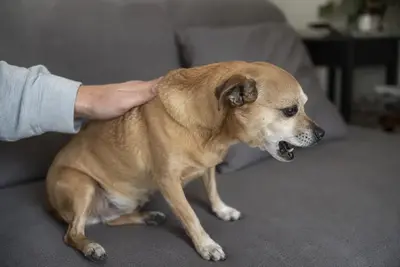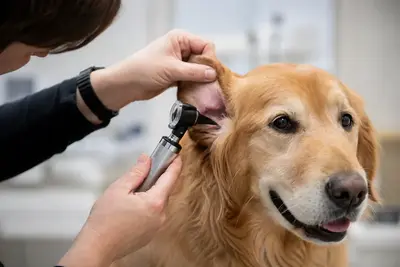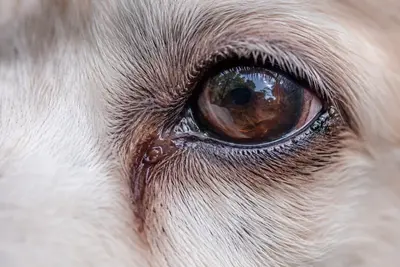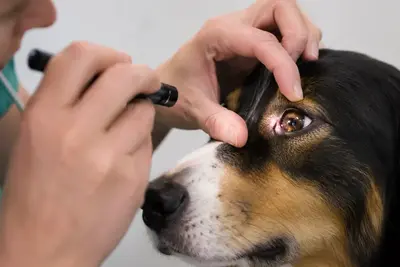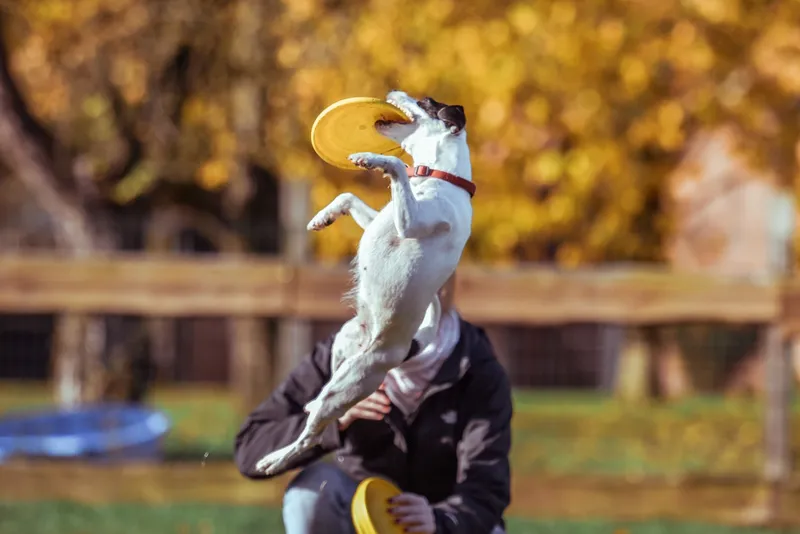
You bring home a new dog and try to teach it catch. The treat bounces right off its nose.
So what do you do?
Catching is a skill, just like everything else in dog training. An untrained dog can turn destructive and hard to live with, while a well-trained one tends to be calmer and happier.
Good training and socialization fix most of that. This article walks through the techniques, from game-based learning to positive reinforcement, crate training, and leash work.
Let’s get into it.
The Definitive Guide To Training Your Dog
Here’s a look at the core training techniques, plus what to do when your dog just can’t seem to catch.
Requirements For Dog Training
Before you start, there are three things worth getting right from the beginning:
Equipment
You don’t need a lot, but a few basics will make things much smoother:
- Ensure you have a dog collar or harness that comfortably fits your dog
- Choose the appropriate dog leash for your dog
- Avoid a retractable dog leash
- Get dog training treats that your dog enjoys most, and that’s easy to eat
Decide On The Method To Use
There are plenty of approaches out there, from training books to online guides on obedience work.
Most trainers agree that positive methods, like praise and treats, are among the most effective options available.
Clicker training is another solid choice, using a conditioned reinforcer to mark the exact moment a dog does something right.
Ultimately, pick the method that fits you and your dog best.
Set Up Training Sessions
Keep sessions short and focused on small, clear steps.
Ten to fifteen minutes a day is plenty, especially for puppies whose attention span is genuinely short.
Long sessions lead to boredom, and a bored dog stops learning fast.
Stick to one command or behavior per session so your dog doesn’t get confused.
Training Your Dog Using Games
Training doesn’t have to feel like work, and it really shouldn’t.
Weaving games into your routine makes it easier for dogs to absorb what you’re teaching them.
Serious training matters, but playtime matters just as much. Dogs genuinely love to have fun.
Playtime keeps your dog mentally sharp and physically tired, which is a combination that prevents most behavior problems.
Games work indoors or outdoors, and there are plenty that kids can join in on too.
These kinds of activities help teach your dog how to play while reinforcing the basics.
Your dog will need a handle on a few simple commands before jumping into structured games, though.
Here are six to rotate through and keep things interesting.
1. Fetch
Fetch is something many dogs take to naturally, and it’s one of the easier games to teach.
You can play it outdoors in a fenced yard with a ball or disc, or indoors with a soft toy.
2. Interactive Treat Games
Pet shops carry a wide range of interactive toys, including puzzles at different difficulty levels and treat-dispensing toys.
You can also make one at home by cutting holes in a plastic container or water bottle.
Fill it with smelly, tasty treats and let your dog figure out how to get them out.
It taps into their natural hunting instincts and gives their brain a real workout.
3. Tug Of War
Most dogs love tug of war, and it gives them a healthy outlet for their natural predatory drive.
It can really wear a dog out, so make sure they know the release command before you start.
Find a good tug toy, get into it, and let your dog win often. Winning builds their confidence.
4. Find The Treat Or Toy
Dogs rely heavily on their noses, and this game puts that skill to good use.
Put your dog in another room so she can’t see you, then hide her favorite treat in a few spots around the room.
Bring her back in and tell her to find it. You can point toward areas she hasn’t checked yet.
5. Hide And Seek
Hide and seek is one of the best ways to reinforce the recall command in a way that actually feels like fun.
Tell your dog to stay, grab a favorite treat or toy, and go hide somewhere in the house.
Call your dog, and shake the treat or squeak the toy to help them track you down.
When they find you, give them plenty of praise along with whatever you were holding.
6. Dog Sports
If your dog is always full of energy and getting into trouble, a structured outlet can make a real difference.
Routine walks and games are a good start, but sometimes they’re just not enough.
Dog sports give high-drive dogs a regular challenge, and there are enough options that you can find one that fits your dog’s temperament.
Safety Guidelines
Always watch for signs of overheating or exhaustion while you’re playing, and stop the game if your dog seems tired, agitated, or anxious.
Your surroundings matter too. Other dogs or people nearby can easily distract your dog, especially if she’s off-leash.
Keep it fun, but keep it safe.
Training Your Dog Using Positive Reinforcement
Positive reinforcement means rewarding the behaviors you want and ignoring the ones you don’t.
You can do that through praise, treats, or real-life rewards like a walk or a play session.
Here’s why it works so well when you do it consistently.
It Gets Family Member Involved
Positive reinforcement doesn’t require strength or a loud voice, which means anyone in the family can use it.
Hand the kids some treats, walk them through the commands, and let them take a turn with you nearby.
With supervision, they can get real results, and the dog gets to bond with everyone in the household.
It Establishes Communication
Positive reinforcement builds a shared language between you and your dog. Reward an action repeatedly, and the dog will repeat it.
Punishment-based methods tend to create fear, and a fearful dog often only behaves when you’re watching.
Positive training teaches the dog that good things happen when it does the right thing, which is a lesson that actually sticks.
Take house training as an example. If you consistently reward your dog with praise, treats, or playtime every time it relieves itself in the right spot, it learns that going there leads to something good.
Dogs want to please. Once they figure out what earns the reward, they’ll keep doing it.
It Provides a Mental Stimulation
A lot of the common behavior problems in dogs, including digging and excessive chewing, come down to boredom.
Short daily training sessions give your dog something to focus on and help burn off energy in a productive way.
It’s a Source Of Fun
Keep sessions short and upbeat and they genuinely become enjoyable for both of you.
Once your dog figures out that training leads to good things, they’ll start to treat it like playtime, and they’ll start offering good behavior just to kick the session off.
It Strengthens Your Bond
For most people, their dog is more than a pet. It’s a companion, and positive training helps you earn that dog’s trust rather than just its compliance.
Think about it like having two different bosses. One pushes you and corrects everything.
The other creates a positive environment and actually recognizes good work.
You’d show up happier for the second one. Your dog feels the same way.
Problems And Proofing Behavior
Patience and consistency are the two things positive reinforcement requires most.
Your dog will disobey sometimes, and you’ll want to react. Try not to.
Dogs read body language more than words, and a frustrated owner can derail a session fast.
Take a breath, pause, and restart on a lighter note.
Mix up the rewards and make sure they’re things your dog actually values. For a brand-new command, use something extra good, something you save specifically for training.
As your dog gets the hang of it, you can dial back to regular treats, and eventually praise alone is often enough.
House Training And Crate Training
Keeping a dog exclusively outdoors isn’t a good long-term setup, which means house training needs to happen early.
This training teaches your dog where to eliminate and it’s one of the first things you should work on.
Crate training supports that process by giving you a way to manage your dog when you can’t supervise directly. Most dogs won’t urinate where they sleep, so the crate helps them hold it until they can go outside.
Here’s how to approach it:
Start by choosing a crate
Crates come in a few main types: wire cages, plastic carriers, and soft-sided canvas or nylon crates.
Wire crates are the most common choice. Your dog can see everything around them, the sides collapse flat for storage, and there’s a sliding tray that makes cleanup easy.
Most wire crates also come with a divider so you can resize the space as your puppy grows.
Plastic crates are better suited for airline travel. They have three enclosed sides, limited light, and can be harder to clean.
Soft-sided crates are lightweight and easy to carry when traveling, but they’re not a good fit for puppies or any dog that chews or scratches.
Size matters a lot. The crate should be big enough for your dog to sleep comfortably, but not so large that they can use one corner as a bathroom.
Introduce the crate
Introduce the crate gradually, whether you have a puppy or an adult dog.
Put something soft inside along with a few toys and some treats, and let your dog explore it on their own terms without any pressure.
Praise and reward every time they go in, and keep the door open at first so they can move in and out freely.
Wait until your dog seems genuinely comfortable before you start closing the door.
Confine your dog to the crate
Dogs are naturally den animals, and a well-introduced crate becomes a place they actually want to be.
Done right, it gives you real peace of mind when you’re away, and many dogs will keep using their crate on their own long after formal training is done.
Once your dog is comfortable going in, toss some treats inside, close the door, and wait a minute or two. If they stay quiet, let them out.
Gradually stretch the time until they’re comfortable staying in for an hour with you home. Then practice the same thing while you step outside briefly, slowly building up until they can handle an hour or more alone.
Problems and proofing behavior
Never use the crate as punishment. The whole point is for your dog to see it as a safe, comfortable place to rest.
Always let your dog out when they’re calm and quiet. If you open the door while they’re barking or whining, you’re teaching them that noise is how they get out, which can mean a lot of sleepless nights ahead.
Don’t leave your dog in long enough that they can’t hold their bladder. For puppies and adult dogs not yet used to confinement, three to four hours is the limit.
Adults who are already accustomed to the crate can manage longer stretches. After any crate time, take your dog out for exercise or a play session.
Leash Training Puppies And Dogs
Most neighborhoods have leash laws, so leash training isn’t optional.
The key is making the whole process positive so your dog builds a good association with the leash from the start.
Here’s how to work through it step by step.
Start in an enclosed area
Start indoors or in a fenced yard where distractions are minimal.
Let your dog sniff the leash before you clip it on, then let her walk around dragging it until the feeling becomes normal to her.
Don’t allow chewing
A lot of dogs treat the leash like a toy at first, and you’ll want to cut that habit before it sticks.
Redirect her with a favorite toy, and if that’s not working, apply something aversive to the leash itself.
Pick up the leach
Once your dog is relaxed with the leash on, pick it up and call her to you, rewarding her with a treat as you hold it.
If she’s still fighting the feeling of the leash, just let it drop and try again later.
Never do leash corrections
The whole point of these exercises is to make your dog comfortable, not anxious.
Never correct behavior by yanking the leash. If your dog is pulling, drop the leash or use a treat or toy to redirect their attention.
Regular practice
Leash walking is something your dog will do for the rest of their life, so it’s worth building the habit early.
Regular practice gets you there faster. Aim for about 10 minutes a day and you’ll see progress quickly.
Practice loose leash walking
Once your dog is walking calmly with you holding the leash, it’s time to work on loose leash walking, where your dog stays beside you without pulling.
Check in with her comfort level as you go and adjust based on how she’s handling it.
Proofing behavior
Before you introduce the leash, make sure your dog is already comfortable wearing her collar. The same gradual approach applies.
Don’t let her treat the collar like a chew toy. Redirect her attention or use a firm “no.”
Keep your attitude positive throughout training. The goal is for your dog to get excited when they see the leash, because it means something fun is about to happen.
That association builds over time, but the earlier you start building it, the better.
Final Thoughts
Not every dog is a natural catcher, and that’s completely normal. The skill comes down to timing, focus, and confidence, all of which you can build with short, patient practice sessions at home.
Starting with soft objects tossed from close range, rewarding every attempt, and keeping sessions fun rather than frustrated will get you further than any strict training program. Most dogs pick it up faster than their owners expect once they understand what the game actually is.
If home practice isn’t making progress, an in-person obedience class or a session with a professional trainer can give you a fresh perspective and some hands-on guidance. The investment pays off in a stronger bond and a dog who’s more engaged and enjoyable to spend time with.
Frequently Asked Questions
Almost certainly, yes. Catching is a learned skill, not an instinct, and most dogs pick it up once you start with light, easy targets tossed gently toward the nose from a short distance. Some breeds take to it in a day while others need a few weeks of short sessions.
Usually because nobody taught the skill, since tracking a moving object and timing the mouth takes practice. Puppies are naturally clumsy until coordination matures. If a dog that used to catch suddenly can't, that's different, and it's worth checking eyes and joints with your vet.
Work up a ladder: soft treats first, then a soft toy, then a lightweight ball. Toss in a gentle arc toward the nose from a couple of feet away, praise every attempt, and only add distance once your dog snags most throws. Never throw hard objects at a dog's face.
Light, soft, and easy to see. Plain popcorn is the classic trainer because it floats slowly and won't hurt if it bounces off the nose. Small soft training treats and single kibble pieces work too. Skip anything hard or heavy enough to startle your dog on a miss.
Not at all. Catching is enrichment, not a requirement, and plenty of happy dogs prefer chasing a rolling ball or playing tug instead. Find the game your dog loves. The only catch-related red flag is a sudden loss of the skill in a dog who used to be reliable.