If your dog has started leaking urine on their bed, the instinct is to go hunting for a food that fixes it. Before you buy anything, it helps to know one thing most lists on this topic skip.
True urinary incontinence, the involuntary leaking many spayed females develop, is usually a hormonal or muscular problem. Food doesn’t fix it.
That kind of leaking is treated by a veterinarian, often with medication like phenylpropanolamine.
What diet genuinely helps with is the rest of the urinary picture: bladder stones, crystals, and recurring infections. Those are driven by urine chemistry, mineral load, and hydration, which is exactly what the foods below are built to influence.
So read this as two lists in one. The prescription diets target stones and crystals, the cranberry supplements support UTI-prone bladders, and the everyday foods suit lower-risk dogs.
Match the pick to your dog’s actual diagnosis, not just the word on the bag.
How We Evaluated These Foods
We didn’t rank these by marketing claims. We started from what a urinary diet is supposed to do, then judged each product against it.
For the prescription foods, we prioritized formulas with a track record for managing struvite and oxalate stones, and we read the guaranteed analysis for the minerals that matter, magnesium, phosphorus, and calcium. We gave extra weight to options that increase hydration, since dilute urine is one of the simplest defenses against stones.
For the supplements, we kept expectations honest. Cranberry and D-Mannose can support a UTI-prone bladder, but they aren’t medicine, so we ranked them below the diets and flagged where the evidence is thin.
We also separated the targeted diets from the simpler everyday foods, because a dog stepping down from a vet diet needs something different from a dog in active stone treatment. Every product here was checked against current manufacturer data so the descriptions match what’s actually in the bag.
Quick Comparison Chart
| # | Product | Our Rating | ||
|---|---|---|---|---|
| 1 |  |
Blue Buffalo W+U Urinary Care | ★★★★★ | Check Price |
| 2 |  |
Hill's Prescription Diet u/d Urinary Care | ★★★★★ | Check Price |
| 3 |  |
Purina Pro Plan Veterinary Diets UR Urinary | ★★★★☆ | Check Price |
| 4 |  |
Royal Canin Veterinary Diet Urinary SO | ★★★★☆ | Check Price |
| 5 |  |
NutriSource Pure Vita Chicken and Brown Rice | ★★★★☆ | Check Price |
| 6 | 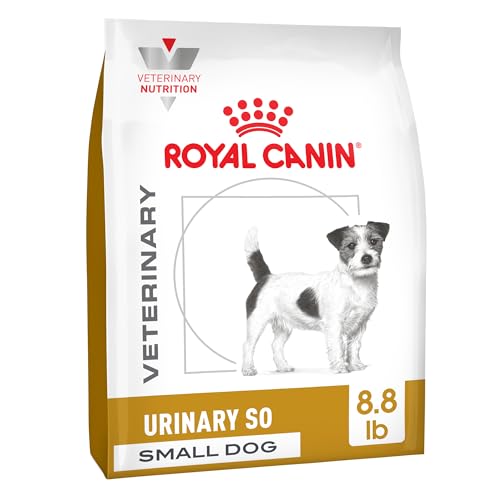 |
Royal Canin Small Dog Urinary SO | ★★★★☆ | Check Price |
| 7 | 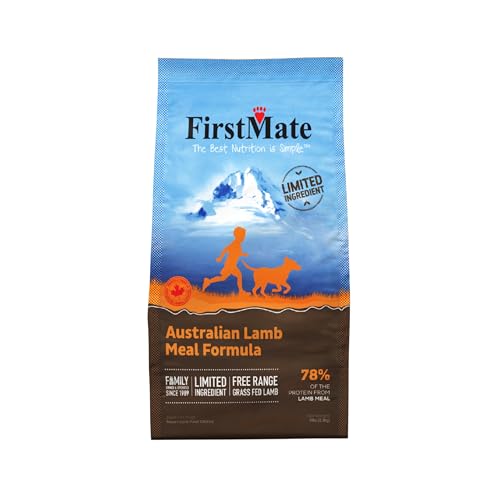 |
FirstMate Limited Ingredient Lamb | ★★★★☆ | Check Price |
| 8 | 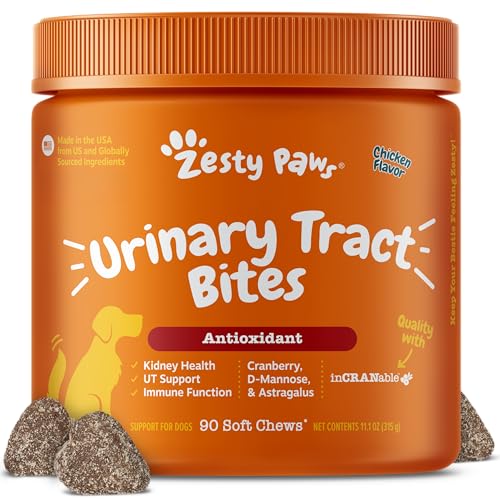 |
Zesty Paws Cranberry Bladder Bites | ★★★★☆ | Check Price |
| 9 |  |
Pawlife Cranberry Bladder Support Chews | ★★★★☆ | Check Price |
| 10 |  |
NaturVet Cranberry Relief Plus Echinacea | ★★★★☆ | Check Price |
1. Blue Buffalo W+U Urinary Care
A natural wet food that does double duty, supporting urinary health with controlled minerals while helping manage weight. Real chicken leads the recipe, with no chicken by-product meals, corn, wheat, or soy.
Pros
- Targets urinary health and weight in one food
- Real chicken is the first ingredient
- No by-product meals, corn, wheat, or soy
- Moist texture adds the hydration urinary dogs need
- A more natural take on a veterinary urinary diet
Cons
- Sold as a veterinary diet, so vet approval is needed
- Wet food costs more per calorie than kibble
- The weight focus isn't right for underweight dogs
Blue Buffalo’s W+U earns the top spot by solving two common problems in one bowl. Plenty of urinary dogs are also carrying extra weight, and this formula manages both at once.
It supports urinary health with controlled mineral levels while keeping calories in check, and it does it with real chicken as the first ingredient instead of by-product meals. There’s no corn, wheat, or soy either.
The wet format is an underrated advantage. Moisture means more water going in, and more water means more dilute urine, one of the best defenses for a stone-prone dog.
It’s still a veterinary diet, so check with your vet before switching. And because the recipe leans toward weight control, it isn’t the right call for a dog that needs to gain.
2. Hill’s Prescription Diet u/d Urinary Care
A veterinary diet built to manage advanced urinary and oxalate-stone issues with carefully controlled minerals and protein. It's one of the most established prescription urinary foods on the market.
Pros
- Long-established prescription urinary formula
- Controlled minerals help manage certain stones
- Backed by Hill's clinical nutrition research
- Often recommended for oxalate-prone dogs
- Large bag size suits long-term feeding
Cons
- Requires a veterinary prescription
- Premium price
- Reduced protein isn't right for every dog
If your vet is managing a dog with oxalate stones, Hill’s u/d is likely already on their radar. It’s one of the oldest and most studied prescription urinary diets available.
The formula carefully controls the minerals and protein that feed stone formation, which is why it tends to come up for the harder oxalate-prone cases rather than simple prevention.
It needs a prescription and it’s priced like the specialist product it’s. The reduced protein also means it isn’t a food for an otherwise healthy dog, only one with a diagnosed need.
The large bag size is a small mercy, since these are diets dogs often stay on for the long haul.
3. Purina Pro Plan Veterinary Diets UR Urinary
A prescription urinary kibble that creates a urine environment unfavorable to struvite and calcium oxalate crystals. It's built to help dissolve struvite stones and lower the odds they come back.
Pros
- Promotes urine that discourages crystal formation
- Can help dissolve existing struvite stones
- Palatable formula most dogs accept
- Backed by Purina veterinary research
- Widely stocked among vet diets
Cons
- Prescription required
- Not a fit for dogs without diagnosed stones
- Costs more than standard Pro Plan
Purina’s UR takes direct aim at crystals. The whole formula is engineered to create a urinary environment where struvite and calcium oxalate crystals struggle to form.
For dogs that already have struvite stones, that chemistry can actually help dissolve them, not just prevent new ones. That makes UR a strong first move after a struvite diagnosis.
Most dogs take to it without fuss, which matters when you’re asking a sick dog to eat something new. It’s widely stocked among vet diets, so refills are rarely a scramble.
Like the others, it’s prescription-only and priced above standard Pro Plan. It also only makes sense for a dog with diagnosed stones, not as a general-purpose food.
4. Royal Canin Veterinary Diet Urinary SO
A veterinary-exclusive dry food designed to lower the concentration of stone-forming minerals and increase urine volume. It's a go-to for dogs with a history of struvite or oxalate stones.
Pros
- Encourages dilute urine to flush out crystals
- Targets both struvite and oxalate risk
- One of the most prescribed urinary diets
- Highly palatable kibble
- Consistent, research-backed formulation
Cons
- Veterinary authorization needed
- Expensive per pound
- More thirst means more frequent bathroom trips
Royal Canin Urinary SO is probably the most prescribed urinary diet in the country, and the approach is refreshingly simple. It works by diluting the urine and lowering the concentration of stone-forming minerals.
More dilute urine means crystals have less chance to clump and settle, so this one covers both struvite and oxalate risk rather than specializing in one. For a dog with a stone history, that broad coverage is reassuring.
The kibble is palatable enough that picky dogs usually accept it, and the formulation stays consistent batch to batch, which veterinarians value.
One practical heads-up: it works partly by making dogs drink and pee more, so expect extra trips outside while their system adjusts.
5. NutriSource Pure Vita Chicken and Brown Rice
A simpler, non-prescription option for dogs with mild urinary sensitivity or those stepping down from a vet diet. It's built on chicken and brown rice with a short, wholesome ingredient list.
Pros
- An accessible food with no prescription needed
- Short, recognizable ingredient list
- Gentle, balanced everyday nutrition
- Works as maintenance for low-risk dogs
- Widely available
Cons
- Not a targeted urinary or stone-management diet
- Less suitable for dogs with active stones
- Contains grains, so not a grain-free pick
Not every urinary dog needs a prescription. For a dog with mild sensitivity, or one your vet is transitioning off a therapeutic diet, Pure Vita is a sensible everyday food.
It’s built on chicken and brown rice with a short, readable ingredient list and wholesome grains. There’s nothing exotic here, and for a low-risk dog that’s the point.
We want to be clear about what it isn’t. This isn’t a targeted stone-management diet, and a dog in active treatment should stay on whatever the vet prescribed.
For maintenance feeding of a dog whose urinary issues are behind them, though, it’s an accessible, balanced choice you can buy without a vet’s note.
6. Royal Canin Small Dog Urinary SO
The small-breed version of Royal Canin's urinary diet, with smaller kibble and the same stone-prevention approach. It's built for little dogs with urinary concerns.
Pros
- The same urinary science scaled for small dogs
- Smaller kibble suits little mouths
- Encourages dilute, stone-discouraging urine
- Highly palatable
- Pairs with the standard Urinary SO line
Cons
- Prescription required
- Premium price
- Only sensible for small breeds
This is simply Urinary SO sized down for little dogs. The stone-prevention science is identical, just packaged in smaller kibble that small mouths can manage.
Small breeds get urinary stones too, and feeding them standard-size therapeutic kibble can be a struggle. This version removes that friction.
It carries the same prescription requirement and premium price as the full-size formula. And it only makes sense if you actually have a small breed, since the kibble size is the whole reason it exists.
If your small dog is on the standard SO and leaving food behind, this is the easy fix to raise with your vet.
7. FirstMate Limited Ingredient Lamb
A grain-free, single-protein lamb formula for dogs that have food sensitivities alongside urinary issues. It's a clean, simple maintenance diet rather than a targeted urinary food.
Pros
- One animal protein keeps the recipe simple
- Grain free and free of common fillers
- Good for dogs with sensitive stomachs
- Grass-fed lamb as the protein source
- Useful when allergies overlap with urinary issues
Cons
- Not formulated for stones or crystals
- Lamb costs more than chicken-based foods
- Pair it with vet guidance for true urinary disease
FirstMate is here for a specific dog: one juggling food sensitivities on top of urinary worries. It’s a grain-free, single-protein lamb recipe with a deliberately short ingredient list.
When a dog reacts to multiple proteins or fillers, a clean limited-ingredient diet can calm the gut while you and your vet sort out the urinary side separately. Grass-fed lamb gives it a single protein to build on.
Be honest about what this is, though. It isn’t formulated for stones or crystals, so it’s a supporting player rather than the treatment.
Lamb also runs pricier than chicken-based foods. For a sensitive dog whose urinary issues are mild or already controlled, it’s a clean, simple base diet.
8. Zesty Paws Cranberry Bladder Bites
A cranberry-based soft chew that supports urinary tract and bladder health rather than replacing a meal. It's a practical add-on for dogs prone to UTIs.
Pros
- Cranberry supports urinary tract health
- Easy soft-chew format
- A supplement, not a diet overhaul
- Useful for UTI-prone dogs alongside their food
- No prescription required
Cons
- A supplement, not a treatment for stones or incontinence
- Evidence for cranberry in dogs is mixed
- Adds calories on top of meals
Here the list shifts from food to supplement. Zesty Paws Cranberry Bites are a soft chew you add alongside meals, not a diet you swap to.
Cranberry is the headline ingredient, and the goal is to support a urinary tract that’s prone to infection. For a dog that gets recurring UTIs, that supportive angle can be worth a try.
The soft-chew format makes dosing painless, and there’s no prescription involved. Most dogs treat it like a treat rather than medicine.
Just keep the expectations grounded. Cranberry evidence in dogs is genuinely mixed, this does nothing for stones or true incontinence, and the chews add a few calories you should count.
9. Pawlife Cranberry Bladder Support Chews
A cranberry and D-Mannose chew aimed at comprehensive urinary and bladder support. It's another supplement option for owners managing recurrent urinary issues.
Pros
- Pairs cranberry with D-Mannose for urinary support
- An antioxidant blend rounds out the recipe
- Convenient chew most dogs accept
- No prescription needed
- Sits easily alongside any diet
Cons
- Supplement only, not a medical treatment
- Results vary from dog to dog
- A less established brand than the bigger names
Pawlife takes the cranberry idea a step further by pairing it with D-Mannose, a sugar thought to help keep bacteria from sticking to the bladder wall.
That combination, plus an antioxidant blend, aims at more comprehensive urinary support than cranberry alone. For owners managing a dog with repeat bladder trouble, it’s a reasonable supplement to rotate in.
The chews go down easily and need no prescription, so they slot into almost any routine.
It’s a smaller brand than the household names on this list, and like any supplement the results vary from dog to dog. Think of it as support, not a cure.
10. NaturVet Cranberry Relief Plus Echinacea
A cranberry supplement with added echinacea aimed at urinary tract and immune support. It's a budget-friendly maintenance option for UTI-prone dogs.
Pros
- Cranberry plus echinacea for urinary and immune support
- One of the more affordable urinary supplements
- Available as soft chews or powder
- Easy to add to meals
- No prescription required
Cons
- A supplement, not a diet or medical treatment
- Echinacea's urinary benefit is unproven
- Not for dogs with diagnosed stones needing a vet diet
NaturVet rounds out the list as the budget-friendly cranberry option. It adds echinacea with the goal of supporting both urinary and immune health.
For owners who want a low-cost maintenance supplement for a UTI-prone dog, it’s easy to add to meals and comes in both soft chews and a powder.
The cranberry rationale is the same as the others, but we’ll flag that the echinacea-for-urinary-health angle isn’t well proven. Treat that part as a bonus claim, not a reason to buy.
It’s a supplement, not a diet, and certainly not a substitute for a vet diet in a dog with diagnosed stones. As affordable everyday support, though, it does the job.
Final Thoughts
The single most useful thing you can do for a urinary dog is name the actual problem. Leaking, stones, crystals, and infections look similar from the outside but call for very different responses.
If your dog is genuinely incontinent, start with your veterinarian, because that’s a medical issue diet won’t solve. If the problem is stones or crystals, a prescription diet like Royal Canin Urinary SO, Purina UR, or Hill’s u/d is the right tool, with Blue Buffalo’s W+U as a more natural option to discuss.
And if you’re simply supporting a UTI-prone bladder, a cranberry supplement alongside good hydration is a sensible, low-risk add.
Whatever you choose, more water and a vet in the loop beat any single bag of food. Treat the diet as one part of the plan, not the whole plan.
Frequently Asked Questions
No. True incontinence, meaning involuntary leaking, is usually hormonal or structural and is treated by a veterinarian, often with medication. Diet helps with urinary stones, crystals, and UTIs, not with the leaking itself.
Incontinence is a loss of bladder control, so urine leaks without the dog choosing to go. A UTI is an infection that causes urgency, straining, and sometimes blood. They have different causes and different treatments.
The targeted stone-management diets here, Hill's u/d, Royal Canin Urinary SO, and Purina UR, are veterinary-exclusive and need your vet's authorization. The everyday foods and cranberry supplements don't.
Cranberry may help discourage bacteria from sticking to the bladder wall, but the evidence in dogs is mixed. Treat it as supportive care alongside veterinary treatment, not as a replacement for it.