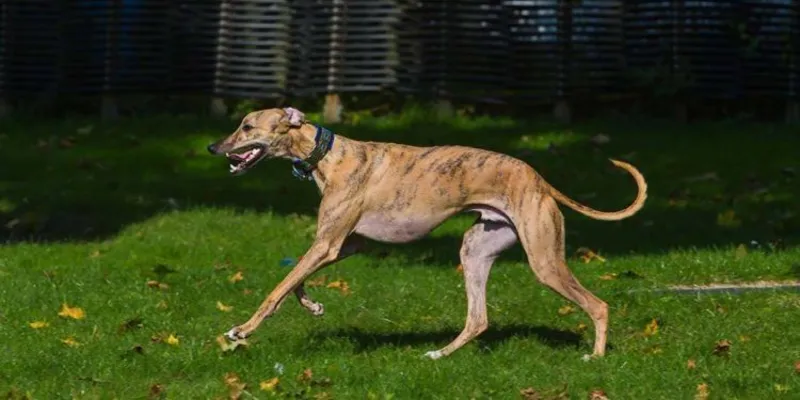
Greyhounds are unlike almost any other dog you’ll feed. They’re sprinters built from lean muscle on a frame that carries next to no body fat, and that unusual body changes what belongs in the bowl.
They also come with a couple of quirks that matter at mealtime. Many have notoriously sensitive stomachs, and as a deep-chested breed they carry a real risk of bloat.
We built this list around those realities rather than around marketing. The foods that lead it deliver quality protein and easy digestion, and we were clear about which picks suit a hard-running racer versus a retired greyhound dozing on the couch.
What Makes Greyhounds Different
Start with the body. A fit greyhound carries only a few percent body fat, a fraction of what a typical dog carries, and almost everything else is muscle.
That muscle has to be fed. Quality animal protein isn’t optional for this breed, since it’s the raw material for the very thing that defines them.
Their metabolism is efficient too, which trips up a lot of owners. A greyhound often needs fewer total calories than its long-legged size suggests, and a retired racer in particular gains weight quickly once the daily sprints stop.
Then there’s the famous greyhound stomach. The breed is prone to sensitive digestion and loose stools, a tendency made worse by the stress and sudden food changes that come with leaving the track.
The deep chest brings the most serious concern, which is bloat. Greyhounds are among the breeds at elevated risk for gastric torsion, a sudden and life-threatening twist of the stomach that feeding habits can help prevent.
Add in a breed-wide tendency toward dental disease, and a picture emerges. The ideal greyhound food is protein-rich, highly digestible, calorie-appropriate, and fed in a way that respects that deep, vulnerable chest.
What to Look for in a Greyhound’s Food
Put protein first, literally. Look for a real, named animal protein as the first ingredient, since that’s what feeds the lean muscle the breed is built on.
Weigh the calories against your individual dog. A still-racing or highly active greyhound can use an energy-dense performance food, while a retired couch greyhound needs the protein without the calorie load, or the weight creeps on fast.
Favor digestibility. Highly digestible recipes, limited-ingredient diets, and added aids like prebiotics, probiotics, or pumpkin all help settle the sensitive stomach the breed is known for.
Mind the fat and the fillers. Quality fat gives energy and a healthy coat, but a retired dog doesn’t need it in excess, and cheap fillers do a greyhound no favors.
Finally, think about life stage and any sensitivities. A senior greyhound, a dog with a chicken intolerance, or one with chronic loose stools each points you toward a different food on this list, which is why we labeled the picks the way we did.
How We Chose These Foods
We didn’t run a testing lab or feed trials of our own. What we did was rank these foods against the traits that actually define the breed, and we were honest about which dog each one suits.
First, we prioritized quality animal protein. Every top pick leads with real meat, because a muscular sighthound needs it more than most breeds.
Second, we weighted digestibility heavily. Given how common sensitive stomachs are in greyhounds, we pushed limited-ingredient and digestion-focused foods up the list and flagged the rich ones.
Third, we matched calories to lifestyle honestly. Rather than crown one performance food the universal best, we separated the energy-dense racer foods from the everyday picks a retired greyhound actually needs.
Finally, we favored recognizable, widely available brands with sound formulation and quality control. A food only helps if you can reliably buy it and your dog will eat it.
Quick Comparison Chart
| # | Product | Our Rating | ||
|---|---|---|---|---|
| 1 |  |
Purina Pro Plan High Protein Large Breed Chicken and Rice | ★★★★★ | Check Price |
| 2 | 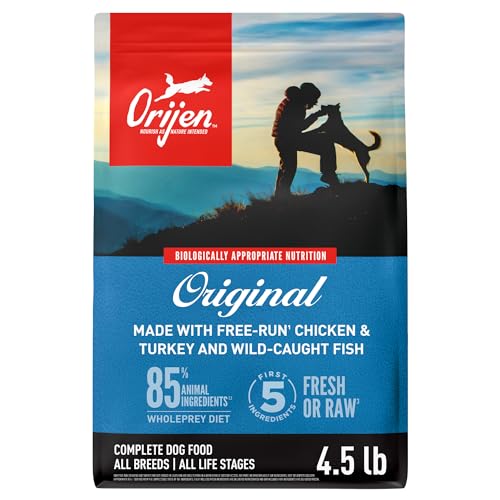 |
Orijen Original Grain-Free | ★★★★★ | Check Price |
| 3 |  |
Hill's Science Diet Sensitive Stomach and Skin | ★★★★☆ | Check Price |
| 4 |  |
I and Love and You Naked Essentials Lamb and Bison | ★★★★☆ | Check Price |
| 5 |  |
Natural Balance Limited Ingredient Lamb and Brown Rice | ★★★★☆ | Check Price |
| 6 |  |
Blue Buffalo Basics Skin and Stomach Care Turkey | ★★★★☆ | Check Price |
| 7 | 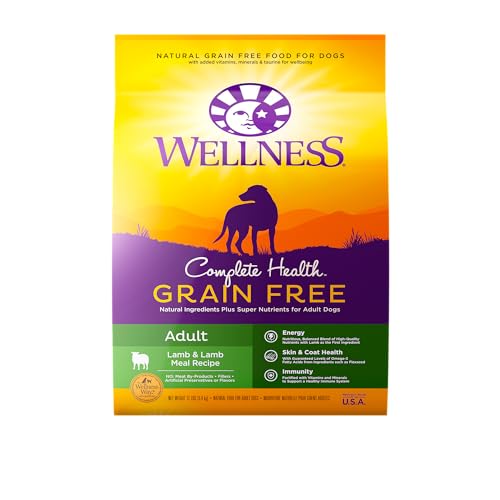 |
Wellness Complete Health Grain-Free Lamb | ★★★★☆ | Check Price |
| 8 |  |
Purina Pro Plan Sport Performance Chicken and Rice | ★★★★☆ | Check Price |
| 9 | 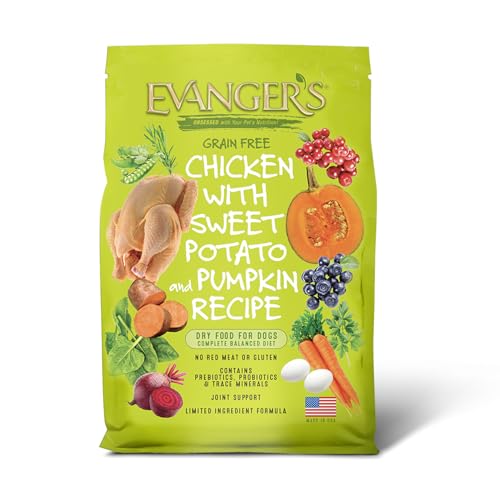 |
Evanger's Grain-Free Chicken Sweet Potato and Pumpkin | ★★★★☆ | Check Price |
| 10 |  |
Orijen Senior Grain-Free | ★★★★☆ | Check Price |
1. Purina Pro Plan High Protein Large Breed Chicken and Rice
A high-protein large-breed formula built around digestive health, with real chicken first, glucosamine and omega-3 for joints, and guaranteed live probiotics. It reads like a checklist of what a greyhound needs from a research-driven brand.
Pros
- High protein supports a greyhound's lean muscle
- Built for large-breed digestion and sensitive stomachs
- Glucosamine and EPA support joints
- Guaranteed live probiotics aid digestion
- From a company with nutritionists and feeding trials
Cons
- Contains grains, which a few owners avoid
- Not grain-free for dogs with a true grain allergy
- Chicken base doesn't suit chicken-allergic dogs
This is our top pick because it reads like it was designed with greyhounds in mind. It’s high in protein to feed lean muscle, balanced for a large breed, and built specifically around digestive health for a breed with a touchy gut.
That digestive focus is the clincher. Guaranteed live probiotics and a large-breed formulation address the exact weakness greyhound owners deal with most, while glucosamine and omega-3 look after the joints.
Real chicken leads the recipe, and it comes from Purina, a company with board-certified nutritionists and feeding trials behind its formulas. That research backing matters for a breed you want to get right.
It does contain grains, which a few owners prefer to avoid, and the chicken base won’t suit a chicken-allergic dog. For the typical greyhound, racer or retiree, it’s the most complete match on the list.
2. Orijen Original Grain-Free
A nutrient-dense, very high-meat recipe built on the brand's biologically appropriate philosophy. For a muscular athlete like a greyhound, the sheer quality and quantity of animal protein is the draw.
Pros
- Loaded with quality animal protein for lean muscle
- Whole-prey ingredients including organs and cartilage
- No fillers or artificial additives
- Highly palatable for picky greyhounds
- From a well-regarded whole-food maker
Cons
- Rich and calorie-dense for a retired couch greyhound
- Among the most expensive options
- Best introduced slowly to a sensitive stomach
If you want to maximize protein quality, Orijen is the benchmark. It’s a nutrient-dense, very high-meat food built on whole-prey ingredients, and for a muscular athlete like a greyhound that’s a genuine strength.
The sheer amount of quality animal protein here suits the breed’s body beautifully. Organs, cartilage, and named meats give a greyhound the raw material its muscle demands, with no fillers in sight.
Most dogs find it extremely palatable too, which helps with the pickier greyhounds. The ingredient quality is about as high as kibble gets.
The caution is calories. This is a rich, energy-dense food that fits an active dog far better than a retired couch greyhound, and a sensitive stomach needs it introduced slowly.
For the right dog, it’s superb.
3. Hill’s Science Diet Sensitive Stomach and Skin
A vet-trusted formula that targets the exact weak spot of the breed, supporting stomach, skin, and immune health together. For the many greyhounds with touchy digestion, this is the food that often settles things down.
Pros
- Directly targets the breed's sensitive digestion
- Prebiotic fiber supports gut health
- Vitamin E and omega-6 for skin and coat
- Highly digestible and gentle
- From a research-driven, vet-recommended brand
Cons
- Lower protein than performance formulas
- Contains grains
- Single protein may bore some dogs
This pick goes straight at the breed’s Achilles heel. It’s formulated for sensitive stomach and skin, which describes a huge share of greyhounds, especially in the stressful months after retiring from the track.
The formula supports digestion with prebiotic fiber while looking after skin and coat with vitamin E and omega-6. For a greyhound with chronic loose stools, this is often the food that finally settles things.
It carries the weight of the Hill’s name, a research-driven brand that vets recommend more than almost any other. The recipe is highly digestible and gentle by design.
The trade-off is that it runs lower in protein than the performance and boutique foods, so a hard-working dog may want more. For a sensitive-stomached pet greyhound, though, it’s hard to beat.
4. I and Love and You Naked Essentials Lamb and Bison
A clean, meat-first kibble with lamb and bison, no corn, wheat, or soy, and a sensible price. It delivers quality protein for muscle without the premium cost of the boutique brands above it.
Pros
- Real lamb and bison lead the recipe
- Quality protein for lean greyhound muscle
- No corn, wheat, soy, or artificial additives
- Prebiotics and probiotics support digestion
- Strong value for the quality
Cons
- Not a breed or performance-specific formula
- Lamb is uncommon, so transition gradually
- Smaller bag sizes for a big dog
For owners who want quality without the boutique price, this is the value sweet spot. It leads with real lamb and bison and skips corn, wheat, soy, and artificial additives.
The protein quality is genuinely good for the money. Lamb and bison feed lean muscle, and the clean recipe avoids the cheap fillers that do a greyhound no favors.
Prebiotics and probiotics give a nod to the sensitive greyhound gut, and most dogs take to the flavor readily. It punches above its price.
The honest notes are minor. It isn’t a breed or performance-specific food, lamb is uncommon enough to warrant a gradual switch, and the bags run small for a large dog.
As an everyday value pick, it delivers.
5. Natural Balance Limited Ingredient Lamb and Brown Rice
A limited-ingredient diet with lamb as the first ingredient and brown rice for gentle, digestible energy. The short ingredient list suits a greyhound whose stomach reacts to richer or more complex foods.
Pros
- Short ingredient list eases sensitive digestion
- Lamb is a gentle, less common protein
- Brown rice provides digestible energy
- No artificial colors or flavors
- Good for elimination-style feeding
Cons
- Lower protein than performance foods
- Lamb doesn't suit a lamb-allergic dog
- Premium pricing
When a greyhound’s stomach reacts to richer foods, a limited-ingredient diet is the smart move, and this is a well-made one. It pairs lamb as the first ingredient with brown rice for gentle, digestible energy.
The short ingredient list is the point. Fewer components mean fewer things to upset a sensitive gut, and lamb is a less common protein that many dogs handle well.
It skips artificial colors and flavors, and the brown rice keeps it grain-inclusive for owners who prefer that. It also works nicely as a base for an elimination-style approach if you’re hunting a trigger.
It runs lower in protein than the performance foods, and lamb won’t help a lamb-allergic dog. For a greyhound with a delicate stomach, it’s a dependable, calming choice.
6. Blue Buffalo Basics Skin and Stomach Care Turkey
A limited-ingredient diet built for skin and stomach care, with turkey as a single novel protein. It's another strong option for the sensitive-stomach greyhound that doesn't do well on chicken.
Pros
- Single novel protein limits stomach triggers
- Made specifically for skin and stomach sensitivities
- No chicken, beef, corn, or soy
- Turkey is gentler for some sensitive dogs
- Reasonable price for a limited-ingredient food
Cons
- Turkey is still poultry to watch for some dogs
- Lower protein than performance formulas
- Single recipe limits variety
Here’s a second strong limited-ingredient option, this one built on turkey. Like the pick above it, it’s designed for skin and stomach care, which makes it a natural fit for the breed.
The single novel protein is the appeal. Turkey gives a sensitive greyhound a gentler protein than chicken or beef, and the recipe leaves out chicken, beef, corn, and soy.
It’s reasonably priced for a limited-ingredient food, and the skin and stomach focus addresses two common greyhound complaints at once. Many sensitive dogs do well on it.
The caveats are small. Turkey is still poultry, so it’s worth watching for poultry-sensitive dogs, and the protein level sits below the performance foods.
As a gentle everyday diet, it’s a fine choice.
7. Wellness Complete Health Grain-Free Lamb
A balanced grain-free recipe built on lamb, with quality protein, healthy fats, and fiber for whole-body health. It's a solid all-rounder for a greyhound that does better without grains.
Pros
- Lamb provides quality protein for muscle
- Healthy fats and fiber are well balanced
- No corn, wheat, soy, or by-products
- Antioxidants support immune health
- From a trusted whole-food brand
Cons
- Grain-free, a choice to weigh for your dog
- Not breed or performance specific
- Premium price point
This is the balanced all-rounder of the list. Built on lamb, it brings together quality protein, healthy fats, and fiber in a recipe aimed at whole-body health.
The lamb base gives a greyhound solid protein while sidestepping chicken for dogs that do better without it. Antioxidants support immune health, and the formula skips corn, wheat, soy, and by-products.
It comes from Wellness, a trusted whole-food brand, and the nutrition is sensibly rounded rather than pushed to any extreme. That makes it an easy, no-drama everyday food.
It’s grain-free, which is a choice to weigh, and it isn’t tailored to the breed specifically. For a greyhound that simply needs a quality, balanced diet, it does the job well.
8. Purina Pro Plan Sport Performance Chicken and Rice
A high-protein, high-fat performance food at 30 percent protein and 20 percent fat, built for hard-working dogs. This is the pick for a still-racing or highly active greyhound, not a retired couch dog.
Pros
- Fuels the demands of an active or racing greyhound
- Amino acids support muscle and recovery
- Real chicken is the first ingredient
- From a brand that runs feeding trials
- Energy-dense for high-output dogs
Cons
- Too calorie-dense for a retired, low-activity greyhound
- Built for performance, not for couch potatoes
- Richness can challenge a sensitive stomach
This food earns its spot for a specific dog, the greyhound that still runs. At 30 percent protein and 20 percent fat, it’s an energy-dense performance formula built for hard work.
For a racing or highly active greyhound, that fuel is exactly right. The amino acids support muscle and recovery, and real chicken leads the recipe from a brand that tests its formulas.
The reason it sits at number eight is that most pet greyhounds aren’t athletes. A retired dog fed this rich a food will gain weight, since the calories outpace a couch lifestyle.
Match it to the dog and it shines. For a working greyhound it could rank near the top, but for the typical retired companion it’s simply more food than the dog needs.
9. Evanger’s Grain-Free Chicken Sweet Potato and Pumpkin
A grain-free recipe with fresh deboned chicken first and pumpkin for digestive support. The added pumpkin is a nice touch for a breed that often needs a little help keeping its stomach settled.
Pros
- Fresh deboned chicken leads the recipe
- Pumpkin supports digestion and stool quality
- Grain-free with no corn, wheat, or soy
- Lean protein for muscle maintenance
- Family-owned American maker
Cons
- Sold in smaller bag sizes
- Chicken base doesn't suit chicken-allergic dogs
- Less widely stocked than major brands
This recipe brings a useful extra to the table for sensitive greyhounds, which is pumpkin. Fresh deboned chicken leads the food, with sweet potato and pumpkin supporting digestion and stool quality.
That digestive angle is genuinely helpful for the breed. Pumpkin is a gentle, fiber-rich aid that many owners reach for anyway, and here it’s baked into the food.
The lean chicken protein supports muscle maintenance, and the grain-free recipe avoids corn, wheat, and soy. It comes from a family-owned American maker.
The drawbacks are practical. It sells in smaller bags, it’s less widely stocked than the big brands, and the chicken base rules it out for chicken-allergic dogs.
For a sensitive greyhound, the pumpkin makes it worth a look.
10. Orijen Senior Grain-Free
A senior version of Orijen's high-meat formula, tuned to maintain muscle and a healthy weight in older dogs. For a greying greyhound that still needs quality protein without excess calories, it's a thoughtful choice.
Pros
- High protein helps seniors hold lean muscle
- Tuned to maintain a healthy senior weight
- Whole-prey ingredients and no fillers
- Supports aging joints and body condition
- From a respected whole-food brand
Cons
- Premium price and small bag sizes
- Rich recipe needs a slow transition
- More food than a sedentary senior may need
Rounding out the list is a food for the greying greyhound. It’s the senior version of Orijen’s high-meat formula, tuned to keep an older dog’s muscle on while managing weight.
That balance matters for aging sighthounds. A senior greyhound still needs quality protein to hold its lean frame, but it needs fewer calories to avoid putting on weight, and this formula aims at both.
The whole-prey ingredients and absence of fillers carry over from the original, so the quality is high. It supports aging joints and body condition along the way.
As with the original, it’s a premium food in small bags that needs a slow transition. For a senior greyhound that still deserves top-tier protein, it’s a thoughtful way to close out the list.
Feeding Tips for Greyhounds
The single most important habit is how you split meals. Feed two, or even three, smaller meals a day rather than one large bowl, which lowers bloat risk and is easier on a sensitive stomach.
Protect that deep chest around exercise. Avoid hard running or play for about an hour before and after meals, and discourage frantic gulping, since both raise the danger of gastric torsion.
Go slow with any food change. Greyhounds react badly to abrupt switches, so transition over a week to ten days, mixing increasing amounts of the new food into the old.
Feed to the breed’s natural shape, not to a generic chart. A healthy greyhound is meant to look lean, with the last couple of ribs and the hip points faintly visible, so resist the urge to fill them out.
Keep an extra eye on retired racers. Once the running stops, their calorie needs drop sharply, and the weight will climb if you keep feeding like they’re still on the track.
Don’t forget the teeth. Dental disease is common in the breed, so pair good food with regular dental care, and mention any persistent stomach trouble to your vet to rule out other causes.
Final Thoughts
Feeding a greyhound well comes down to respecting how unusual the breed really is. Lean muscle on almost no fat, a sensitive stomach, and a deep chest add up to a dog that needs quality protein, easy digestion, and sensible calories more than it needs any gimmick.
Our top pick, Purina Pro Plan High Protein Large Breed, hits that combination squarely, and the limited-ingredient and sensitive-stomach options give you strong choices when digestion is the main battle. For the dog that still runs, the performance formula has its place, and the senior recipe closes the gap for older hounds.
Pair the right food with smart habits, smaller meals, slow transitions, and care around that deep chest, and most greyhounds thrive. Feed them lean, feed them well, and let those remarkable dogs do what they do best, which is usually sleeping eighteen hours a day between sprints.
Frequently Asked Questions
Feed a high-quality food that leads with real animal protein and is easy to digest. Greyhounds carry a lot of lean muscle on very little body fat, so quality protein matters, and their sensitive stomachs reward a digestible, consistent diet. Split the daily amount into two meals rather than one large bowl.
Less than their size suggests, because greyhounds are lean and efficient. A healthy greyhound is meant to look slim, with the last ribs and the points of the hips faintly visible, so feed to maintain that rather than to fill them out. Retired racers gain weight easily once the running stops, so watch portions closely.
It's a breed trait, often made worse by the stress and abrupt diet changes that come with retiring from racing. A highly digestible food, slow transitions over a week or more, and smaller, more frequent meals all help. If loose stools persist, your vet can rule out parasites or other causes.
Yes. As a deep-chested breed, greyhounds face a higher risk of bloat and gastric torsion, a true emergency. Lower that risk by feeding two or three smaller meals a day, discouraging gulping, and avoiding hard exercise for an hour before and after eating.
Generally yes. Greyhounds are built from muscle, and quality animal protein supports that lean mass whether your dog races or naps all day. The thing to manage is calories and fat, since a retired greyhound needs the protein but not the energy load of a hard-running racer.